How do we know where to build new homes?
Where homes are built within a local authority matters far more than the headline targets set for each area, write Nikhil Datta and Amrita Kulka of the University of Warwick



Nikhil Datta and Amrita Kulka are assistant professors at the department of economics, University of Warwick
 Where homes are built within a local authority matters far more than the headline targets set for each area, write Nikhil Datta and Amrita Kulka of the University of Warwick #UKhousing
The government wants to build millions of new homes to tackle the UK’s housing crisis. It is well established in economic geography that people are drawn to areas with good amenities, job access and schools. A large body of research also finds that where children grow up affects their long-term opportunities.
In other words, where new housing is built matters as much as how much is built. While the government has been clear about its goals on the latter, the former is only addressed at a relatively coarse level – via local authority targets.
Our new research shows that where homes are built within a local authority matters far more than the headline targets set for each area. Using state-of-the-art housing search data from millions of prospective movers, combined with detailed information on available listings, we construct a measure of excess housing demand: the housing gap. This captures the difference between the number of people searching in an area and the homes available.
Using this measure, we can show that 96% of the variation in excess housing demand occurs within local authorities rather than between them, highlighting the importance of the location of sites dedicated to new builds.
Read more


Because the data are highly granular, we can estimate the housing gap for hyper-local neighbourhoods, essentially mapping which micro-neighbourhoods households would like to live in. These results are visualised on our new mapping tool.
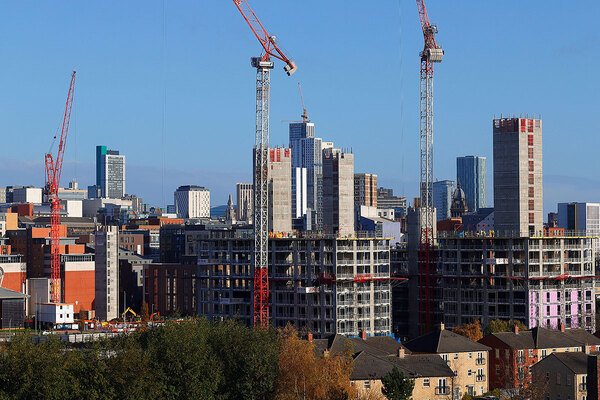
Half of the gap is concentrated in the urban cores of towns and cities, with much of the remainder in surrounding suburbs and outer urban areas. Only around one-fifth of the housing gap is found in small towns and rural locations.
“When we examine where housing has been built over the past decade, a clear mismatch emerges between development patterns and the areas of highest demand”
Therefore, a local authority looking to meet its targets by developing new towns may miss the areas where pressure is highest, and where improving access to jobs, amenities and long-term opportunities would have the greatest impact.
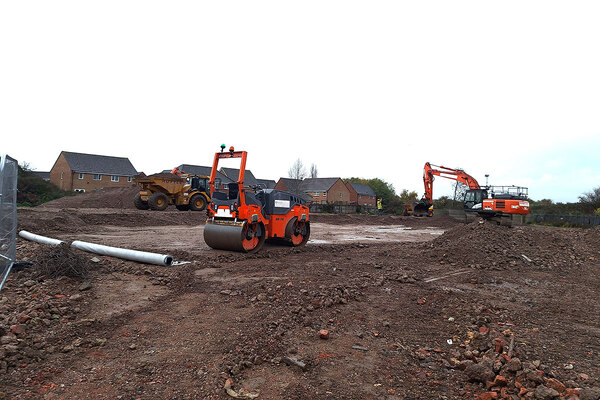
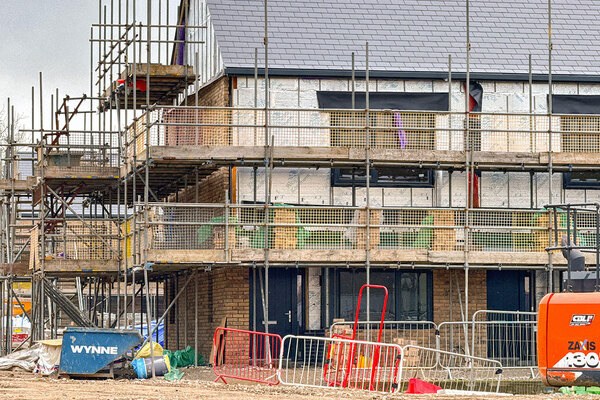
When we examine where housing has been built over the past decade, a clear mismatch emerges between development patterns and the areas of highest demand. Analysis of more than three million new homes shows that a disproportionate share was delivered through new rural settlements and small-town extensions, while densification in high-demand neighbourhoods has lagged significantly.
Nearly 20% of all new builds in the past decade were constructed in villages or towns without a secondary school or GP, and access to jobs has declined – particularly when measured by public transport connectivity. The lack of amenities and public transit access near new builds hits rural areas particularly, deepening existing spatial inequalities.
If much of the country’s new housing is to be delivered through new towns, ensuring strong transport links, access to jobs and essential local amenities is critical – and these must be in place at the right time. In practice, this is far from straightforward.
Our analysis of millions of residential planning applications submitted between 2000 and 2024 shows that developments of 500 homes or more took, on average, nearly eight years to navigate the planning system, and required dozens of separate filings. Projects that depend on major infrastructure can face even longer delays due to factors outside the control of local planners or developers.
This was the experience at Northstowe, just north of Cambridge, envisioned as the largest new town since Milton Keynes. The scheme was effectively put on hold for around four years because of delays to the Highways England-led expansion of the A14 – an infrastructure improvement the development was entirely reliant on.
“If much of the country’s new housing is to be delivered through new towns, ensuring strong transport links, access to jobs and essential local amenities is critical – and these must be in place at the right time”
Deeper analysis of the housing gap shows that places where demand is severely outstripping supply are not confined to high-price postcodes. Several relatively affordable, less affluent neighbourhoods also face acute shortages. Examples include the London Road area of Glasgow and Kelham Island in Sheffield. Directing new housing to these areas would deliver meaningful benefits, reducing excess housing demand pressures for households lower down the income distribution.
Our new mapping tool is designed to help planners, developers and policymakers identify these neighbourhoods with precision. It visualises the housing gap at output area level, alongside indicators such as build classification (i.e. densification, urban extensions, small-town extensions or rural development), restrictive planning designations including greenbelt and conservation areas, local price statistics for both rental and sales markets and demographic characteristics of those already living in the area.
By making these pressures visible at a hyper-local scale, the tool offers a practical way to ensure that the homes we build are delivered in the places where they will make the greatest difference.
Nikhil Datta and Amrita Kulka, assistant professors, Department of Economics at the University of Warwick
Sign up to Inside Housing’s Development and Finance newsletter
Sign up to Inside Housing’s weekly Development and Finance newsletter, featuring a round-up of business, development and regeneration news and analysis.
Click here to register and receive the Development and Finance newsletter straight to your inbox.
And subscribe to Inside Housing by clicking here.
Already have an account? Click here to manage your newsletters.
Related stories