You are viewing 1 of your 1 free articles
The fight to clean up supported housing has barely started
Andy Burnham’s welcome pledges on homelessness risk handing more money to bad actors, warn Ashley Horsey, chief executive of charity Commonweal Housing, and Charlotte Cook, a partner at law firm Winckworth Sherwood



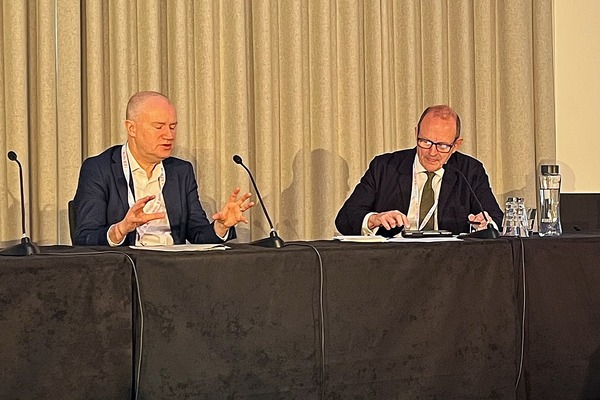
Ashley Horsey is CEO of Commonweal Housing, and Charlotte Cook is a partner at Winckworth Sherwood
...more Andy Burnham’s welcome pledges on homelessness risk handing more money to bad actors, warn Ashley Horsey, chief executive of Commonweal Housing, and Charlotte Cook, a partner at Winckworth Sherwood #UKhousing
Caught in a wave of housing policy shifts, including the Renters’ Rights Act, the Social and Affordable Homes Programme and local government reorganisation, the Supported Housing (Regulatory Oversight) Act (SHROA) may have slipped off the radar for sector professionals not directly involved in supported housing provision. Nevertheless, the need for action is now becoming very real.
Bob Blackman MP initially introduced the act as a private members’ bill in late 2022 and it finally received royal assent in June 2023, after several years of sector attention on problematic providers of non-commissioned exempt supported housing claiming enhanced housing benefit.
Exempt from Responsibility?, Commonweal Housing’s 2019 report, investigated this sector, with a focus on Birmingham. The report, and other observers, expressed concern – seeing accountability gaps taken advantage of, with residents being let down.
Read more

Recent media pieces are littered with accounts of tenants let down by rogue providers.
Rhys, who features in a report by the BBC, and who moved into supported housing due to health problems, was forced to live on the streets for two years following eviction from his accommodation with an hour’s notice after a fellow resident threw a knife at him.
Unfortunately, Rhys’ story is one of many detailing the horrors of unregulated supported housing. Lauren, also featured in the BBC report, whose mental health and back problems motivated her move into supported housing, saw no other alternative than living in a tent in a park for a week when the recurrent drug-fuelled parties in one of the properties she lived in became unbearable.
The intention of the act is to prevent such experiences by targeting rogue providers in the sector, ensuring that “all residents receive good-quality support in good-quality accommodation”.
“For good providers of supported accommodation, any higher compliance burden may not be ideal”
We have already seen implementation (at least in part) of macro-level measures contained in the act, including the establishment of the Supported Housing Advisory Panel in March 2026, as set out in Part 1 of SHROA.
A month earlier, in February 2026, statutory guidance was published for local authorities on the preparation and delivery of local supported housing strategies. Envisaged by Part 2 of SHROA, this places an expectation on local authorities to set strategic priorities and a delivery plan, including an assessment of supply and demand in their areas. The intention is that strategies will be published by 31 March 2027.
Section 4 of SHROA envisages a licensing regime, which the government is proposing to introduce across all local housing authorities in England. Current proposals mean that the licence must be obtained by the person managing or in control of supported housing properties in each licensing district. All licensees (and the board of directors where applicable) will also be required to pass a fit-and-proper-person test.
For good providers of supported accommodation, any higher compliance burden may not be ideal. The government seems to have acknowledged this during last year’s consultation, which saw provider concerns about maintaining operations considered in the form of specific concessions. This included a change to the proposed model, whereby providers operating across multiple properties in a licensing district could obtain one district-level licence, rather than applying separately for each property.
On the other hand, SHROA, in theory, gives authorities the tools and framework to expel poor providers from the sector. In particular, the government is proposing to provide licensing authorities with a range of enforcement powers to ensure compliance with the regime. This includes the creation of an offence of ‘operating supported housing without a licence’ for which the penalty, if convicted, consists of an unlimited fine, banning order and rent repayment order. As an alternative to prosecution, the licensing authority will also be able to issue a fine of up to £40,000.
Despite the above, it remains to be seen how likely such measures will be in any immediate effort to rid the sector of poorer providers. For one thing, the recent direction of travel, in terms of exempt supported provision, is towards entrenchment.
At the time of the Exempt report, Birmingham had around 11,000 people living in exempt accommodation, but a recent BBC report into sector abuses now puts that figure at 34,000. Protecting what is good is vital, but those in power must ensure that the other focus of the act – driving out the exploiters, the ineffective, and the non-compliant – takes centre stage now, as local authorities undertake their supported housing needs assessments and publish their comprehensive five-year strategies.
“New or larger pots of public money to alleviate rough sleeping cannot be used to entrench the presence of those parts of the supported housing sector that do not care about the residents in their care or under their supervision”
Many remain in exempt accommodation for the simple reason that there are few other places for them to be housed at any given time. Charities that become desperate to avoid residents returning to rough sleeping will turn to exempt providers to take in their residents, and those providers will collect significantly uplifted housing benefit in the process.
There are also more immediate concerns about whether local authorities have the capacity to oversee this sector at all. One local authority representative, when interviewed as part of the government’s Systems-wide evaluation of homelessness and rough sleeping (published December last year), admitted, “We don’t actually have lots of resource to be checking the quality and standard consistency of all the exempt accommodation that we have”.
Andy Burnham pledged to end rough sleeping as one of his first commitments when entering Downing Street. On 19 August, this was followed by the announcement of a national drive to offer everyone who needed it a route off the streets by Christmas. This initiative is supported by £422m in funding, aimed at providing long-term support for those experiencing homelessness.
Such ambitious commitment should be welcomed, especially given the urgent need for quality supported accommodation across the country, but there remain plenty of causes for concern.
New or larger pots of public money to alleviate rough sleeping cannot be used to entrench the presence of those parts of the supported housing sector that do not care about the residents in their care or under their supervision. In particular, the promises made by the prime minister prioritise immediate action and tight deadlines, potentially disincentivising the high-quality care and resilient systems envisaged by the initiative.
Regardless of the merits of the prolonged SHROA implementation process, we may find ourselves at the point where regulation is overtaken by political impetus, to the detriment of the project. Those operators that don’t care will continue this ‘whack-a-mole’ game, nominally helping the public sector meet its statutory responsibilities until such time as we have the controls in place to stop them once and for all. SHROA was intended to be the starting point for that clampdown, let us not forget.
Ashley Horsey, chief executive, Commonweal Housing, and Charlotte Cook, partner, Winckworth Sherwood
Sign up to Inside Housing’s Regulation and Legal newsletter
Sign up to Inside Housing’s Regulation and Legal newsletter, featuring a weekly bulletin with news and insight on regulation, key legal rulings, legislation and court cases.
Already have an account? Click here to manage your newsletters.
Related stories