You are viewing 1 of your 1 free articles
The government must ensure the national housing strategy tackles the housing crisis for older people, too
The government’s housing strategy needs to address quality and accessibility if our housing stock is to meet the needs of an ageing population, say Millie Brown, deputy director for homes at the Centre for Ageing Better, and Ben Cooper, head of the Fabian Society housing centre


 The government’s housing strategy needs to address quality and accessibility if our housing stock is to meet the needs of an ageing population, say the Centre for Ageing Better’s Millie Brown and the Fabian Society’s Ben Cooper #UKhousing
Policymakers rightly focus a lot of attention on the housing crisis affecting young people and building 1.5 million new homes to help them realise the dream of homeownership.
But there is also a housing-quality crisis that is ignored all too often, and it affects older people more than any other group. People aged 55 and over are more likely to live in energy inefficient, inaccessible homes that sap good health and impact family finances through high energy bills.
The upcoming national housing strategy will be the government’s opportunity to set the blueprint for how to achieve its ambitious housebuilding plans. It is vital that it takes into consideration the housing needs of both older and younger generations.
Read more
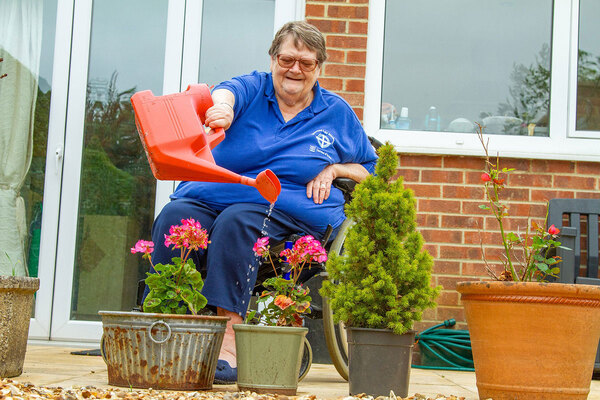


The housing crisis for older people is already severe and desperate. The non-profit Centre for Ageing Better and the Fabian Society thinktank have worked together to set out the challenge and some solutions.
In our new report, Forward Planning: A Vision of Ageing at Home, we found that 1.9 million older people who own their homes live in properties that would fail the Decent Homes Standard. While poor-quality rented accommodation matters, over 80% of all older people who live in homes that are unsafe, cold, or in a general state of disrepair are owner-occupiers.
“The number of people aged 55 and over in England is expected to grow by five million over the next 25 years, reaching 23 million in 2050”
Without action, this crisis will only deepen over the coming decades as the population ages. The number of people aged 55 and over in England is expected to grow by five million over the next 25 years, reaching 23 million in 2050. And the places with the largest older population in the future currently have the largest proportion of non-decent properties. We risk poorer health outcomes, more accidents and injuries, further pressure on health and social care, and more unnecessary deaths.
If we want to ensure that everyone has access to a property in which they can age well, the housing strategy and wider housing policy need to be specific in addressing key challenges facing the sector.
First, it needs to recognise the importance of mainstream housing for older people. While specialist older people’s housing has a role to play, over 90% of older people live in mainstream housing – and that is unlikely to change over the 10 years of the long-term housing strategy.
Second, the government needs to tackle the enormous shortfall in accessible homes. Older people are particularly unable to live in an accessible home. Fewer than 10% of homes owned by older people are visitable by a disabled person, compared with 15% of homes owned by younger people. Millions of people live in homes that compromise their independence and put their safety at risk. With an ageing population, this number will only grow unless there is action to drive up building rates of accessible homes.
The government should introduce the accessible and adaptable standard for all new homes. This was first announced in July 2022, and it should be implemented now. Adding 1.5 million new homes to the housing stock over the next few years could make a significant dent in current shortfalls if the vast majority are built to high accessibility standards.
“Fewer than 10% of homes owned by older people are visitable by a disabled person, compared with 15% of homes owned by younger people”
Third, the housing strategy needs to address the issue of existing stock. As we build 1.5 million new homes, we must remember that we cannot build our way out of this housing-quality crisis. Previous Centre for Ageing Better research found around 40% of all homeowners want to improve their home but would not be able to deliver changes or are unsure if they could. The cost of home improvements and the uncertainty caused by a lack of trustworthy advice and support leave millions of older people living in poor-quality, even dangerous, housing.
Indeed, older people are more likely to live in poor-quality housing than their younger counterparts – despite the health implications potentially being much more serious.
The government should support a comprehensive network of one-stop home-improvement hubs to help millions more older people live in homes that allow them to age well without enduring hardship and ill-health. They can be modelled on the Good Home Hubs, an idea pioneered by the Centre for Ageing Better of local one-stop shops for support on housing improvements, to ensure people have access to trusted practical housing repair and adaptation services, including independent information and advice.
There are enormous benefits to ensuring that people can live in their own homes for as long as possible by improving the quality and accessibility of homes.
We never know at what age our circumstances and our accessibility needs might change. For all our sakes, we should make sure the housing strategy delivers better-quality, more-accessible homes.
Millie Brown, deputy director for homes, Centre for Ageing Better, and Ben Cooper, head of the Fabian Housing Centre, Fabian Society
Sign up to Inside Housing’s Asset Management newsletter
Inside Housing’s Asset Management newsletter brings you comprehensive in-depth news, comment, insight and analysis of how affordable housing providers are managing their homes
Click here to register and receive the Asset Management newsletter straight to your inbox.
And subscribe to Inside Housing by clicking here.
Already have an account? Click here to manage your newsletters.
Related stories