You are viewing 1 of your 1 free articles
How a council is transforming its homelessness approach by focusing on mental health
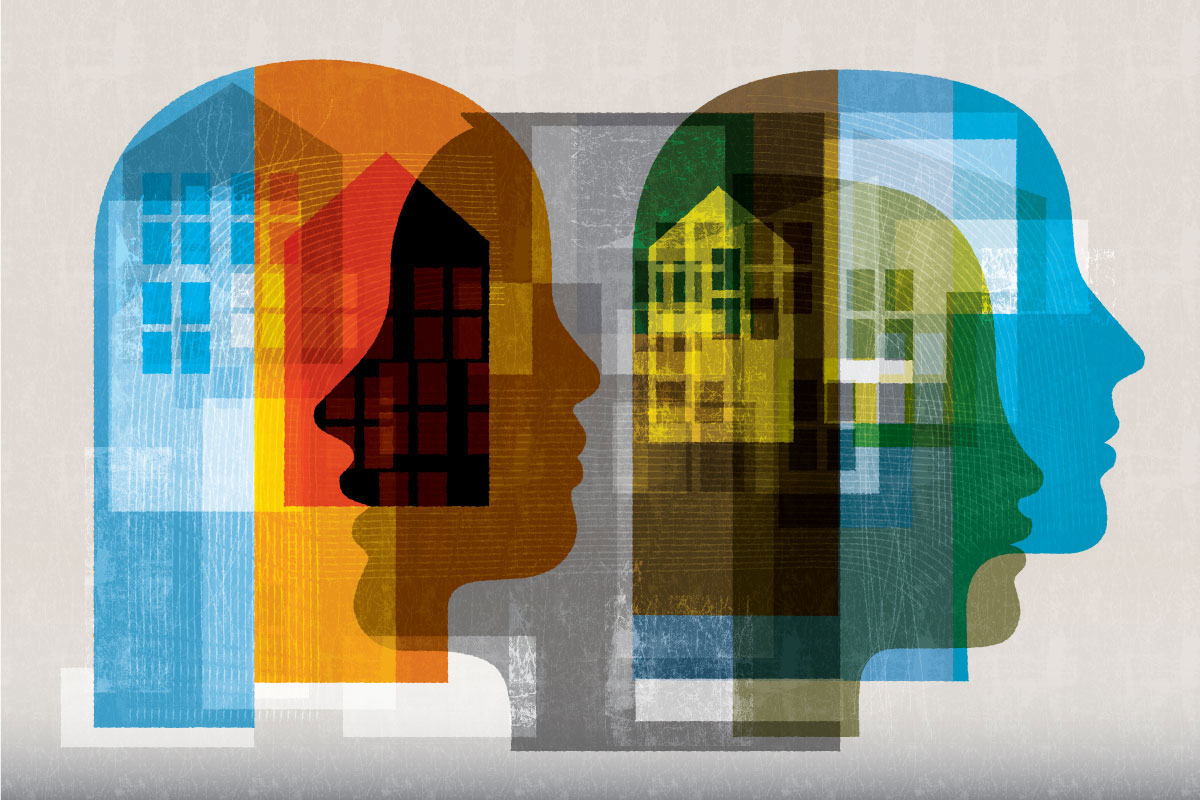
When New Forest District Council had to restructure its homelessness provision because of the Homelessness Reduction Act, it took a completely new approach to the mental health aspects of being unhoused. Keith Cooper reports. Illustration by Paul Wearing


 How a council is transforming its homelessness approach by focusing on mental health – @KeithCooper1973 reports for @insidehousing #UKhousingWhen @newforestdc had to restructure its homelessness provision because of the Homelessness Reduction Act, it took a completely new approach to the mental health aspects of being unhoused. @KeithCooper1973 reports
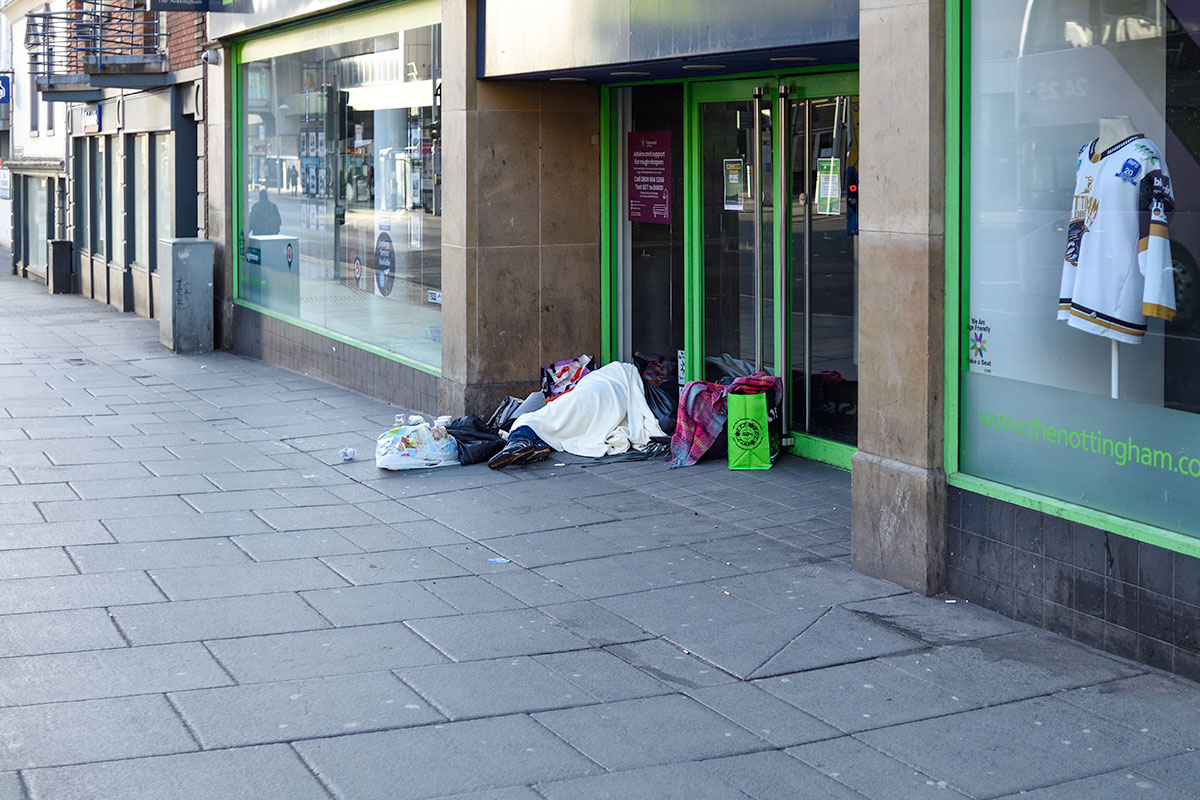
Ufuk Karaman was living in a camper van, parked outside a police station, when he met the outreach worker from New Forest District Council outside its town hall in Lymington on New Year’s Eve. He had been sleeping rough, first in a car, then this camper van, for months before he had agreed to the meeting.
“I felt really low and unworthy. I didn’t have any support around me. At the same time, I was still going to work and trying to keep my head up,” he says. “I was crying a lot and feeling suicidal.”
“At that time, I was very scared to be around people, of going into a shared house”
Within a week of that meeting, he had his own room in a guest house with an en-suite bathroom and lockable door. “At that time, I was very scared to be around people, of going into a shared house,” he says. “But then I felt worthy. There were people out there who wanted to help me. I started to think positively again.”
In June, he moved into a flat – temporary accommodation while he searches for a more permanent home.
Such a positive outcome was unlikely until recently. Until 2020, New Forest District Council did not have a single support worker in its homelessness team. There would have been no one to meet a scared, depressed man, help him to take that first step into a guest house, and keep checking on him as he got himself “back together again”, as Mr Karaman puts it.
Now the authority has eight support staff and has just recruited a mental health homelessness practitioner, a nurse, from Southern Health, an NHS trust with which it works.
Read more


New approach to homelessness
So what changed? How is New Forest helping people with mental ill health with their housing?
Like many authorities, New Forest had to alter its whole approach to homelessness in 2018, when the Homelessness Reduction Act introduced duties to prevent and relieve it. Housing options service manager Richard Knott, then newly arrived, says the council “ripped up” its previous approach. As well as recruiting support workers, it looked at what housing it had.
“I believe if you give someone a positive, clean, new, modern environment, that’s half the battle”
“We identified that we had very little suitable emergency accommodation for people with more complex needs,” Mr Knott says. “That wasn’t helping the situation, because it meant people had to stay in hotels and other unsatisfactory accommodation.
“Even when they came into our own accommodation, it was of poor quality,” he adds. “It was not conducive to helping people resolve their issues.”
Many New Forest District Council homes – including its 5,000 social homes, and the temporary and emergency accommodation it lets from private landlords – are in five main urban areas which encircle the New Forest National Park like a doughnut. It rents, by the night, accommodation from private providers above shops, in guest houses and in houses in multiple occupation, but they are often far from support services.
“We want to move away from this,” says Mr Knott.
To do so, it is refurbishing and developing its own temporary accommodation in more locations. “I believe if you give someone a positive, clean, new, modern environment, that’s half the battle,” says Mr Knott. “That’s one less thing for them to focus on and worry about. They can then focus more on themselves.”
The people the council houses are offered varying degrees of support.
One of its refurbished buildings, part-funded by the government’s Next Steps Accommodation Programme, has an ‘internal pathway’ and on-site staff. Rough sleepers start on the ground floor, in en-suite rooms or shared accommodation, before trying to live more independently in self-contained flats on the first floor. People in properties without on-site staff are visited by outreach workers and the mental health homelessness practitioner.
New Forest in numbers
1,800
Average number of people presenting as homeless each year
45%
Proportion of presentations who are single
200
Single people accommodated under Everyone In
40
Number with serious mental health issues
Source: New Forest District Council
Public services partnerships
Equally crucial to sorting its housing out is the authority’s developing relationship with Southern Health. Like many relationships between hard-pressed public services, this has grown, over years, from uneasy beginnings and misunderstandings into one of respect.
“We may not be qualified mental health professionals, but we do see changes in behaviour and people’s ability to cope”
“It started with an argument,” recalls Megan Fletcher, the council’s senior homelessness and housing advice officer, who oversees the support team. “I had this very complicated client with every support need you could list. From my perspective, she was very unwell and needed mental health assistance. What I saw was mental health services not helping her. Without mental health help, her housing was insecure. It was frustrating.”
Since that one “beneficial argument”, the council and Southern Health have moved closer together and better understand how the other one works.
“One of the biggest things I have learned is that the kind of crisis they see is very different from those that we see,” says Ms Fletcher. “What that has taught me is that we’ve been very quick to be concerned about someone. Actually, they don’t always need the mental health team. We can put things in place instead.”
Like much of the NHS, Southern Health’s mental health staff are extremely busy, says Raff Davis, its head of nursing. “The pressure is quite significant. Over the past few years, we have been dealing with much more complex and risky individuals. Part of the challenge in community mental health is around this unscheduled work – what we call crisis intervention and short-notice assessments.”
Emma’s story
Emma Jones’* mental health deteriorated weeks after she was found emergency accommodation by New Forest District Council in June. Her own appeal to the NHS for help was rejected, its waiting list full, as they too commonly are.
If the previous experience of this teenager was anything to go by, her relationship with her landlord was destined to break down again. Two years earlier, in 2019, she left her council home after the council reported it “continually in an unpleasant and dirty condition”.
She would have found herself at the doors of an accident and emergency department again, as she did a year after another overdose, before her admission to a psychiatric ward launched another search for suitably supportive housing to which she could be discharged safely.
This time, however, Ms Jones escaped those revolving doors. After observing her, the support team convinced the NHS to help Ms Jones. She was offered appointments and talking therapy. Once her mental health improved, the council offered lessons in life skills.
She now has a flat in a council block, has enrolled onto an access course, and aims to apply to university next year.
*Not her real name
Breaking the cycle
From this better understanding, trust has come. Hard-pressed nurses now return calls from council officers, more confident they’re flagging a genuine mental health crisis. The council’s frontline support and homelessness workers feel “listened to and seen as professionals”, says Mr Knott. “We may not be qualified mental health professionals, but we do see changes in behaviour and people’s ability to cope.”
Joint arrangements between hospitals and landlords are not new, but the need for more has been highlighted by Everyone In, the drive to house rough sleepers during the pandemic.
“It has thrown a stark light on when people’s mental health issues have contributed to tenancy problems,” says Sarah Davis, senior policy and practice officer at the Chartered Institute of Housing. “You are now seeing NHS trusts and public health thinking a bit more about how they are working with housing.”
Suddenly having to house scores of people, many with mental health and other difficulties, made a difference in the New Forest (see box: New Forest in numbers). These were no longer rough sleepers, but people it housed and had to keep housed. The trust found that patients who previously cycled between homelessness and admission were now accommodated under Everyone In.
Part of the council’s response was the recruitment of a mental health homelessness practitioner, a post funded for one year by the government’s Rough Sleeping Initiative. It will be an interesting test of how even stronger ties between housing and health might benefit both.
Southern Health hopes the new council practitioner will ease pressure on its own staff, bed spaces and finances; the council hopes that it will ease costs, and pressures on its staff when accommodation placements fail.
Faster access to help can stop people reaching a crisis point which risks unplanned interventions, admission to a psychiatric ward, and even the loss of their home. The cycle of admission, discharge to accommodation, crisis, admission again, is well-known within the council and trust (see box: Emma’s story). It is one they are both keen to break.
Jon Pritchard, associate director of housing at Southern Health who helped co-ordinate the closer working arrangement, is hopeful the practitioner post will help break the cycle. “We want to work with people much earlier, prevent things reaching crisis point to the level at which they need admission to a psychiatric ward, then need temporary accommodation, and we start that cycle again.”
The next year will tell whether this novel arrangement works out. New Forest District Council expects to apply for more government funding. But at some point, it will have to decide, with Southern Health, whether a mental health nurse in a homelessness team is worth as much to them as it is to the people it so obviously helps.
Sign up for our care and support bulletin
Already have an account? Click here to manage your newsletters
Related stories