You are viewing 1 of your 1 free articles
From Dagenham to Hong Kong: should we be more worried about scaffolding fires in occupied buildings?
In the aftermath of the deadly Wang Fuk fire in Hong Kong, focus turned to bamboo scaffolding. But, as Peter Apps reports, scaffolding in the UK can pose a fire risk as well


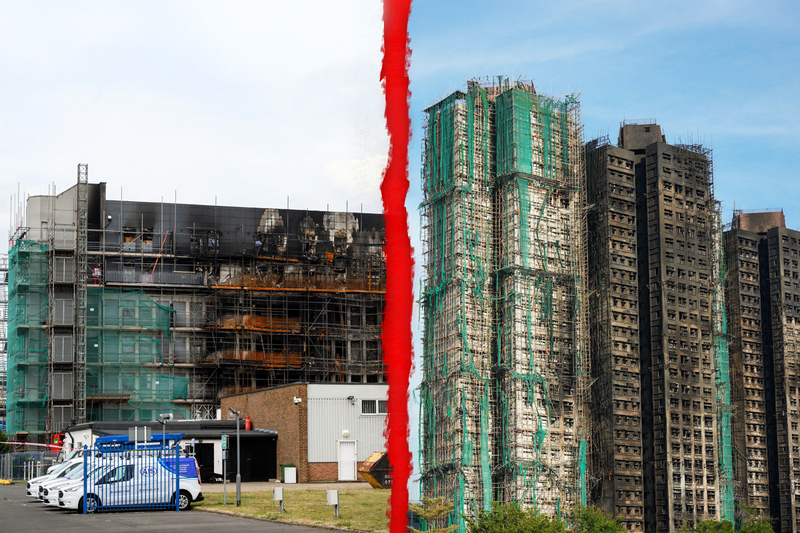 In the aftermath of the deadly Wang Fuk fire in Hong Kong, focus turned to bamboo scaffolding. But, as Peter Apps reports, scaffolding in the UK can pose a fire risk as well #UKhousing
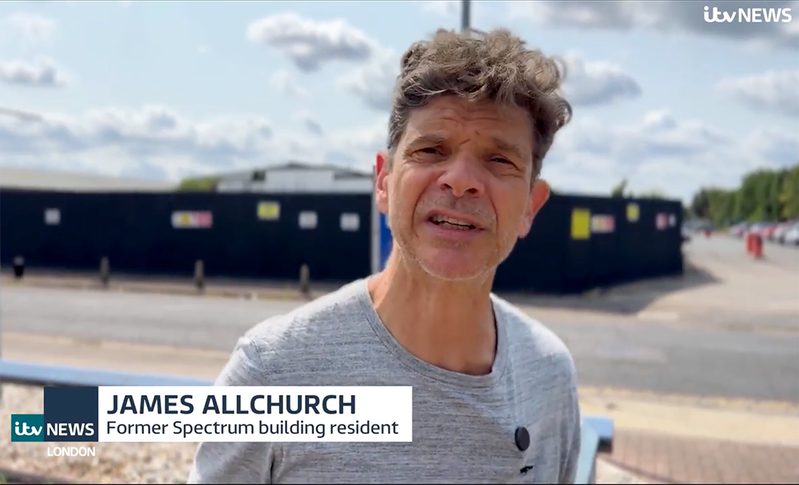
James Allchurch woke up suddenly at about 2.30am with a strange feeling of danger. He wasn’t sure what had jerked him out of his sleep, but once he was awake, he heard an unusual noise.
“If you’ve ever been in a marina, sometimes when the wind blows, the ropes knock against the masts, and it makes quite a distinctive sound. That’s the only way I can describe it,” he told Inside Housing. “When I looked up at the ceiling, I could see blue swirling lights.”
He got up and looked out of the window in the lounge. “I could see embers floating down past the window, which is the most weird thing,” he says. “And then I opened the window and this really strong smell, like an acrid, burning plastic smell, just hit me.”
Read more
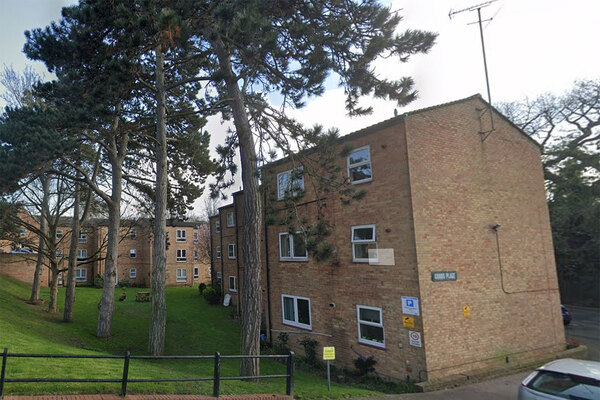
He woke his partner, and told her that he thought there might be a fire in the building. When they opened the front door to their flat, they found a corridor full of smoke. “At that point, we just decided to get out,” he says. “We didn’t grab a phone, I wasn’t wearing any shoes or socks, we just ran out.”
When they got out of the fire exit, firefighters had to help them climb over a padlocked gate with a ladder. There were riot police marching down the street and rows of fire engines.
James had lived in the Spectrum building in Dagenham, east London, for nine years at this point. “The way the building was being managed, it felt like it was falling into increasing disrepair,” he says.
“The managing agent wasn’t very good, and it felt like people didn’t really care about it.” Neither the managing agent, Block Management UK, or administrators for the freeholder, Arinium, responded to a request for comment.
He and his neighbours were just coming to the end of a long saga of cladding remediation. A contractor had erected a scaffold around the building and they’d recently been told that dangerous ‘high pressure laminate’ panels on the upper floors had been entirely removed. Aside from some ‘making good’ work and the removal of the scaffold, the works were almost complete.
But the fire was huge. It spread right up one facade of the building – a converted office block – and ripped through the roof. The building was so badly damaged that it was demolished in December last year.
So what went wrong? Inside Housing has seen the London Fire Brigade’s (LFB) investigation report which, while having been previously obtained by other news outlets, has not been made public. The report makes it clear that the fuel for the fire spreading up the exterior wall of the building was scaffolding.
At 1.27am, a burning item had fallen onto the roof of the play area of a nursery outside the building, followed by two more over a period of 38 minutes. Investigators have not been able to determine what these items were or where they came from.
The items eventually ignited a wheelie bin filled with cardboard, a timber fence and the floor of the play area, which was made from the rubber mulch of recycled car tyres. Fire spread onto a timber roofing area, where it was blown by the wind towards the building’s scaffold, which featured timber boards and a “fire retardant debris netting”, which was bone dry after weeks of hot weather.
The LFB report said: “While the density of the boards would normally make them difficult to ignite, the intensity of the fire within the nursery play area was likely sufficient to have affected the scaffold boards. As the scaffold boards became involved, combined with the wind pushing the fire against the building, the scaffolding assisted the external spread up the building.”
When Spectrum was converted from an office building into flats, two additional storeys were added, making it a six-storey building. These top two floors were timber framed, and the roof was covered in timber decking.
“When these two floors became fully involved, the fire spread was both more rapid and intense due to the... combustibility of the building materials used,” the report says. The fire penetrated this structure and was obscured by an array of solar panels on the roof, making it difficult to extinguish. The roof was almost entirely destroyed.
While everyone made it out, for some people it was touch and go: officers had to rescue some residents with smoke hoods. It was the LFB’s most challenging incident since the Grenfell Tower fire.
Inside Housing has also seen a series of risk assessments of the building, dating back to 2018, as well as other documents. These show some concerns about missing door closers, holes cut to allow cables through fire walls and gaps around flat entrance doors.
An EWS1 assessment shows there were polystyrene panels beneath windows which were “both combustible and flammable” and would “produc[e] droplets of flaming molten polymer” if ignited. These panels are understood not to have been removed from the facade during the remediation, so would have still been present when the fire broke out.
The documents also show that the London Fire Brigade had served an enforcement notice on the building in April 2023, raising concerns about the maintenance of fire doors, fire stopping and confusion over the fire evacuation strategy. This confusion is highlighted in the risk assessments, some of which say the building was a ‘full evacuation’ property, and others say it had a ‘stay put’ strategy.
Worryingly, the building was fitted with ‘break glass’ fire alarm switches in the communal areas – but these were apparently not connected to any actual alarm system. “There are no fire alarm sounders interfaced with the fire alarm call points and therefore the call points achieve no obvious purpose,” a risk assessment from 2023 says.
It is not clear if the issues identified in these risk assessments and enforcement notices had been resolved prior to the fire, and they are not referenced in the LFB report as having contributed to its spread.
The Wang Fuk fire
That was London, in August 2024. The story of the devastating disaster which struck Hong Kong last month is eerily similar – although the outcome was, of course, far worse.
The Wang Fuk complex in Hong Kong, where the disaster struck, was a form of affordable housing built in the 1980s – a discounted homeownership model provided by the province’s housing authority.
The eight tower blocks provided almost 2,000 homes to a little over 4,600 people. Local media describes the residents as “ordinary labourers such as drivers, security guards and restaurant staff”. “Most of the residents in [Wang Fuk] are working-class people,” one resident, who works as a packer at a logistics company, told Singaporean newspaper The Straits Times.
Many residents moved in when the towers were first built in the 1980s, and have aged with the building, steadily paying off their mortgages with their low wages. But like many buildings around Hong Kong, the complex was ageing and needed work. There were major leaks, especially before and after typhoons. The air conditioning unit dripped water. The single-glazed window panes occasionally fell out.
Since 2012, the city’s labour department has required buildings older than 30 years to undergo mandatory inspections, and then carry out any specified repairs. The Wang Fuk buildings underwent such an inspection in 2019, with a major repairs programme approved in 2024. This would be paid for by residents – with fees up to $HK180,000 (£17,000) each, billed in six instalments. After working their whole lives to pay off their mortgages, residents suddenly found themselves back in housing debt.
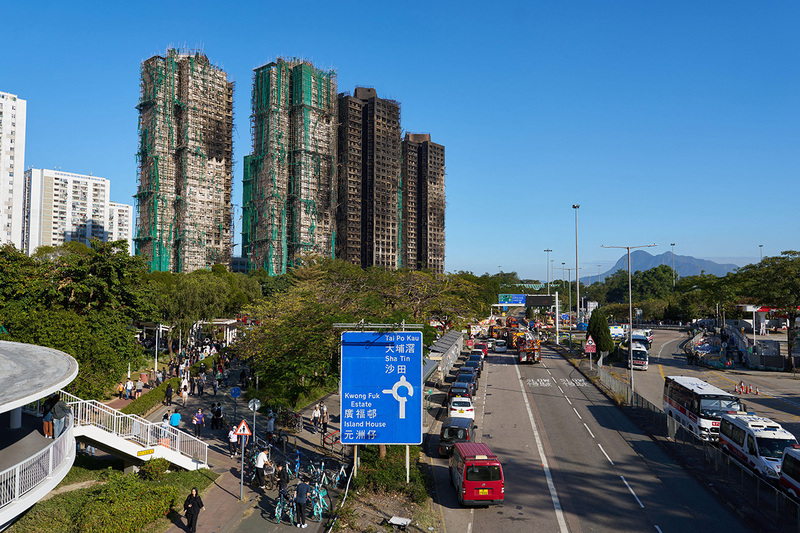
Residents immediately raised concerns about the cost, quality and safety of the work, which began in July 2024. The contractor erected the scaffolding and began blocking up windows with styrofoam boards in order to protect them during the job. This plunged flats and lobbies into total darkness, and residents were immediately worried that these plastic boards presented a fire risk.
According to Bloomberg, a group of residents even ran an experiment in September 2024, detaching one of the boards and lighting it with a cigarette lighter in the green space under the tower. It burst rapidly into flames. An analysis of residents’ emails by The New York Times showed that they had raised fire safety concerns about the wrapping on the scaffolding as well as the foam panels, even engaging a fire engineer to help bring the concerns to the city’s authority. Visits by inspectors resulted in fines for health and safety breaches, with the last coming just days before the fire, but no action was taken to remove the combustible materials.
The companies involved have not responded to any attempts to contact them by global media.
At 2.51pm in the afternoon of 26 November, residents heard explosions near the base of the scaffolding. Fire then rapidly spread up the wrap. The city authority has since told Bloomberg that it believes the scaffolding wrap was replaced with a cheaper, less fire-safe version, after the original was damaged by a typhoon in July. It claims that the more expensive, fire-retardant wrap was used around the bottom of the scaffolding in a deliberate attempt to mislead inspectors. Several arrests have been made and an inquiry has been announced.
The bamboo scaffolding structure, with its open gaps, created the perfect conditions for a chimney effect, and fire raced up the outside of the building. The styrofoam panels also burst into flame, taking fire directly into the flats. The building’s fire alarm system had been deactivated due to the refurbishment and offered no warning.
Smoke spread rapidly into the landings and stairwells. More than 40% of the building population was older than 65, and many will have struggled to evacuate quickly. Tragically, fire spread rapidly from one block to another, with seven of the eight towers engulfed by the flames. Fires burned for more than 48 hours.
So far, 160 deaths have been confirmed.
The hidden dangers of scaffolding
So should these two fires set alarm bells ringing about the safety of scaffolding systems on occupied buildings?
This is a desperately important question for England right now. There are 759 buildings which are undergoing major fire safety remediation work, with a further 2,865 with identified issues where work is yet to start. Many of these buildings have a multitude of issues, which will take years to fix, and will therefore spend many months encased in scaffolding.
These buildings are also particularly vulnerable to dangerous fires – combustible materials are exposed during the works, sparks from welding or grinding bring new ignition risks and the scaffold adds a new dimension to the external wall.
“Buildings under construction or under renovation are very, very often more vulnerable to fire,” says Professor Guillermo Rein, a professor of fire science at Imperial College London’s Department of Mechanical Engineering. “We have done some work analysing fires in buildings under renovation, and we have found that the renovation works themselves can breach some of the layers of protection.”
“During the remediation, you are exposing the combustible materials, and you are exposing the edges of the material, which is often the point at which [it is] most vulnerable,” adds Jonathan Sakula, director of Sakula Consulting and the facades expert who advised the Grenfell Tower Inquiry.
Despite this, fire safety during the remediation phase is not always properly considered, says Neil Gibbins, fire lead at Collaborative Reporting for Safer Structures UK (CROSS-UK), an anonymous reporting service for the construction sector.
“We’ve been made aware of three fires that have happened during the remediation phase of the building,” he says. “And that’s quite concerning, because it is the most vulnerable time for the building, when systems aren’t working as normal.”
Because of this, scaffolding ought to be fire safe. But it isn’t always. While some recladding jobs use scaffolding structures made entirely out of steel or aluminium, many others utilise classic wooden boards, like those which propagated the fire at the Spectrum building.
And while some scaffolding wraps are woven out of mineral materials, most products on the market are plastic, treated with fire-retardant chemicals to improve their fire performance. Despite being chemically improved, these materials are still combustible. Some widely available products include low-density polyethylene – the same plastic which formed the core of the cladding on Grenfell Tower.
“The thing that worries me is the scale effect. The material may have gained a [low combustibility rating] in the laboratory, but we do those tests with very small materials. Fire spread expresses itself at scale. When you have a building of 100m, you can have flame spread even with materials of [this] rating, because the situation is so different from the circumstances in the laboratory,” Mr Rein says.
“I’ve come across many refurbishment sites where they use this kind of green mesh, which is a woven plastic,” says Phil Murphy, a former firefighter and consultant on fire safety in high-rise residential buildings. “When you see that kind of thing up on a block that’s having remediation work done, it makes my stomach turn.”
We do not, in fact, have clear guidance covering the fire risk posed by scaffolding. Most scaffolding guidance focuses on workplace safety – preventing the risk of falls or collapse – but overlooks the fire risk to an occupied building.
In 2023, an anonymous reporter submitted a warning to CROSS-UK about the use of “scaffolding formed of timber boards with plastic wrapping which could present a medium for fire spread” for work to occupied residential buildings. The reporter feared that the wrap would “trap smoke within the scaffold structure and spread it to other parts of the building” unless they were deliberately ventilated. They warned that building owners were relying on fire risk assessments carried out by the scaffolding contractors themselves, but these were “often generic, unsuitable and insufficient”.
Mr Gibbins says risk assessments of the scaffolding should be carried out by an appropriately qualified fire expert, not the scaffolding contractor. “The fire risk assessment needs to be reviewed and constantly tested to ensure that the safety of the residents has been considered, whatever is happening on the outside of the building,” he says. “The scaffolding companies might not be best equipped to generate fire risk assessments; they might genuinely fail to understand the consequences.”
For Professor Rein, the situation is even more straightforward: once erected, the scaffolding is a part of the external wall, and it shouldn’t include materials which wouldn’t be allowed on a completed building. “A scaffolding is a facade, while it is in place,” he says. “The rules do not change just because you have a scaffolding system.
“If a facade is not meant to be combustible, then the scaffold must borrow those rules. To say it is only temporary so it doesn’t matter would be a farce.”
This principle is evidently not being followed in the real world. On a short bike ride around London, Inside Housing saw multiple scaffolds on buildings undergoing remediation work – some of them clearly above 18 metres in height – where timber boards and plastic netting were in use.
This does not mean we have as big a risk as Hong Kong. Timber boards are not bamboo, and the wraps used in the UK are likely treated with fire retardant and far less combustible than those on Wang Fuk. But where scaffolding systems are combustible, this risk needs to be taken into account.
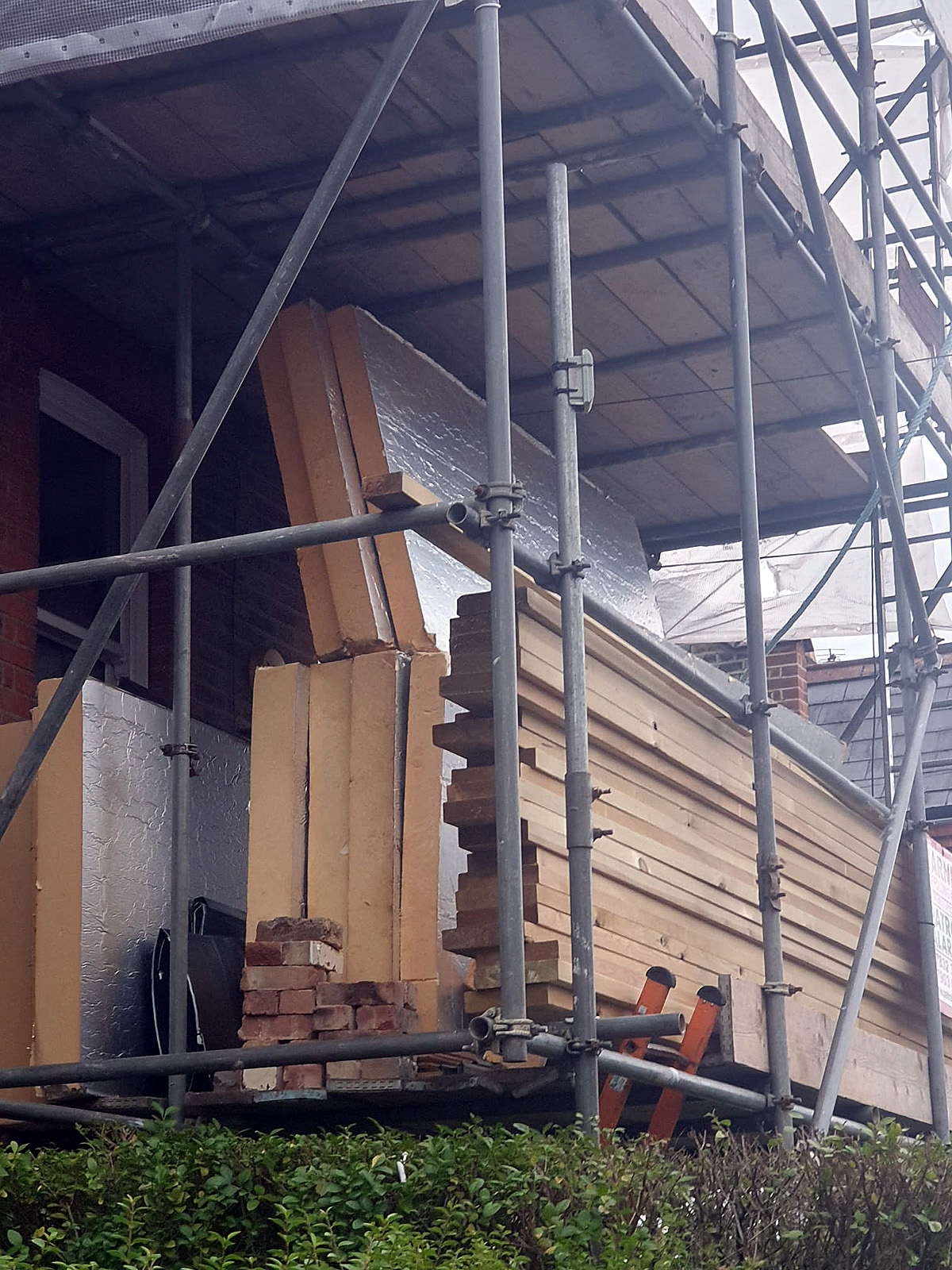
“Timber boards are probably not as dangerous as bamboo. They might even slow down the vertical growth of the fire, because they wouldn’t allow the air to rush up like they did between the lattice bamboo structure,” says Mr Sakula. “But timber is undoubtedly combustible, so it is additional fuel for the fire, yes.”
There also may be lessons worth taking from the contribution of the bamboo to the fire in Hong Kong. This has become an awkward question, with some commentators from Hong Kong robustly defending bamboo structures against criticism, noting that it was the styrofoam boards and plastic wrap which seemed to burn more fiercely.
But the experts Inside Housing has spoken to refute this interpretation. Instead, they say that while the plastic may have ignited first and burned more rapidly, the bamboo will have provided a slow-release fuel which continued to propagate the fire. The bamboo may also have contributed to the spread of fire from one building to another.
“The fire jumped from one high rise to other high rises and I don’t think this has ever happened before,” says Professor Rein. “It’s such a massive breach of compartmentation, I cannot think of a bigger one in the history of fire engineering.”
He believes that firebrands – airborne embers – may have helped the fire spread in this way. “Whenever you are dealing with biomass materials [natural products such as wood and bamboo], you will get firebrands,” he says. “Gulam, timber, whatever it is, if a biomass product burns, you will get firebrands.”
This raises another question: space separation. Fire should not spread from one tall building to another. Regulatory guidance in the UK is not straightforward on this point. We do not have a minimum distance between buildings, but instead engineering principles which take into account compartment size and the amount of ‘unprotected area’ on a building’s facade.
Professor Rein feels there is space for these to be updated. “I think there’s concern, because these calculations were written a long time ago, and they only assume one form of spread. But there is plenty of new research, plenty of new real-world information to rewrite the rules,” he says.
With regard to Hong Kong, there is also the question of what happened after the fire broke out. The alarms in Hong Kong were disconnected, compartmentation was lost rapidly and a population of older residents, many of whom had mobility issues, were faced with the daunting or impossible task of escaping through smoke-filled landings and stairwells. There are reports in the local media of residents staying with their older relatives instead of fleeing, or desperately trying to help them escape – a horrifying echo of many of the deaths at Grenfell Tower.
For Dr Michael Kinsey, an associate director at Ashton Fire and an expert in human behaviour in fire and evacuation dynamics, wider use of evacuation lifts is crucial for supporting the evacuation of people that cannot use the stairs – which are rarely installed in older buildings, because there is often no explicit requirement to improve existing fire safety features, only to maintain them.
“There’s this common concept of not making things any worse in existing buildings, which I think is a woefully inadequate regulatory benchmark,” he says. “Because what this can effectively result in is not providing means of escape for everybody.”
Learning from the past
James, from the Spectrum building, has now moved out of London to Margate, a seaside town in Kent. “We were probably getting a bit sick of being in London anyway, but the fire was a really strong catalyst in moving away,” he says.
He praises Barking and Dagenham Council for the support it offered residents since the fire, but is critical of the freeholder, Arinium Ltd (which recently went into administration) and the managing agent, Block Management UK. “They would say they fulfilled their legal obligations,” he says. “But the response has just been, ‘We’re only responsible for the communal areas,’ and they’ve left us on our own really.”
Tenants who rented privately in the building endured a period of disruption, being moved from hotel to hotel, while leaseholders are still paying the mortgages on their now-demolished homes. The freeholder is obliged to rebuild the block, but it is not clear what will happen now that it has entered administration. Meanwhile, the Building Safety Regulator and the London Fire Brigade continue to investigate any potential breaches of fire safety laws.
There are other lessons from Spectrum unrelated to scaffolding: the nursery was part of the same building, on the ground floor, but was absent from most of the risk assessments, a major concern for some fire risk assessors tasked with assessing multi-use buildings.
The polystyrene window panels – present in both Dagenham and Hong Kong, albeit not used to block up windows in Dagenham – are also worthy of consideration. These are, sadly, a common feature of pre-Grenfell buildings in the UK and have been linked to other fires. The timber frame and solar panels on the rooftop extension are also worthy of wider consideration, given their use on other buildings and the rapid, dangerous fire spread through them.
But the movement of the fire up from the nursery to the roof came from the scaffolding. And after what we’ve just witnessed in Hong Kong, it may be time to take this risk more seriously. Dangerous buildings can be at their most dangerous during the remediation phase. And those who manage them need to do what is necessary to keep them safe.
Sign up to Inside Housing’s Building and Fire Safety newsletter
Sign up to Inside Housing’s fortnightly Building and Fire Safety newsletter, now including a monthly update on building safety from Inside Housing’s contributing editor Peter Apps.
Already have an account? Click here to manage your newsletters.
Related stories