You are viewing 1 of your 1 free articles
Almost half of social home builds in Northern Ireland could be scrapped under new rates
Social housing schemes in Northern Ireland have been pushed to “the brink of collapse” by a recent government grant cut which could render nearly half of houses unviable, research has found.


 Social housing schemes in Northern Ireland have been pushed to “the brink of collapse” by a recent government grant cut which could render nearly half of houses unviable, research has found #UKhousing
The Northern Ireland Federation of Housing Associations (NIFHA) has analysed the impact of the grant cut, announced in October by minister for communities Gordon Lyons, that will reduce the rates for social housing new build grants from 54% to 46%.
The new rates will come into effect on 1 December and last until the end of 2026-7.
In March, the Northern Ireland Executive set a target to begin 5,850 new social homes by 2027 to address the 50,000 households currently on the country’s housing waiting list, almost a quarter of whom are in Belfast.
Read more
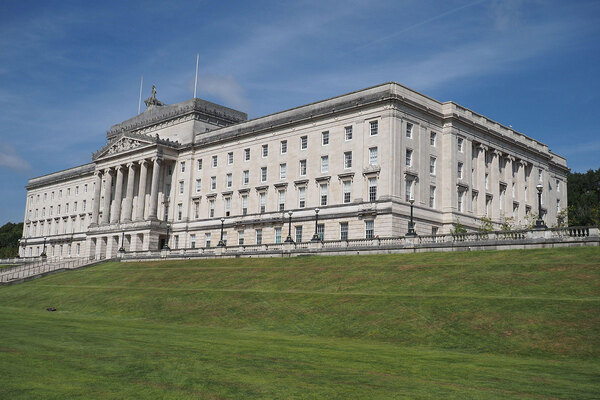
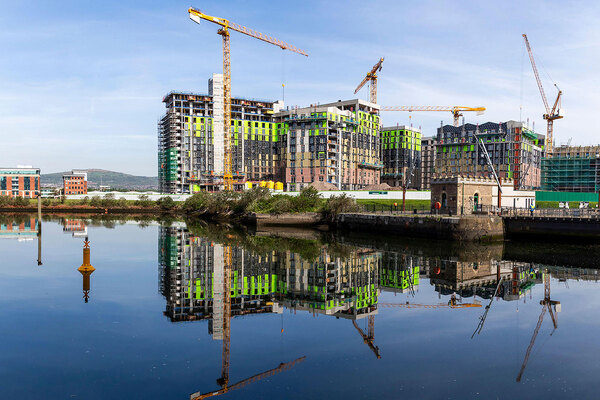

But Seamus Leheny, NIFHA chief executive, said the grant change “has resulted in us facing a collapse in social housing build in some of the areas of highest housing need”.
The NIFHA’s analysis warns the cuts could mean the scrapping of almost half of Northern Ireland’s planned social homes, slashing the number of viable projects from 2,092 to 1,100, a fall of 47%.
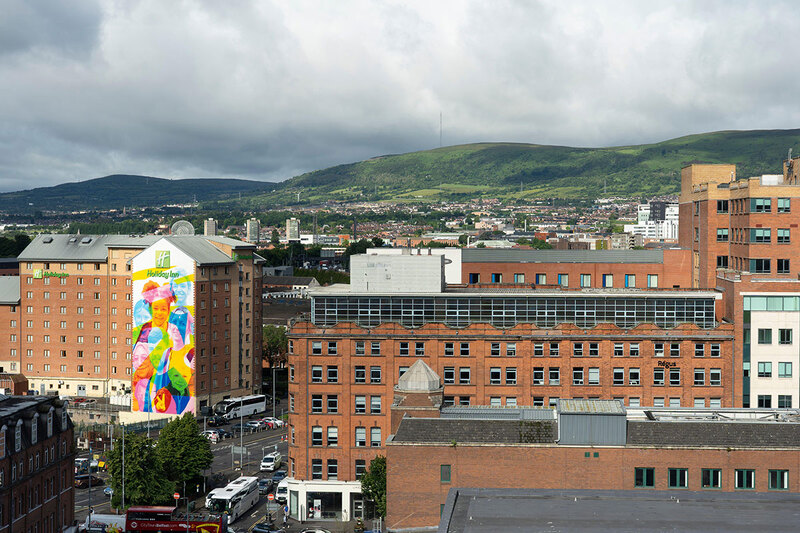
In Belfast, where over 13,000 households are currently on the social housing waiting list, the new policy threatens two-thirds of new social homes, dropping the number of viable schemes from 1,026 to just 373.
In Lisburn and Castlereagh, where there are 2,482 households on the housing registry, the amount could fall to zero.
A spokesperson from the Department for Communities said: “The purpose of reviewing the funding allocation to housing associations was to secure the maximum possible number of new social homes from the available budget.”
She claimed that the NIFHA’s analysis had not yet been shared with the department, but added: “The minister remains committed to achieving the targets in the Executive’s Housing Supply Strategy, however changes must be made. We must achieve more with less.”
But Mr Leheny warned: “The fundamental flaw in the decision to reduce the level of grant funding is the assumption that housing associations can easily fill the gap with additional borrowing, but the facts don’t support that.
“What the analysis shows is that housing associations will need to raise at least £23m more in private finance in a short period just to stand still – and that brings tens of millions more in interest costs over the lifetime of the loan.”
Speaking in the Northern Ireland Assembly on 18 November, Mr Lyons explained the change was necessary due to growing construction costs, “inflationary increases, new building regulations [and] NIE [Northern Ireland Electricity] Charges, among other things.”
According to the NIFHA’s predictions, only one council, Causeway Coast and Glens, would benefit from the new rates, where a net 52 new homes could be built.
Five other councils – Derry and Strabane, Fermanagh and Omagh; Mid and East Antrim, Mid Ulster, and Newry, Mourne and Down – would be unaffected by the changes.
Sign up to Inside Housing’s Northern Ireland newsletter
Sign up to Inside Housing’s Northern Ireland newsletter, a fortnightly round-up of all the key news and insight affecting the Northern Irish affordable housing sector.
Click here to register and receive the Northern Ireland newsletter straight to your inbox.
And subscribe to Inside Housing by clicking here.
Already have an account? Click here to manage your newsletters.
Related stories