You are viewing 1 of your 1 free articles

2017: the year of Grenfell Tower
If the disaster on 14 June does not change the way that social housing is perceived, something is seriously wrong in this country, writes Colin Wiles


 Grenfell must change the way social housing is perceived, says @colinwiles #ukhousingGrenfell was “the defining housing event of the past few decades” says @colinwiles #ukhousing
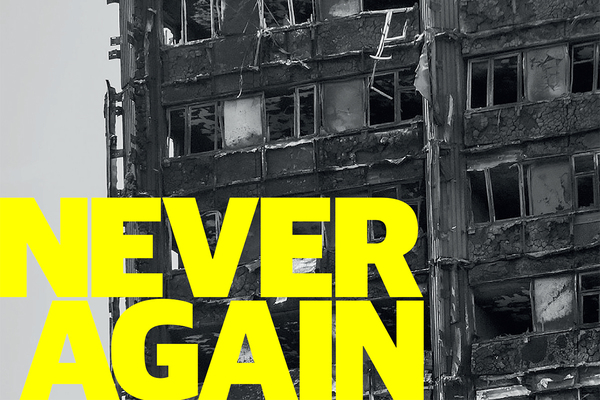
The Grenfell Tower catastrophe was the defining event of 2017.
In fact, it was the defining housing event of the past few decades, and Inside Housing has been right to devote so much coverage to this issue, and the wider issue of resident safety.
In June, I wrote a blog about the disaster, pointing out that the Rebuilding of London Act of 1667 (a year after the Great Fire) had required all new buildings to be built of brick and stone.
The act stated: “No man whatsoever shall presume to erect any house or building great or small, but of brick or stone… the building with brick is not only more comely and durable but also more safe against future perils of fire.”
Over the next four decades, further London Building Acts required parapets to protect roof timbers and for windows to be recessed to prevent the spread of fire across brick and stone walls.
Read more



The Stuarts knew that brick and stone do not burn and that by protecting timbers it would help to slow the spread of fire, allowing fires to be contained.
The principle of containment continues to the present day – 30-minute fire doors, and one-hour containment of fire within high-rise dwellings to protect adjoining residents.
“The Stuarts knew that brick and stone do not burn and that by protecting timbers it would help to slow the spread of fire.”
Yet even after the Grenfell fire had spread rapidly up the face of the building, residents were still being told by the emergency services to stay put in their flats.
London’s Building Acts were enforced by 28 district surveyors.
In a memorable post-Grenfell letter to the Daily Telegraph, a former surveyor wrote: “The old maxim in the service was: first, make sure it does not fall down; secondly, make sure it does not burn down; and thirdly, use your common sense for all other matters.”
A slideshow of every Inside Housing front page in 2017
He went on: “The fire at Grenfell Tower would not have happened under the London Building Acts and bylaws.
“Proper fire breaks in the cladding would have been insisted on and, more importantly, enforced. Controlling fire spread was the foundation of the 1667 Rebuilding of London Act… No combustible materials would have been allowed on the outside of a building, no cavities in cladding allowed to create vertical fire or air pathways. Vertical and horizontal fire breaks were the foundation of the protection principles.”
Yet all this was swept away in the 1980s when national building regulations were introduced.
“Building regulations now allow external walls to be of ‘limited combustibility’ – a meaningless term.”
Inexplicably, they now allow external walls to be of ‘limited combustibility’ – a meaningless term.
Materials that do not ignite in lab conditions can burn in situ. Aluminium, the material used to enclose and protect plastic cladding, will melt at 600 degrees celsius, and yet the temperatures at Grenfell exceeded 1,000 degrees celsius.
It appears that we have gone backwards since 1667.
I made two other key points in my blog.
First, those who try to make political capital out of the catastrophe are misguided.
The regulations have been in place under Labour, Conservative and coalition governments without repeal.
“Those who try to make political capital out of the catastrophe are misguided.”
Second, I predicted that this was not just an issue for social housing, but that all types of buildings – private tower blocks, schools, offices, hotels and hospitals – would also be affected, as investigations by Inside Housing have now shown.
We were just unlucky. No one can pre-judge the outcome of the public inquiry but I believe the unfathomable and incomprehensible building regulations (part B, 2010) will be a prime culprit. Try reading them and see for yourself.
What of other events in 2017? Social housing continued to be a shrinking sector, with social rented homes disappearing faster than they were replaced.
Leadership, values and principles appear to be in retreat.
The Social Housing Under Threat (SHOUT) campaign appeared to make some headway, with the National Housing Federation and the Chartered Institute of Housing calling for investment in social rent, but the government failed to heed the message and continued its disastrous policy of investing in the inflationary Help to Buy programme.
“This government simply does not understand how housing markets work.”
Trebles all round for the house builders. This government simply does not understand how housing markets work.
But Grenfell eclipsed all. If this disaster does not change the way that social housing is perceived then there is something seriously wrong in this country.
And board members will need to put resident safety at the very top of their agenda.
They will need to become experts on every aspect of safety, and challenge their executives relentlessly.
To do anything less would be to disrespect the dead of Grenfell Tower.
Colin Wiles, independent housing consultant
Related stories