You are viewing 1 of your 1 free articles
The Cutteslowe Walls: social housing stigma of the past echoes in the present
A new radio series about 1930s council housing in Oxford has clear parallels with today’s housing crisis, writes Jules Birch



Jules Birch is an award-winning blogger who writes exclusive articles for Inside Housing
 A new radio series about 1930s council housing in Oxford has clear parallels with today’s housing crisis #UKhousing
Walk down Wentworth Road in north Oxford and you will come across the scene of one of the most famous episodes in housing history. It’s a story that has come to symbolise the class divisions of the past, but there are also contemporary resonances for housing and society more generally.
About halfway down the street you’ll notice something strange: the house numbers suddenly go out of sequence and the street name changes to Aldrich Road. Look at the wall of the house opposite and you will see a blue plaque commemorating what happened there in 1934.
The story is very well told in a new series on BBC Radio 4: The Shadow of the Cuttleslowe Walls. It does much more than just delve into the past, it also looks at what has happened to the area since and what that tells us about housing today.
Read more
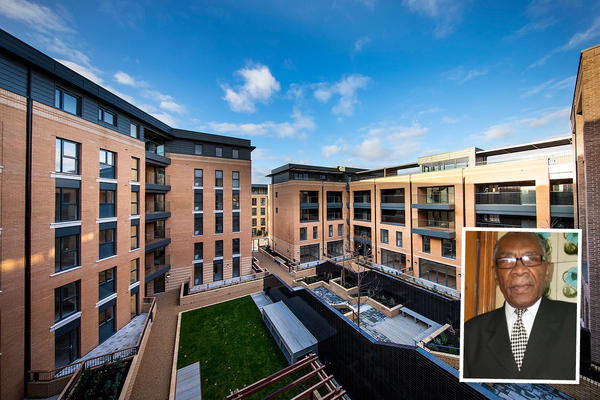

The council estate at Cutteslowe was built by the Corporation of the City of Oxford, and the first council tenants moved into the homes in October 1934. The argument that led to the walls being built started when the Urban Housing Company, the developer building private homes nearby, claimed that the council had broken a promise that tenants from the slums would not move into its homes. This was only true of 28 of the 298 council homes built, but the company was convinced that their presence would affect property values.
They came up with a drastic solution: two eight-foot high walls topped with spikes that forced the council tenants to make a 600m detour to get to the main road. The walls became a by-word for class discrimination, and were finally demolished in 1959 after the council compulsorily purchased the land.
The story is astutely placed in the wider context of interwar council housing in Oxford by John Boughton in Municipal Dreams: The Rise and Fall of Council Housing and, as he points out, it was far from the only example of walls being built to enforce the class divide.
The Radio 4 programme adds extra layers to the story by talking to present day residents, like Steve, who grew up on the estate and was five when the walls came down. His parents and grandparents all lived on the estate and the episodes investigate what happened to their former homes.
“Steve’s parents’ former house is now owned by a private landlord and divided up into six en-suite rooms occupied by young professionals. The single-occupancy rooms cost up to £1,000 a month”
One still has council tenants paying £700 a month in rent, but their son is living at home at 30 and they fear he has no prospect of getting a place of his own. “People can’t afford to buy houses, that’s why we need council houses,” they say.
Another was bought by a couple in 1993 from tenants who had done Right to Buy. Their house is now worth around £600,000, compared to up to £1m for one on the other side of the old wall. The couple laments that the council homes that were sold were not replaced and that young people cannot afford to buy.
Steve’s parents’ former house is now owned by a private landlord and divided up into six en-suite rooms occupied by young professionals. The single-occupancy rooms cost up to £1,000 a month so the landlord, whom the tenants have never met, is making up to £6,000 a month.
If you think that’s an extreme example of former council homes being exploited for private profit, the house next door has been extended and divided into 10 rooms, so the landlord is making £10,000 a month.
Although the walls have now come down in Cutteslowe, we also learn that the original class divisions were perhaps never quite as stark as the Urban Housing Company made out. There was not much difference in quality between the council and private homes, and residents from the wrong side of the walls remember a strong sense of community that has been eroded as the wider area has been gentrified.
The private homes were originally built for rent rather than for sale, and had tenancy conditions to prevent residents lowering the tone. They were unable to park vans outside their house or leave in workmen’s overalls. A former resident remembers his painter and decorator father going out with his work clothes packed in an attaché case.
“The walls have obvious echoes in contemporary controversies about ‘poor doors’ that force social housing tenants to use different entrances than their more affluent neighbours”
Against that, the class divisions of the 1930s persist to this day, in the unfair reputations of estates in towns and cities that were built as part of slum clearance schemes.
Fast forward to the 2020s and the walls have obvious echoes in contemporary controversies about ‘poor doors’ that force social housing tenants to use different entrances than their more affluent neighbours. Landlords have attempted to justify these on the grounds that they protect tenants from higher service charges, but they point to the limits of mixed tenure development.
The story also seems highly relevant to current debates about planning and supply. Cutteslowe was right on the edge of Oxford then and it still is now. The city is surrounded by green belt which means it has barely grown since the 1960s. Supporters of planning reform will see an obvious lesson in that and hark back to the golden age of private housebuilding in the 1930s, before the 1947 Town and Country Planning Act stifled supply.
The government will also see it as justification for its determination to drive through local government reorganisation and free up development in the grey belt. This could see Oxfordshire among the counties to get a unitary authority, while controversy already surrounds a plan to build homes in nearby Kidlington that is backed by the city council but opposed by the local district council.
However, the 1930s development just three miles away at Cutteslowe was led by the city, which bought former farmland and sold the surplus to the Urban Housing Company. So those who say we need more than just planning reform will also find support for their argument that the state must play a more active role in housing development.
At Cutteslowe, the council retained control to the extent of dictating how much the private homes could be sold for. In case you are wondering, the price of homes on the right side of the walls was £650 in 1933. Adjusting for inflation, that would be just over £40,000 in 2026 – the house prices are now up to 25 times that.
That says it all about our housing affordability crisis, wherever you live. As Steve puts it towards the end of the programme: “The walls came down. Keep them down.”
Jules Birch, columnist, Inside Housing
Sign up to Inside Housing’s Development and Finance newsletter
Sign up to Inside Housing’s weekly Development and Finance newsletter, featuring a round-up of business, development and regeneration news and analysis.
Already have an account? Click here to manage your newsletters.
Related stories