You are viewing 1 of your 1 free articles
New homes watchdog should cover social housing, MPs told
Compulsory quality standards and a redress scheme for new homes should be rolled out across the entire housing sector to avoid costly problems being built into the government’s building plans, MPs have heard.


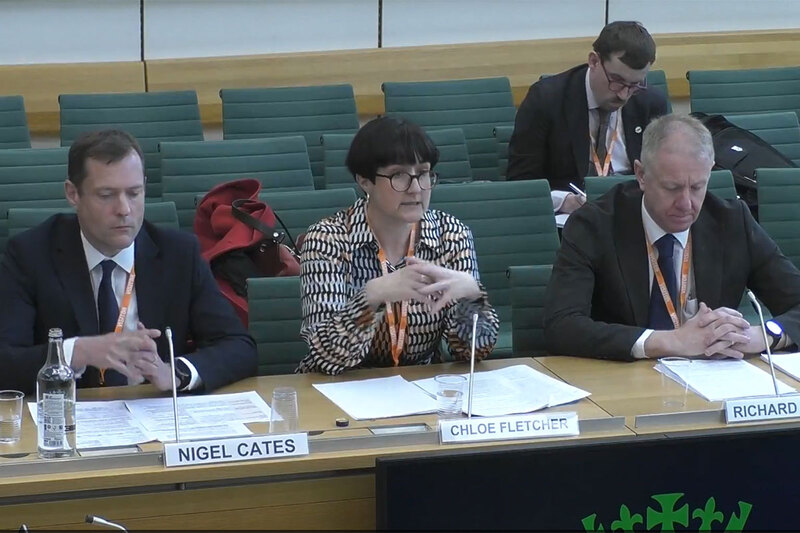 New homes watchdog should cover social housing, MPs told #UKhousing
The New Homes Ombudsman Service and the associated New Homes Quality Code currently exclude homes bought by social landlords for their tenants, but should apply across the sector, said Chloe Fletcher, head of policy at the Chartered Institute of Housing.
She told the cross-party Housing, Communities and Local Government Committee of MPs that as the sector tries to ramp up housebuilding to 1.5 million new homes this parliament, failing to get quality right now risks “baking in future problems” that taxpayers will ultimately pay to fix.
Read more

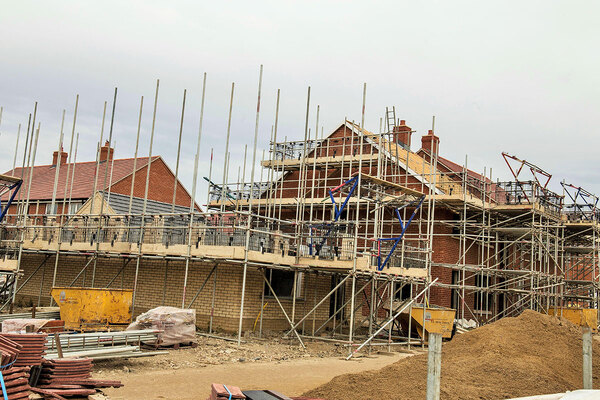

The New Homes Ombudsman Service, introduced in 2022, is helping to improve housing standards in new homes but “needs to be mandatory across the whole sector”, Ms Fletcher said.
“It needs to, in my opinion, cover the social housing sector, affordable homes, the types of homes that social housing organisations are buying for their tenants,” she added.
“We absolutely support the 1.5 million homes target, but we need to ensure that those homes are built safely and at really good quality – they are going to be with us for decades to come.
“And it’s really important that we get this right and we don’t waste money and have to put things right in the future.”
The code requires developers to meet strict consumer protection standards throughout the buying process, and gives buyers access to independent redress from the ombudsman if things go wrong.
There is currently no nationally accepted quality assurance standard for construction in the UK’s new build housing sector, the committee heard.
Nigel Cates, chief ombudsman at the New Homes Ombudsman Service, added that since starting up three-and-a-half years ago, the service is now getting about 200 complaints a month, which he called “quite a sizeable amount”.
Complaints include “safety issues to do with poorly fitted fire equipment”, and problems with damp and mould also feature but “not on the scale” seen by the Regulator of Social Housing.
Mr Cates said that as much as 35% to 40% of the market currently sits outside the ombudsman’s remit, where protection “is not robust at all” and amounts to “a patchwork of codes that are different, but in many cases just really replicate what people have in general consumer protection law”.
He added that coverage “has to be statutory… it protects everyone and [social housing new build customers] are the people that need the most protection”.
Ms Fletcher also called for the scrapping of permitted development rights, which allow developers to convert disused office blocks into homes without full planning oversight. She warned that in Harlow, where she is from, these rights are producing what “many are describing as the new slums of the town”.
“We are creating these shoeboxes of no natural light, no room, no place to go and play if you’ve got children. We absolutely cannot allow parts of the sector to be left like that.”
Are you subscribed to Inside Housing?
Inside Housing is the most comprehensive information service for UK housing professionals. Not subscribed yet?
Related stories