You are viewing 1 of your 1 free articles
Landlords could be ‘set up to fail’ by new energy requirements under reformed DHS
Social landlords could be “set up to fail” if the government’s preferred minimum energy efficiency standards (MEES) for housing are introduced, a senior director has said.


 Social landlords could be “set up to fail” if the government’s preferred minimum energy efficiency standards for housing are introduced, a senior director has said #UKhousing
The Decent Homes Standard (DHS) should also be included during the planning stage for new homes, according to Richard Young, technical director at housing association Sovereign Network Group (SNG).
Mr Young and others in the sector gave their views on proposed reforms to the DHS to Inside Housing during the government’s consultation on the changes, which closes today following a last-minute extension.
The DHS was brought in nearly 25 years ago and sets the minimum quality for social rented housing.
It grades properties on four criteria: safety; the state of repair, including the condition of key components; the facilities and services provided; and the quality of heating and insulation.
These are now set to be updated, with the new regime, known as DHS2, due to be in force in a decade, although the wait could be until 2037.
Read more

Under the government’s plans, three of the policy’s four criteria will be tweaked and a fifth criterion, requiring homes to be free from damp and mould, will be added.
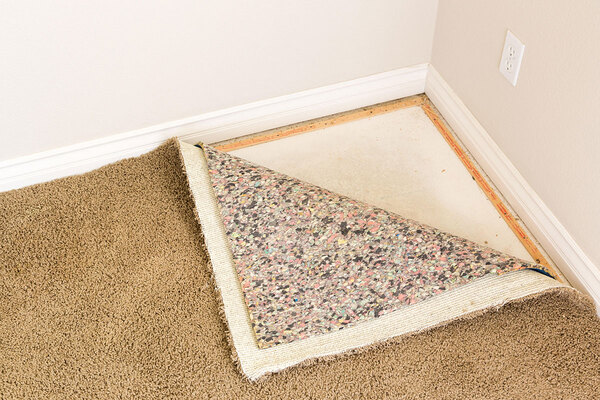
Headline changes include a move to measure the state of repair solely on the property’s condition rather than its age, extensions to the list of key building components and essential services, and requiring floor coverings to be mandatory in new tenancies.
Homes would also be required to meet the new MEES, but what these standards will be is currently unclear. The government consultation on MEES also closes today and has several options, with a preferred one it would like to roll out. These standards will both be part of the new DHS and brought in under the Regulator of Social Housing’s remit by 2030.
Speaking to Inside Housing, Mr Young warned that the government-preferred option, which would see landlords required to meet a mandatory fabric-efficiency standard and one of two other measures, would be difficult to meet for many in the sector.
He said: “If you say there’s a hard metric against, say, fabric, well we might be able to get the roof and may be able to get the windows and doors, but the wall might actually be far too costly for us to do. Therefore, by extension, we fail that standard.
“And in 2030, when the regulator takes hold of this, what will happen is, suddenly they say, ‘You’re failing in this standard, so therefore you could be downgraded’, which is kind of setting us up to fail as a sector.”
Instead, SNG likes option three, which would allow landlords to take two of the three metrics and make a blended average to get compliance.
“It’s a blended average of, ‘Well, we’ve gone really well on our heat pumps, done OK with our fabric and we’ve got some solar panels, we comply’.”
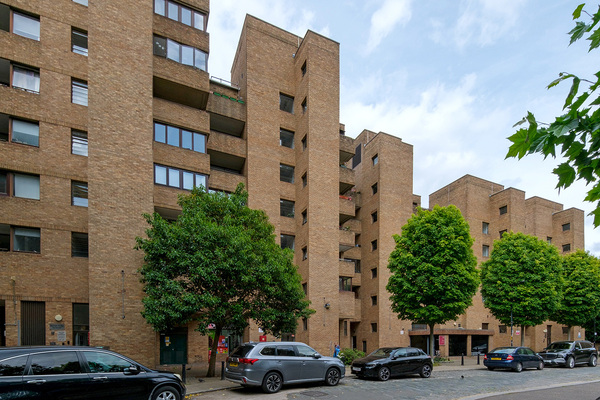
He stressed that one size does not fit all. “Applying a mandatory fabric standard on, say, a 50-storey apartment block in the middle of Lambeth for argument’s sake, is a much harder thing to agree than, say, a two-storey home in the middle of Suffolk.”
On additional measures, Mr Young pointed out that the standard was not currently considered at all in the planning stage for new affordable homes built under Section 106 agreements; these properties are then taken on and managed by housing associations.
“What ends up happening is we’re kind of buying this stuff and then looking at it and going, ‘OK, we now need to spend a load of money over here to make homes comply with the DHS.’
“On affordable housing, all homes should be in accord with the DHS in planning, so therefore you’re getting a home that’s fit for purpose at day one, not day 365.”
Overall, sector experts were unsurprised at the 10-year lead-in time for the changes and pointed out that landlords will need to make changes anyway to meet new regulations coming in sooner.
Matt Cowen, a partner at law firm Winckworth Sherwood, told Inside Housing: “The 10-year period won’t come as a surprise to most across the sector and reflects the need for sufficient lead-in times to make changes, particularly given the financial pressures faced by many [registered providers (RPs)].”
“In any event, RPs will need to meet earlier deadlines for specific related measures, for example, the new MEES by 2030 and the implementation of the first phase of Awaab’s Law from October 2025,” he added.
“So just because RPs have 10 years, this does not mean waiting that long to implement changes – the 10 years is a deadline, not a target.
“We would expect some RPs will look to review their asset management strategy in light of the new DHS, particularly where an RP has older stock that might not be possible, or financially proportionate, to retrofit in order to meet the new DHS.”
John Guest, national head of social housing at audit and tax firm RSM UK, told Inside Housing that planning for long-term changes in standards “requires a proactive and data-driven approach”.
“Some of the key challenges for registered providers of social housing will likely be having accurate, on-the-ground knowledge [of] their housing stock, as it’s no longer sufficient to rely on the age of properties.
“It’s therefore key that RPs look to implement tech and AI to improve efficiencies and monitor repairs and maintenance costs, as well as to help identify where investment and resource allocation will be required in the future.”
Such changes are likely to be costly, however, leading to a potential clash with other priorities as landlords look to balance their budgets.
Jon Slade, director at consultancy Campbell Tickell, stressed that compliance with the DHS is seen as a “must have” for the vast majority of landlords, meaning spending on it is mandatory.
“We will hear a lot about DHS2 in relation to the wider issues, chiefly, how much money there is, how much investment DHS2 requires and, therefore, how much money is left over to build more new homes,” he said.
“RPs are modelling based on the DHS2 investment requirement and a range of rent settlements, and there are many challenging financial forecasts. Within the sector, there will be discussion of there not being enough money in the pot.
“Sector critics will say that operational inefficiency is to blame for adverse forecasts. While there may be some truth in both positions, it is certain that improved efficiency alone cannot plug the gaps in the forecasts.”
Sign up for our asset management and sustainability newsletter

Already have an account? Click here to manage your newsletters
Related stories