You are viewing 1 of your 1 free articles
Charities, sector groups and academics have said it is “disappointing” that the government has scrapped a proposed flooring requirement from the updated Decent Homes Standard (DHS).
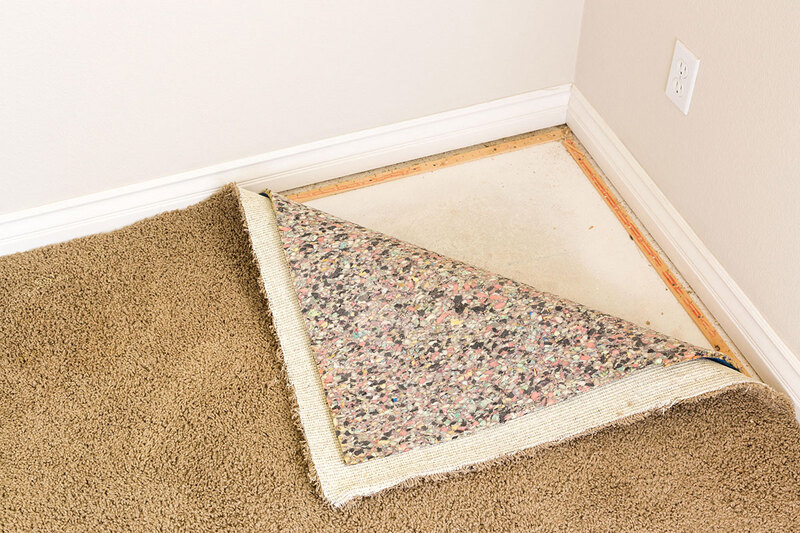
Instead, the government said it will set up a pilot and working group to gather more evidence, including clarifying the costs to social landlords.
If brought in, the change would mean social homes that still have exposed floors less than a year into a tenancy would fail the new DHS when it applies from 2035.
The government published the reformed standard last week.
Claire Donovan, director at End Furniture Poverty, said the charity is “very disappointed” with the decision.
She told Inside Housing: “This was an opportunity to bring England in line with Wales and ensure that tenants no longer have to live in homes with bare, dirty and dangerous floors.
“Evidence also shows that the cost of flooring provision is offset by the savings made in reduced rental arrears and increased tenancy sustainability.”
She acknowledged that some landlords have changed their policies and are looking at floor installation schemes, and urged them to continue this “vital work”.
At a conference last year, the National Housing Federation backed a flooring pilot amid concern about the cost of such a requirement on the social housing sector.
Ms Donovan added that End Furniture Poverty is “encouraged” by the pilot and hopes to work with the government to make sure the policy is put in place quickly.
The Longleigh Foundation, which has carried out flooring research, also expressed disappointment at the news of the scrap.
The charity said: “Our research shows that for many people moving into social housing, flooring is not optional. It is central to warmth, safety, dignity and feeling settled in a new home.
“We welcome commitments to further guidance, sector working groups and pilot activity, but these must be genuinely tenant-led and focused on those most in need to make a meaningful difference.”
However, the foundation also said that related announcements by the government last week, such as the proposed social housing taskforce, “signal progress”.
Katherine Brickell, professor of urban studies at King’s College London and co-author of Debt Trap Nation, said research showed that a lack of flooring can push families into debt and particularly affects single mothers rebuilding their lives after homelessness and domestic abuse.
She stressed that floor coverings are not “cosmetic extras”, but fundamental to safety, warmth, hygiene and well-being, especially for families with young children.
“Living without them increases the risk of injury, raises heating costs and makes already poor housing conditions harder to endure,” Ms Brickell told Inside Housing. “Yet the costs of making a property habitable are routinely externalised on to tenants least able to absorb them.
“Our research shows how this pushes families directly into debt. Carpets and vinyl are commonly bought through credit cards, catalogues, ‘buy now, pay later’ schemes, or loans from friends and family.
“These debts arise not from irresponsibility, but from the state’s withdrawal from providing the basics of a liveable home.”
Alison Inman, chair of tenant engagement organisation Tpas, said: “It is hard not to see this as a missed opportunity.
“There is so much to be pleased about in the announcements from MHCLG [Ministry of Housing, Communities and Local Government], but the omission of the mandatory requirement for floor coverings at point of let is a real disappointment.
“People often move into social housing with nothing and the absence of floor coverings can lead to massive debt, or to poorer health outcomes, danger to babies and small children, feelings of shame and embarrassment and a place to live that is not a home.”
Jenny Danson, founder and chief executive of the Healthy Homes Hub, described the decision as “profoundly disappointing and ignores a substantial body of evidence”
She cited research that an estimated 760,000 adults in UK social housing live in homes without proper floor coverings in bedrooms and living areas, and nearly four in five tenants move into homes that are not fully covered by flooring.
Ms Danson added: “If the Decent Homes Standard is genuinely about decency, health and dignity, it cannot continue to treat flooring as optional.
“Condition-only thinking does not deliver healthy homes, and this decision risks entrenching avoidable harm for hundreds of thousands of households.”
The government considered bringing in the flooring requirement due to evidence that a large number of social homes are let with bare floors and residents who cannot afford coverings struggle to keep their homes warm, safe and quiet.
Explaining its reasons for not including the requirement in the DHS, the government said: “We think this balances the cost implications of improving the quality of existing rented homes with the need to increase affordable and social housing supply and the projected increases in the overall cost of delivering the new DHS.
“Increasing supply will help move people, including many vulnerable children, out of unsuitable temporary accommodation with the positive behaviours that many landlords are already taking on provision of floor coverings, particularly in the PRS [private rented sector].
“While many SRS [social rented sector] landlords have said they are already providing floor coverings, the government recognises that the situation is not positive across the board.
“Therefore, we will work rapidly with landlords and tenants to identify cost-effective ways in which landlords can better support tenants who need assistance with floor covering provision.”
Inside Housing’s Asset Management newsletter brings you comprehensive in-depth news, comment, insight and analysis of how affordable housing providers are managing their homes
Click here to register and receive the Asset Management newsletter straight to your inbox.
And subscribe to Inside Housing by clicking here.
Already have an account? Click here to manage your newsletters.
Related stories