You are viewing 1 of your 1 free articles
It has been five years since social landlords made pledges for change in response to Black Lives Matter. Has there been a significant shift in the sector? Jess McCabe reports
Five years ago, outrage and grief over the killing of George Floyd by a police officer in the US city of Minneapolis poured out into Black Lives Matter protests around the world. These were an urgent cry for change.
Many in the UK wanted the social housing sector to be part of this change. Councils and housing associations put out anti-racist statements and pledged actions.
At Inside Housing, we set up our Race and Housing Editorial Panel, with members drawn from across the housing sector. We wanted to generate ideas and influence our coverage (see box). This panel still meets on Teams every few months.
But five years later, how much has really changed?
Olu Olanrewaju, a director at Altair and a member of our editorial panel, recalls: “I thought at that time there was a somewhat earnest interest and attempt by a number of leaders within the housing sector.”
Adunni Adams, senior development manager at Qualis Commercial and panel member, says: “Navigating spaces as a Black person hasn’t fundamentally changed. [But] I do think that spaces are opening up where you can articulate those issues. And I think what is interesting is that white people are starting to notice.”
In 2021, the late Steve Douglas – who was chief executive of St Mungo’s at the time – presented a vision of what success would look like. “We know that success is when our organisation fully reflects the diversity of the clients we work with and the communities where we work, at all levels of the organisation,” he said.
In the same year, the National Housing Federation (NHF) launched a diversity toolkit, which aimed to provide data on how diverse landlords’ staff and leadership was when compared with their residents. Its most recent data from 2023 found that 10% of the workforce was Black/African/Caribbean/Black-British, but only 3% of executives. It found that 5% of the workforce was Asian/Asian-British, but only 1% of executives.
Annalisa Langton, head of engagement and diversity at The Guinness Partnership and panel member, says the data shows some “subtle” progress. “You’ve seen movement on boards and we can see movement up to operational manager-ish-type roles.” However, she adds: “We haven’t had the change with the decision-makers.”
The NHF is going to collect new data next year, which will hopefully provide more solid evidence.
The five-year period since the height of Black Lives Matter has seen the sector confront major issues in the quality of its homes and its engagement with tenants. This has included the issue of race.
Months after Mr Floyd’s murder, the inquiry into the Grenfell fire was in flow. Leslie Thomas, a barrister representing bereaved relatives of the 72 people who died in the tragic fire, told the inquiry: “A majority of the Grenfell residents who died were people of colour. Grenfell is inextricably linked with race.”
In May 2020, a Black man called George Floyd was killed in Minneapolis by a police officer who knelt on his neck.
In the middle of the coronavirus pandemic, protests began – first in the US and online, then around the world. These protests used the phrase and hashtag #BlackLivesMatter, which had first been coined in 2013 following the acquittal of George Zimmerman in the shooting of 17-year-old Trayvon Martin.
In Mr Floyd’s last moments, he was recorded saying: “I can’t breathe.” This statement became a rallying cry and an echo of many other killings of Black people through police violence, as well as injustices faced by Black and ethnic minority people.
The anti-racist protests that swept the UK were reported to be the largest since the slave abolition movement, according to The Guardian.
In November 2020, two-year-old Awaab Ishak died. The inquest, two years later, linked his death to prolonged exposure to mould in his family’s housing association home. It also exposed assumptions that landlord Rochdale Boroughwide Housing made about Awaab and his parents’ “lifestyle” choices that caused the mould, which it presumed included “ritual bathing”.
In 2021, ITV’s Daniel Hewitt began reporting on terrible cases of disrepair in social housing. Kwajo Tweneboa, a tenant of the Eastfields Estate that featured in one of Mr Hewitt’s stories, began talking about his story on Twitter (since renamed X). Other tenants shared their experiences with him, and he would visit and post photos and videos which exposed some of the worst living conditions in the sector, often using the exposure to successfully advocate for action.
“The majority of people that reached out to me were from Black and ethnic minority groups,” Mr Tweneboa tells Inside Housing. “The sector was in denial for a very long time and [Awaab’s death] blew that to pieces.”
Housing consultant and panel member Rosalind Ugwu has advised multiple organisations on complaint-handling. She says: “You can’t just go in and look at damp and mould. You have to look at all those protected characteristics [of tenants] and beyond [to find out] what is really going on with this family or this person.”
Mr Olanrewaju says it is “matter of fact” that there is a gap in tenant satisfaction between Black and minority ethnic residents and white residents. “When you look at the English Housing Surveys, it’s quite clear that people of colour are over-represented in poor accommodation.”
He adds: “I’m hoping that greater focus on consumer regulation, even if it’s not targeted towards a particular group, they will be caught up [on improvements]. The greater emphasis… should lead to a more collective improvement in the service offering to residents, and then a by-product of that will be that people of colour will be living in better-quality accommodation.”
Since 2020, the public debate around race and diversity has shifted dramatically.
In 2022, Elon Musk bought Twitter. Along with rebranding it as X, his takeover seemed to usher in a more lenient approach to hate speech. Internationally, many advertisers pulled out of X. In 2023, Mr Musk shared what was generally acknowledged as an anti-semitic trope, which was widely condemned.

By 2024, social landlords began to leave X. When GreenSquareAccord closed its account, Steve Hayes, its director of corporate affairs and communication, cited “more and more unfiltered inappropriate content on
the channel, including hate speech”.
But this has been controversial because of the role the social media platform has played in allowing tenants to reach their landlords directly and hold them to account for poor service. “It was a fool move for landlords to come off of X,” Mr Tweneboa says bluntly.
He adds: “It’s not their own personal X accounts; it’s the housing provider’s account. They should have remained there if it was a channel residents were using.”
On 29 July 2024, things changed again. Seventeen-year-old Axel Rudakubana went to a dance class for children and perpetrated a mass stabbing, which killed three girls and seriously injured 10 other people. Before the killer’s identity became known, misinformation spread on X and other social media platforms. Rioters tried to set fire to hotels where asylum seekers were living.
The Housing Diversity Network stepped in with advice for landlords, including on providing open forums for safe discussion and supporting tenants and staff affected. It also said: “Community tensions can arise when one group feels that another group has preferential access to basic resources, such as housing.”
The tension has not gone away. “On 5 March this year, a couple of individuals came to our office and ask consent to film,” says Luke Baptiste, head of neighbourhoods at South Liverpool Homes.
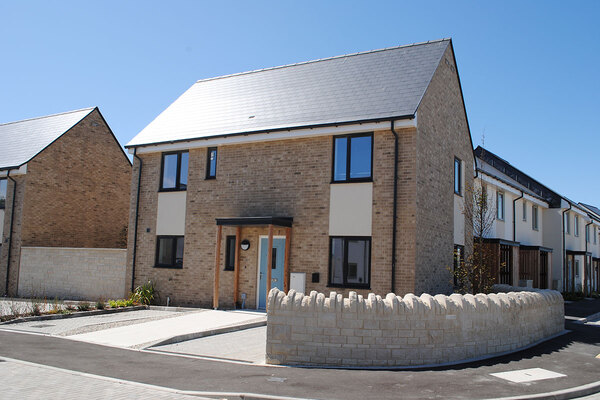
They asked questions about the new homes the landlord is building in Speke and who would be housed in these. A staff member gave factual answers about the allocation policy. Then, the individuals filmed outside and made false claims that 95% of the homes would be going to minority ethnic people and immigrants.
The video was put on YouTube and received more than 45,000 views. The video’s title includes the phrase “great replacement theory”, which refers to a far-right conspiracy theory that white Europeans are being demographically “replaced” by non-white people.
Mr Baptiste says he is “absolutely” concerned about the impact of the video on minority ethnic residents.
South Liverpool Homes decided to publish a customer-facing report on how the allocation process works for new homes. It did not directly refer to the video, to avoid giving it more airtime.
Riverside was targeted in a similar video in December 2024. A spokesperson says: “Misinformation claiming that housing providers are prioritising people from immigrant backgrounds or ethnic minorities can have serious and harmful impacts for individuals, communities and public policy. It risks not only the possibility of targeted violence, abuse or aggression… but may deter individuals from coming forward to access the support they need due to perceived consequences.”
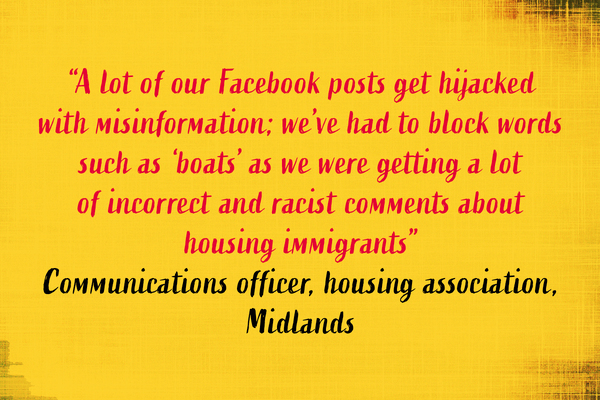
The myth that new social homes are overwhelmingly being allocated to asylum seekers has now become a popular right-wing talking point on social media.
Most people Inside Housing spoke to for this story think the sector should be responding.
It is worth noting that official statistics show that 77.6% of new social lettings in England went to white British tenants. Given that white British people make up 74.4% of the population, if anything they are slightly over-represented in new social housing tenancies.
Mr Olanrewaju says: “The question you’ve got to ask yourself is, ‘Is it in the short and long-term interest of the housing sector for us to be portrayed falsely, which could have huge repercussions?’”
Shahi Islam, director of the Affordable Homes Programme at Homes England and a panel member, adds that the sector and government need to address the underlying reasons beyond racism or xenophobia that mean these myths land with a receptive audience.

He explains: “You can’t ignore the feelings of white working-class people who do feel neglected, and some of the issues on social mobility and the quality of housing that they live in. So there is a role for the sector to make sure we’re not inadvertently marginalising other people.”
Will the diversity push by social landlords survive, especially as they face so many pressures – and at a time when the value of equality and diversity is under attack in the US, where Black Lives Matter began?
“I think it’s been a very difficult operating climate for the sector and a wider real estate sector to work in,” says Mr Islam. But he adds: “There’s a lot still to do.”
Looking ahead to what should happen next, Mr Olanrewaju sums up: “You will see better senior representation at board levels. You will see gaps in satisfaction reduce. You will see the over-representation of people of colour in poor-quality accommodation reduced and, crucially, you’ll see the sector being at ease to talk about race and race issues.”
Most of the people Inside Housing spoke to for this story feel that progress has just been tenuous. As Ms Ugwu puts it: “All these people [and organisations] set up these groups and they designed all these beautiful documents that were very high level, and they were going to deliver all these promises. And I see no evidence of that in the actual workplace and the lives of the people that live in our stock.”
But sometimes progress is not linear. In July 2020, Tracey Gore, director of Steve Biko Housing Association, was seconded for six months to chair an anti-racism taskforce in Liverpool. A few months in, then-Liverpool mayor Joe Anderson was arrested. He was charged in March 2025 over offences related to bribery and misconduct, which he has denied.
Amid this, the taskforce’s work was sidelined. “We started, but we weren’t able to finish it,” Ms Gore says. However, a new leadership team has come in and Liverpool Council has picked up some of the taskforce’s recommendations. Two steps forward, one step back.
The Housing 2015 conference is taking place in Manchester later this month, with the following sessions related to this article – One year on: reflections on the racist riots (Tuesday 24 June, 9.45am, Fringe Festival Stage); and Overcoming race inequality in housing (Wednesday 25 June, 12.05pm, Homes and Governance Theatre). Find out more and secure your delegate pass here
In the wake of Black Lives Matter, Inside Housing set up an editorial panel that focuses on race and housing, and pledged to increase our coverage on this important topic. In the past five years we have published many stories, often suggested by the Race and Housing Editorial Panel. This is a selection of just a few of those, which focused on how race impacts housing – and the solutions.

The death of two-year-old Awaab Ishak raised urgent questions – not only about damp and mould, but also about race. This piece examined those questions, as well as how the sector should respond.

This story looked at housing association Mosscare St Vincent’s anti-racism taskforce and how this contributed to its tenant engagement work.

We spoke to minority ethnic people who used to be housing professionals and have since left the sector, to find out lessons for how to nurture diverse talent.

The chief executives of G15 landlords signed a Diversity Pledge in 2020. This story looked at the actions that followed and how the group of large London associations was able to shift senior appointments.

In 2023, we tracked the pledges made by housing associations in the wake of Black Lives Matter and asked if they had been implemented.

In the immediate wake of the Black Lives Matter protests, many social landlords launched initiatives designed to listen more to Black, Asian and minority ethnic staff. We reported on what these initiatives were trying to achieve.
We have recently relaunched our weekly Long Read newsletter as Best of In-Depth. The idea is to bring you a shorter selection of the very best analysis and comment we are publishing each week.
Already have an account? Click here to manage your newsletters.
Related stories