Housing sector responds to 2026 Autumn Budget
John Healey delivered his first Budget as chancellor to the House of Commons on Wednesday. Inside Housing rounds up the sector’s views


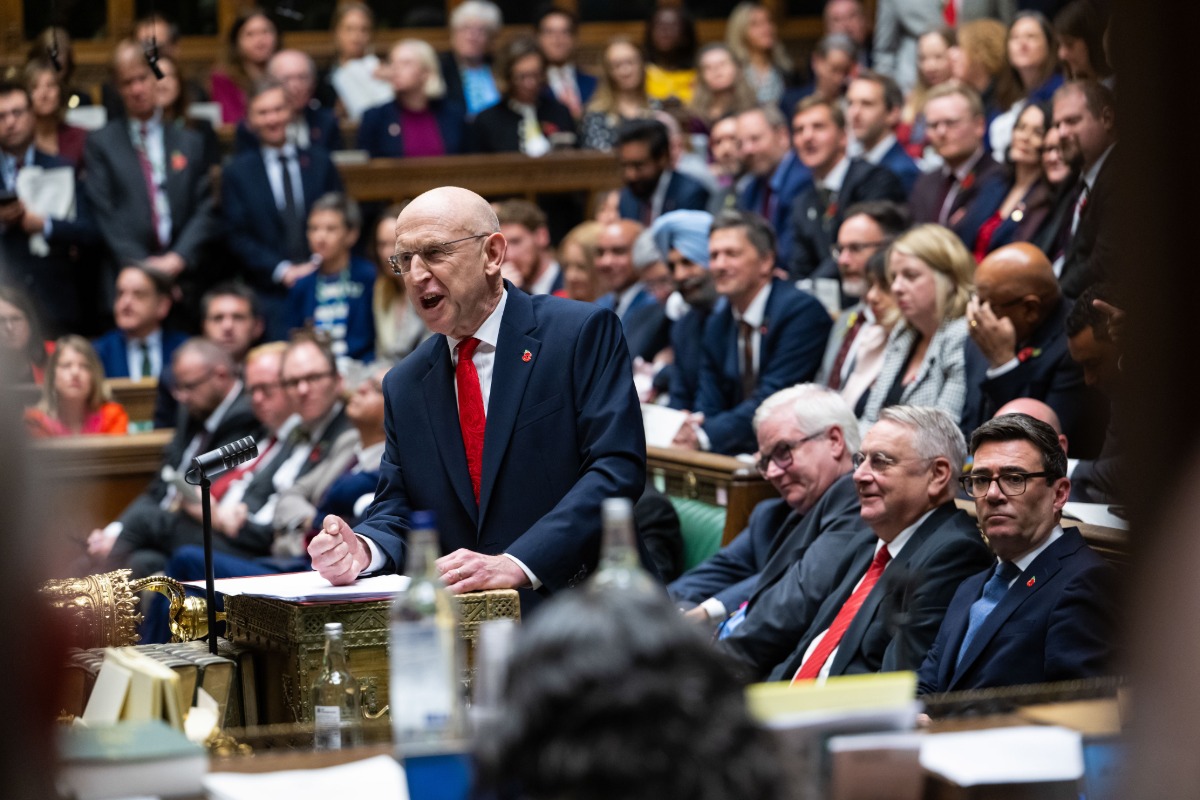 John Healey delivered his first Budget as chancellor to the House of Commons on Wednesday. Inside Housing rounds up the sector’s views #UKhousing
Delivering his first Budget as chancellor on Wednesday, John Healey mostly confirmed what we already knew on housing, but he also revealed a pledge to extend cheaper borrowing for councils and make all land sold to social landlords VAT-free.
His Budget confirmed that £1.5bn of devolved loans will be made available to mayoral authorities, and the near doubling of rough-sleeping funding to the end of this parliament.
Mr Healey also confirmed that £1.5bn would be added to the Social and Affordable Homes Programme (SAHP).
He promised to “draw the line on constant changes to building regulations”, the day after housing secretary Angela Rayner announced new measures to protect more leaseholders from remediation costs.
Below, we look at what the sector thinks of Mr Healey’s Budget and where we need to go from here.
£1.5bn of extra funding for the SAHP
The extra funding was widely welcomed by the sector.
Kate Henderson, chief executive of the National Housing Federation, said it would “enable housing associations and councils, which are already working in partnership to deliver tens of thousands of new social homes, to go further and build faster for families in need”.
She said that with more than 177,000 children currently living in temporary accommodation and over 1.3 million households on waiting lists, “it’s right that the government is prioritising social housebuilding”.
“Housing associations stand ready to work in partnership with councils, mayoral strategic authorities and the government to build the homes needed in communities across the country,” Ms Henderson said.
Other sector bodies said access to grant funding needed to come sooner rather than later, and to housing associations, which are ready to build, as well as councils.
Tracy Harrison, chief executive of the Northern Housing Consortium (NHC), said: “The £1.5bn additional Social and Affordable Homes Programme investment is welcome, but funding must be accessible to housing associations with development plans ready, as well as councils, to deliver much-needed homes quickly.”
Read more



John Bowker, chair of development consortium JV North, said: “Housing associations nationally and JV North members in the North West have long, proven track records of delivering in partnership with government, so it is pleasing this has been recognised and the sector is seen as a vital component in addressing the housing crisis.
“For us to capitalise on the announcement, we need access to this money and the rest of the available £39bn in the early years of the programme, so landlords can assure boards that grant funding is available and development opportunities can continuously be brought forward.”
Catherine Ryder, chief executive of PlaceShapers, strongly welcomed the funding, alongside the announcements on land and borrowing. However, she said it was “vital” that funding for social housing could be accessed by “all those who can contribute, including smaller place-based and community-focused housing associations”.
Greg Reed, chief executive of Places for People, said: “Housing providers already have the land, pipeline and capacity to build, and bringing more SAHP funding into the programme’s early years would help deliver more homes, faster.”
Josie Parsons, chief executive of Local Space, said the extra funding was welcome, but now the priority must be “turning that investment into homes, particularly in places like London, where housing pressures are most acute”.
Phil Andrew, chief executive of Orbit, said that while the additional funding was “very much welcome” alongside the VAT exemption, “we cannot solve the housing crisis by focusing only on the homes we build and ignoring those we risk losing”.
“Regeneration protects existing social housing, creates better places and can unlock new supply. Government should give the sector greater flexibility to use grant funding for regeneration alongside new development,” Mr Andrew said.
Council funding
Councils welcomed funding to tackle rough sleeping and the £1.5bn for the SAHP. The chancellor said he would be extending cheaper borrowing to get more council homes built, but local authorities raised significant concerns about the lack of overall funding support for them in the Budget.
Eamonn O’Brien, chair of the Local Government Association, said: “Extra funding to tackle rough sleeping and for social housing is positive. However, no overall funding increase for local government means councils will continue to struggle to meet demand and provide services to our communities.”
He said the government “recognises that councils are central to achieving good growth and rewiring the state”.
“These ambitions cannot be achieved if council finances remain fragile and reliant on emergency bailout agreements.”
Mr O’Brien said there must be a “new deal for local government” and “genuine devolution must go beyond mayors and strategic authorities to empower councils themselves”.
Glyn Halksworth, co-chair of the Association of Directors of Housing (ADoH), said councils “stand ready to deliver more social and affordable homes and play a leading role in ending homelessness”.
However, he said the Budget “falls short in some critical areas”, including LHA rates staying frozen and temporary accommodation subsidy arrangements staying at 2011 levels.
He said: “As a result, councils will continue to shoulder growing financial pressures while more households struggle to access housing they can afford.”
Mr Halksworth called for further investment in social and affordable housing, fair funding for homelessness pressures, and reform of Local Housing Allowance and temporary accommodation subsidy arrangements.
He said councils should be placed on “equal footing” with housing associations when it comes to accessing low-cost borrowing, “enabling them to maximise their contribution to delivering new homes”.
London Councils highlighted the state of local government finances in the capital. It forecasts a funding shortfall for boroughs of up to £1.2bn this year and £5.2bn between now and 2030.
Kam Rai, deputy chair of London Councils, said: “The overall outlook for London boroughs’ finances remains extremely difficult, especially due to skyrocketing social care and homelessness costs.
“We will continue to seek sustainable funding solutions to end the crisis in town-hall finances, including through the government’s next Spending Review.”
Mairi MacRae, acting chief executive of housing charity Shelter, highlighted the huge historic debt facing councils.
Around £29bn of debt was transferred to local authorities under the 2012 Housing Revenue Account self-financing settlement, which was put in place under the Conservative-Liberal Democrat coalition government. A recent report by Shelter and property firm Savills found the debt has now risen to approximately £31.8bn.
Ms MacRae said the “burden of an unfair historical housing debt” meant councils were “shelling out millions in interest repayments to the government” instead of what they used to do – deliver thousands of social homes.
“Leaving councils saddled with needless debt while expecting them to build enough social homes is like asking them to drive with the handbrake on. The prime minister’s pledge to build more council homes will fall short unless the government removes this debt from council balance sheets,” she said.
Homelessness funding
The doubling of funding to tackle rough sleeping to £874m was broadly welcomed, but the sector said the focus must now be on helping people stay off the streets long term, with individualised, wraparound support.
The sector also expressed disappointment about the “missed opportunity” to unfreeze Local Housing Allowance (LHA).
Emma Haddad, chief executive of housing charity St Mungo’s, described the funding as having the potential to be a “real turning point for homelessness in this country”.
“Now we have to make sure that people receive sustainable routes off the street with the right support. Many people we support out of homelessness have immense complexity of need, from physical and mental health issues, domestic abuse, or substance support needs.
“Quick, untailored offers off the street won’t work for many of these people. The doubling of funding announced today must help ensure that offers are individualised, and that we work with people for as long as it takes, beyond Christmas if need be, for sustainable and long-term recovery from homelessness,” she said.
Like many others, she said the Budget “missed the opportunity to make renting more affordable for people recovering from homelessness by unfreezing Local Housing Allowance”.
“The housing sector is ready to deliver, but more work will be needed to reduce the use of temporary accommodation, support those with additional needs and improve the energy efficiency of existing homes”
Ms Haddad said: “Many of the people we support are struggling to move into private rented homes due to extortionate rents that benefits and low incomes simply don’t cover. To properly prevent homelessness, housing must be accessible and reflect the real cost of renting.”
Gavin Smart, chief executive of the Chartered Institute of Housing, said the freeze will “continue to place pressure on housing services and risks undermining efforts to help people off the streets”.
“The housing sector is ready to deliver, but more work will be needed to reduce the use of temporary accommodation, support those with additional needs and improve the energy efficiency of existing homes,” he said.
Fiona Colley, director of social change at Homeless Link, the national membership charity for frontline homelessness services, said the focus must turn to prevention now, while “long-term thinking must drive policy choices across government”.
She said: “We need a sustainable funding system that empowers the people working in services ending and preventing homelessness across the country to scale up their efforts.
“The Value for Money Review of homelessness funding is an opportunity to start prioritising homelessness solutions which we know work: wraparound support, expanding Housing First provision, investing in high-quality supported housing, moving towards a housing-led approach and, critically, putting prevention first.”

Ms Colley also said the chancellor had “missed an opportunity to act to meaningfully prevent homelessness, including by failing to unfreeze Local Housing Allowance rates”.
“Taken in the round, however, the promised funding and the positivity of the prime minister’s rough-sleeping summit on Monday speak to a generational opportunity to turn the tide on unacceptable levels of homelessness,” she added.
Devolution
NHC chief executive Ms Harrison welcomed the Budget’s focus on devolution.
“Place-based investment by people who know their areas best is the most effective way to drive growth and create thriving Northern communities. As the chancellor said, housing is at the heart of this,” she said.
Ms Harrison said the £285m good growth funding and £1.5bn of local borrowing would help mayors target investment in regeneration and development, while incubator capital funding “will support areas without mayors, addressing a previous gap in the Northern Growth Strategy”.
She said: “Today’s announcements are a step in the right direction, but stop short of providing long-term, flexible, dedicated regeneration funding for the North.
“Our Renew research found that a policy framework that includes a 10-year, £5bn fund for housing-led regeneration could unlock 500,000 good-quality homes across the North, driving growth in every postcode.”
Mr Rai of London Councils said devolution “should come as close as possible to communities”.
“As London receives new fiscal powers, including keeping more of the money raised in business rates and income tax, [boroughs] must have a key role,” he said, adding that he welcomed the government’s commitment to “working with boroughs as well as the Greater London Authority to develop a bespoke approach” for the capital.
Jonathan Layzell, chief executive of Stonewater housing association, said that while the ongoing plan for devolution was referenced, the “detail will be in the Rewiring the State devolution white paper which has been delayed for several weeks”. He urged the government to publish the paper as soon as possible to give the sector clarity.
He said: “We know that, as part of its devolution plans, Social and Affordable Homes Programme funding will be devolved to regional mayors, with an emphasis on new council housing.
“There is an opportunity for housing associations to play a crucial role, not just to support delivery of more affordable homes, but also to help upskill local authority staff and equip them to start delivering more council homes at speed.
“With over 1.3 million households on social housing waiting lists across England, more than 130,000 households in temporary accommodation, and council spending on temporary accommodation approaching nearly £3bn every year, the urgent need for accelerated delivery of affordable homes cannot be [overstated].”
Devolved nations
Gordon Llewellyn-MacRae, interim director of Shelter Scotland, also pointed to the frozen LHA rates and said the Budget “doesn’t go far enough to address the housing emergency”.
Richard Meade, chief executive of the Scottish Federation of Housing Associations, welcomed the announcement of zero-rate VAT on qualifying land for social housing.
“At a time of rising costs and ever-increasing demands across the housing system, this should reduce barriers, lower some development costs and help deliver the social and affordable homes Scotland needs,” he said.
He called for the UK government’s additional investment in social and affordable housing, alongside its plan to end rough sleeping in England, to be “matched in Scotland”.
Homeless Network Scotland urged Westminster to provide the Scottish government with the “full details” of any Barnett consequentials (funding the UK government allocates to Scotland, Wales and Northern Ireland when it increases or decreases spending on services in England that are devolved in the other nations) “as soon as possible” ahead of the country’s Budget in November.
“Ahead of the Welsh government’s draft Budget next month, we urge the finance minister to prioritise any new funding stemming from today’s announcements in delivering new, warm, affordable homes to help us reach its own social housing target”
Matt Hamill, head of policy and impact at the charity, said: “Homeless Network Scotland has been clear that any additional Barnett funding from homelessness initiatives in England should be ringfenced by the Scottish government and used to tackle the ongoing housing and homelessness crisis in Scotland.”
Nicola McCrudden, chief executive of Homeless Connect, called for the same in Northern Ireland.
She said: “The UK government’s new investment must become an opportunity for Northern Ireland, not a lost one.
“At Homeless Connect, we’re calling on the Northern Ireland Executive to direct any Barnett consequential arising from the UK initiative towards homelessness prevention, support services and action to end rough sleeping.”
Stuart Ropke, chief executive of Community Housing Cymru, said the membership organisation for housing associations in Wales was pleased to see further investment in social housing and rough sleeping.
“Ahead of the Welsh government’s draft Budget next month, we urge the finance minister to prioritise any new funding stemming from today’s announcements in delivering new, warm, affordable homes to help us reach its own social housing target,” he said.
Mr Ropke added: “The Welsh government must also invest in vital homelessness and housing support services amid the constant and increasing pressure experienced over the last decade.”
Sign up to Inside Housing’s Daily News bulletin
Sign up to Inside Housing’s Daily News bulletin, featuring the latest social housing news delivered to your inbox.
Already have an account? Click here to manage your newsletters.
Related stories