You are viewing 1 of your 1 free articles
How to get better at listening to tenants
Tpas recently held its National Tenant Conference. Peter Apps finds out how delegates think landlords should be engaging with their residents


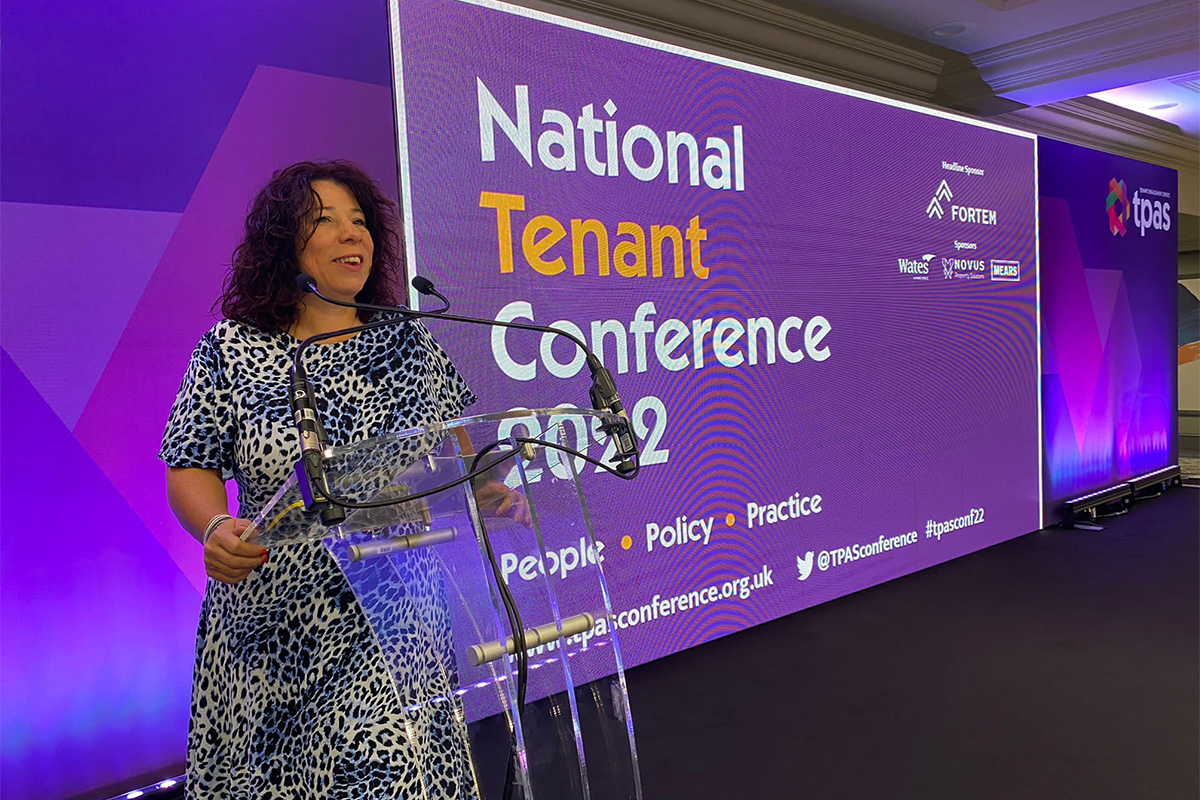 .@PeteApps finds out how delegates at Tpas’ National Tenant Conference think landlords should be engaging with residents #UKhousing
The audience at the annual National Tenant Conference holds up a looking glass to the housing sector. There are more ethnic minority delegates, more regional accents and more visible disabilities than you would expect to find at – for example – a housing finance conference.
This speaks to an important divide in the sector: the demographic make-up of those who live in social housing remains distant from the demographic make-up of those who run the organisations that manage it.
This is part of what makes what the housing sector terms ‘tenant engagement’ so important. Social landlords need to find ways to bridge the gap between their boardrooms and their communities, and a swift way to start doing that is to bring the communities into the boardrooms.
The conference is organised by Tpas, the group that advises social landlords on engagement, and most of the delegates are involved in some way in formal scrutiny or governance structures within the landlords to whom they also pay rent.
With this issue taking on greater significance after the Grenfell Tower fire and the slow but steady advancement of the Social Housing Regulation Bill through parliament, Inside Housing takes a trip along to Solihull to hear from the delegates.
The first session of the day is delivered by Kate Dodsworth, director of consumer regulation at the Regulator of Social Housing. Ms Dodsworth has an important job: she is tasked with implementing the new promised regime of consumer regulation, which will see the regulator take a proactive interest in the standard of services being delivered to residents for the first time in more than a decade.
Read more



Go beyond numbers
Questions from the floor challenge her about how robust the regime would be – with an apparently inherent distrust of satisfaction numbers and ‘key performance indicators’ (KPIs).
“What will you do about a landlord who claims to have 85% satisfaction for its repairs service, when the actual service people receive isn’t working?” asks one.
“My concern is that when landlords measure their KPIs, it all seems to be rosy. But how do you make sure you are dealing with the actual experience of human beings and not just figures?” asks another.
Ms Dodsworth assures them that the regulator would go beyond numbers and actually speak to residents about the service they are being provided with. They also have a ‘memorandum of understanding’ with the Housing Ombudsman to pinpoint the landlords for which the volume or nature of individual complaints point to more substantial problems.
After the session, Inside Housing speaks to Liam Kelch, a tenant board member at Gloucester City Homes. He is clear that if landlords really want to grasp the issues with poor services, they need to have tenants engaged on their boards.
“You have to speak to tenants. It might be a bit raw sometimes, you might get a bit of a shock, but if you want to hear the truth, you have to do it. Who is the whole sector for? Without us, the sector wouldn’t exist,” he says.
Mr Kelch says his experience gives him insight that other members of the board lack. “I have been in the houses and flats where you get water dripping down the walls and mould. And I know the places where kids are afraid to play because of anti-social behaviour, whereas the other board members are commercial people – they are accountants or from a housing management background,” he says.
While he thinks things are moving in the right direction, he feels the sector is sometimes too geared towards management when it talks about issues such as repairs. “And that includes you [Inside Housing],” he adds.
Nonetheless, he hopes the regulator’s new approach might deliver change. “There’s more hope now. The regulator was previously only interested in viability and governance, but now they are taking a look at these issues. That should persuade any landlords that aren’t taking this seriously enough that they need to,” he says.
Another who is positive about the impact of the forthcoming changes is Rachael Hawthorne, a tenant board member at Nottingham Community Housing Association. “I’m really looking forward to [consumer regulation],” she says. “I think it will really shake things up.”

As someone who has worked in social housing as well as living in it, she is a believer in the importance of tenant engagement. “Some landlords do it better than others. Some are happy to provide more training and support to help residents do the job well,” she says.
“I think you need to make sure you have a panel that will challenge,” Ms Hawthorne adds. “You need to look for the residents who are complaining regularly – they are the perfect candidate if you want to find out where the problems really are.”
She also notes that tenant engagement can be dominated by retirees, who have more time to engage with these processes than working-age residents.
Tackling stigma
But this is something she feels remote working and technology driven by the pandemic can change. “Zoom has totally opened up the potential to hear from people,” she says. “You don’t have to do this during working hours in person any more.”
Later in the day, Debbie Larner, a housing consultant and former senior member of the Chartered Institute of Housing, leads a discussion about the professionalisation of the housing sector.
Around the room, delegates are invited to discuss instances where they feel professionalism has been lacking in their engagement with the sector – as well as positive instances.
A common theme in the negative column is staff who believe social housing residents are asking for too much. “I have heard staff say, ‘don’t ask them [tenants] what they want, they want gold taps’. Well, they don’t. They just want a decent service,” says one delegate.
This touches on a theme that raises its head multiple times throughout the day: stigma.
One group of residents from the conference explains to Inside Housing that they have relaunched a long-standing campaign against social housing stigma, previously dubbed ‘See the Person’.
Now it is called ‘Stop social housing stigma’. “This campaign does what it says on the tin now,” says Yaw Boateng, chair of the tenant and leaseholder panel at Croydon Council and vice-chair of the newly formed group.

He explains that stigma can be a reason resident complaints don’t get listened to. “A big thing within the social housing environment is the belief that we should be grateful to have a roof over our heads, so what are you complaining about?” he says.
Mr Boateng believes that empowering residents within organisations is one of several ways to combat this. “Tenant involvement is extremely important because it’s our homes that we are dealing with,” he says. “It goes back to the same thing: listen, and don’t just listen, but listen and do.”
David Yates, a tenant who is now chair of Community Gateway Association in Preston, says he prefers not to use the term ‘social housing’ at all. “I hate the phrase ‘social housing’. As soon as you call it that, there’s stigma. I prefer to talk about homes for people, because that’s what they are,” he says.
In terms of tenant engagement, Mr Yates says his main message is that tenants need to realise they have power. “Tenants have power – for God’s sake, use it. Use your authority. You pay the rent, you should have high expectations,” he says.
Kathy King, a member of the tenant panel at Dartford Borough Council, says she got involved in the process after retirement. “We are the ones who receive the service, so we should have a say,” she says.
She explains that she is able to listen to the concerns of people who may not normally have the confidence to complain directly to the council. She can then feed this back up the chain. “It’s also good for loneliness. I volunteer at a community cafe, and listen to people’s concerns. It can sometimes be the only chance people have to talk,” she says.
The delegates Inside Housing speaks to are broadly positive about the efforts their landlords have made around engagement and improving their services as a result.
But with the sector grappling with a reputational crisis around repairs, ensuring that resident voices are heard loud and clear within every landlord in the country has never been more important.
Sign up to our Best of In-Depth newsletter

We have recently relaunched our weekly Long Read newsletter as Best of In-Depth. The idea is to bring you a shorter selection of the very best analysis and comment we are publishing each week.
Already have an account? Click here to manage your newsletters.
Related stories