You are viewing 1 of your 1 free articles
Rent convergence: sector groups divided as they reveal consultation responses
Sector bodies have outlined their asks to the government on social rent convergence after the consultation closed last week. James Wilmore reports


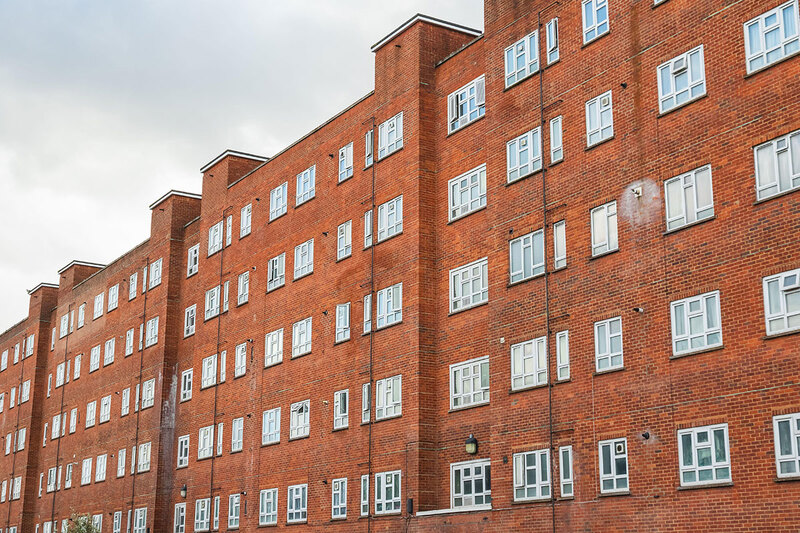 Rent convergence: Sector groups divided as they reveal consultation responses #ukhousing
The National Housing Federation (NHF), the Chartered Institute of Housing (CIH) and the G15 are among those to have responded to an eight-week consultation on rent convergence.
The plans were published by the Ministry of Housing, Communities and Local Government in July after it was announced in the Spending Review that a consultation would be held to reintroduce rent convergence.
The policy was initially introduced in 2002, but was abandoned by the previous government in 2015.
Once resurrected, it would see social rent properties that are currently below ‘formula rent’ increase by an extra amount each year, over and above the Consumer Price Index plus 1% limit.
However, the sector is split over the level at which rent convergence should be permitted.
So what have groups asked for?
Read more
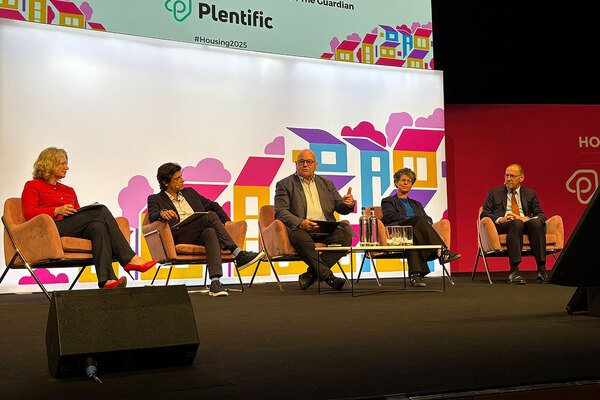


National Housing Federation and G15
The NHF and the G15 have both urged the government to go beyond the maximum £2 per week uplift proposed in the consultation.
The NHF has said it would “encourage” ministers to implement a £3 uplift, starting in 2026. This would generate an extra £3.4bn over 10 years for housing associations, the group said.
It could mean an extra 51,244 homes being built in England, according to NHF estimates.
Regarding the date on which it should be implemented, the NHF said it has received “clear feedback” from its members that delaying the implementation of convergence beyond April 2026 would push planned investment back by at least a year, “but in practice probably longer”.
The NHF also called for the policy to be in place for 10 years. But it added: “It is important that rent convergence is established as a standing feature of social rent-setting policy that ‘rolls over’ into any future rent policy.”
Convergence will also “improve fairness and consistency by ensuring residents pay similar amounts for similar tenancies in similar homes”, according to the group.
The G15 agreed with the NHF on its suggested approach.
The group of London’s largest housing associations said the government’s proposed levels – of either £1 or £2 – are “too low to restore financial capacity at the pace required to meet both immediate and long-term challenges”.
The G15 said: “Because of the sheer number of homes below formula, a £3-per-week mechanism would mean that 95% of our homes would reach target rent within 10 years, compared with far fewer under lower mechanisms.”
The G15 said that its members currently have 225,000 homes where residents pay below target rent, and in 2024-25 had a collective shortfall of £167.6m in rental income.
“The disparity between actual rents and formula rents, especially given the rising costs of operating in London, is unsustainable,” the group said.
On the effect on tenants, the G15’s submission said: “We acknowledge that any increases in rent will have an impact on some residents’ disposable incomes, and all G15 members have robust support services in place for those residents who may struggle to cover increased costs.”
Paul Hackett, chief executive of G15 member Southern Housing, said: “Multiple headwinds have reduced housing associations’ capacity to build, resulting in the collapse of affordable homebuilding – especially in London and the South East.
“We’re pleased to see government grasp the nettle on stabilising housing association rents, which underpins our ability to build new homes and maintain existing stock. When it comes to convergence levels, only a £3 premium would restore our financial capacity at the pace required to meet both immediate and long-term challenges, while reintroducing much-needed fairness into housing association rents.”
Chartered Institute of Housing
The CIH said that “on balance”, rent convergence should be capped at £2 per week. The body urged the government to commit to extra funding for the sector to meet new regulatory requirements, such as the Decent Homes Standard.
“If the government does not commit to this additional funding, it may be necessary to implement £3-per-week convergence, to ensure stronger financial viability within the sector to enable it to provide safe and decent homes for tenants,” the CIH said.
It added: “However, we would note that even this level of convergence may not be sufficient to meet the costs of forthcoming policies relating to quality and decency without an additional existing homes funding stream.”
The CIH echoed other calls for convergence to come in next April.
But it also warned that tenant affordability “must remain at the heart of the discussion on rent increases”.
The group added: “Our members have outlined their current support initiatives for tenants, but this must also be supported by an effective national social security system, with changes needed such as removing the two-child limit, to help those in most need.”
The CIH said other measures were also needed, including unfreezing the Local Housing Allowance rate and giving councils more capacity through revisiting the Housing Revenue Account (HRA) debt settlement.
Northern Housing Consortium
The Northern Housing Consortium (NHC) has also said convergence should be at £2 per week for “at least” 10 years.
This level would boost housing associations’ and councils’ income in the North of England by £1.73bn over 10 years, the group said.
Patrick Murray, executive director of policy and external relations at the NHC, said: “Rent convergence is an important lever that will unlock greater investment in new and existing homes across the North.
“A £2-per-week policy would not only deliver greater financial capacity for landlords in the North – it would do so faster, enabling meaningful reinvestment in this parliament. Crucially, a policy of £2 per week over 10 years strikes the right balance between enabling greater investment by landlords and ensuring that rents remain affordable for residents.”
Local Government Association
The Local Government Association (LGA) reiterated this call for a £2-a-week level. The body said anything less would not return councils’ HRAs to a cumulative surplus in 10 years. More than a third (57) of HRAs are in deficit this financial year, according to the LGA.
The LGA said that with a £2 uplift, around 17,764 homes could be delivered, compared to just 9,214 under a £1-a-week uplift.
However, it also suggested that £3 should be looked at as an option. “It is clear that even £2 per week over a period of 10 years would result in properties that still have not reached formula rent in many local authority areas,” the LGA said.
The group also agreed that convergence should be implemented from next April and there should no fixed time limit for how long a convergence mechanism is in place.
Sign up for our development and finance newsletter

Already have an account? Click here to manage your newsletters
Related stories