You are viewing 1 of your 1 free articles
Disability benefit cuts will push families into homelessness, charity boss warns
The government’s proposed cuts to disability benefits “can only result in increased homelessness”, a charity boss has said.


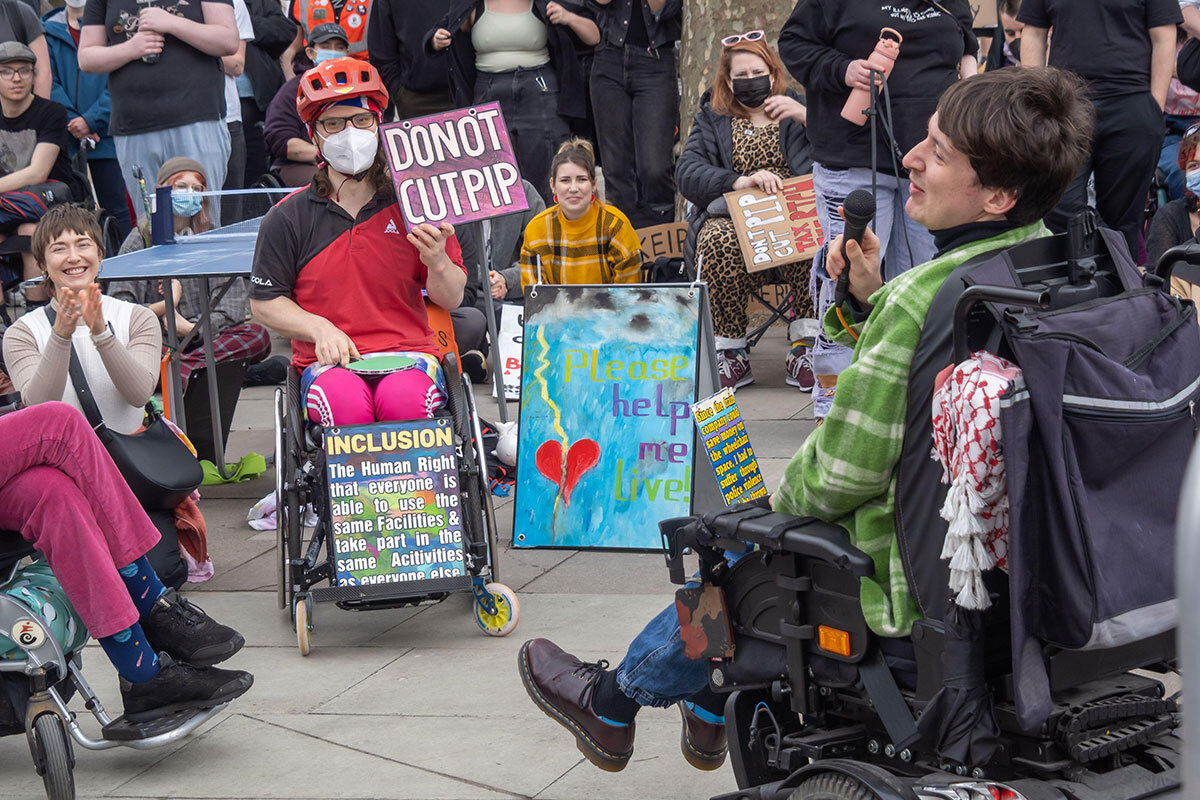 The government’s proposed cuts to disability benefits “can only result in increased homelessness”, a charity boss has said #UKhousing
Duncan Shrubsole, chief executive of homelessness charity St Martin-in-the-Fields Charity, told Inside Housing that tightening eligibility for personal independence payment (PIP) could cause “massive issues” for housing and housing benefit “which haven’t necessarily been clocked”.
His intervention came alongside reports that chancellor Rachel Reeves will announce a further £500m of welfare cuts in today’s Spring Statement, after the Office for Budget Responsibility watchdog said she had overstated the savings of her benefits reforms.
Universal Credit incapacity benefits for new claimants will now be frozen until 2030 rather than increased in line with inflation. There will also be a small reduction in the basic rate of Universal Credit in 2029, after it was raised by £7 a week.
Read more
Plans unveiled last week will see one million ill and disabled people lose PIP worth between £4,200 and £6,300 each, but Mr Shrubsole said they could lose additional exemptions, too.
“What hasn’t been appreciated is the way PIP is a passport to other benefits,” he said, which has two implications for housing.
First, if someone, their partner, or any children living with them get PIP they are currently exempt from the benefit cap. The cap ranges from £284 a week for a single adult outside London to £487 a week for a couple or single parent in the capital.
Having their housing benefit capped could make accommodation unaffordable for large families, Mr Shrubsole said. In addition, given Local Housing Allowance (LHA) and housing benefit rates are usually too low to cover rents, many people already draw on other benefits to cover their rents.
“People could face a real double whammy – less housing benefit, meaning an even bigger gap between rents and benefit levels, plus significantly less benefits to make up that housing benefit shortfall,” he said.
Large families “may well lose accommodation they have been moved into or no longer be able to move into it”, he added.
Second, if someone is under 35 and claiming PIP then they can also claim the LHA one-bed rate, rather than the shared accommodation rate, which can be more than £100 a week lower.
Young single people who are seeking rehousing could therefore be pushed into shared accommodation, which can be “incredibly challenging” for them, Mr Shrubsole said.
The LHA one-bed rate “can be the key to getting them in a property they can move on from”, he continued. “Now you lose PIP and you could be stuck in shared accommodation for 10 years.”
Under the government’s reforms, people aged under 22 could also lose any ability to access PIP. “There is a group of particularly vulnerable young people who can’t live at home,” he said. “That will raise youth homelessness.”
“The government has shown good intentions on tackling homelessness, but the concrete thing it is doing is cutting benefits that raise youth homelessness, which is very concerning,” he said.
Last week, the All-Party Parliamentary Group for Ending Homelessness agreed to write to the Treasury and the Department for Work and Pensions about Mr Shrubsole’s concerns.
Meanwhile Julie Layton, chief executive of Advance Housing and Support, told Inside Housing that the planned cuts were already causing anxiety and uncertainty for residents.
She said: “Advance provides supported housing to people with disabilities and mental health conditions and for many of them, disability benefits are a lifeline.
“We are deeply concerned about the impact the government’s proposals could have, and are already having in terms of increased anxiety and uncertainty for people.
“We are particularly concerned about the potential impact on people with mental health conditions whose disabilities can often be hidden and difficult to fit into the government’s eligibility criteria.
“Households that include people with disabilities are already more likely to be living on low incomes and the current proposals carry the risk of pushing many more people into poverty. While we understand the need for reform, it cannot come at the cost of disabled people’s independence and dignity.
“We hope that the government will speak to disabled people and supported housing providers to understand the real-world impact of any proposed changes and to make sure those who are in most need of support are not the ones who lose out.”
Last week Nic Bungay, director of housing, strategy and innovation at Habinteg Housing Association, also voiced concern that the cuts could “disproportionately affect those on already squeezed budgets”.
Sign up for our care and support bulletin
Already have an account? Click here to manage your newsletters
Related stories