You are viewing 1 of your 1 free articles
London mayor urged to tackle ‘chronic shortages’ of family and accessible homes with higher grants
London mayor Sadiq Khan has been urged to give higher grants for “desperately needed” family-sized and accessible homes in the capital’s next affordable housing programme.


 London mayor urged to tackle ‘chronic shortages’ of family and accessible homes with higher grants #UKhousing
The London Assembly’s Housing Committee, which scrutinises the mayor’s work, said that only a fifth of homes completed between 2016 and 2025 under the Greater London Authority’s Affordable Homes Programme (AHP) had three bedrooms, while just 3% had four.
Family-sized social rent homes and accessible homes for deaf and disabled Londoners are not being delivered at the scale required, leaving many families trapped in overcrowded or unsuitable accommodation, the committee found.
London is in the midst of a severe housing downturn, with recent statistics showing that work began on just over 1,200 affordable homes in London in the first half of 2025. Figures from consultancy Molior, released last week and shared with Inside Housing Living, revealed that starts on private homes in the capital fell by 84% in a decade.
Read more
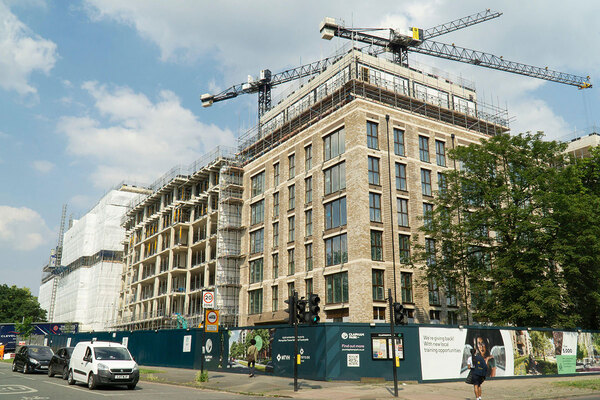


The committee said that affordable housing delivery in London had been hit by rising construction costs, high land prices, increased borrowing costs and new building safety requirements.
Yet, the AHP had also suffered from a “lack of strategic focus” and funding constraints. On family-sized homes, the report pointed to evidence from groups such as the G15, a group representing London’s biggest social landlords, which argued that grant rates are “relatively flat”, regardless of unit size or type.
“This creates a disincentive to deliver the very homes that are often most needed, particularly in areas with high levels of overcrowding or long waiting lists for larger properties,” the G15 said.
Accessible homes for deaf and disabled Londoners are also not being delivered at the scale required, the report found.
It highlighted the lack of grant uplift for accessible homes, and said the financial challenges that councils face are making delivering accessible, affordable housing difficult.
Following up on its investigation into accessible housing last year, the report also criticised the “concerning” data gaps in the London Plan and “poor monitoring” of accessible housing through the AHP.
“The insufficient data for accessible homes delivered through the Affordable Homes Programme means we cannot know whether delivery partners are meeting the targets for accessible homes set out in the London Plan,” the report said.
Zoë Garbett, chair of the London Assembly’s Housing Committee, said: “London’s housing crisis is hitting families and disabled Londoners hardest, yet the homes they need most are the ones least likely to be built.
“The report highlights that delivery has slowed sharply since 2023, at the same time as demand for genuinely affordable housing continues to rise.”
“Evidence to the committee showed that rising construction costs, high land prices, increased borrowing costs and new building safety requirements have all reduced the capacity of councils and housing associations to bring forward new homes.
“Without changes to how funding is allocated, the report warns that delivery under the next Affordable Homes Programme risks falling further behind.”
The report recommended that in the next AHP, which will run from 2026-36, grant rates should be higher for both accessible and family-sized homes.
This should be “standard practice” rather than being issued on a case-by-case basis, the report said. It also recommended clear targets to ensure that public investment “better reflects” London’s most urgent housing needs.
The report also raised concerns about the lack of progress in delivering sites for Gypsy, Roma and Traveller communities and the growing pressure on supported housing providers.
The current AHP (2021-26) runs until March, and has a target of 17,800 to 19,000 starts. This target has been lowered twice from its original goal of 35,000 as a result of the capital’s building slump.
As of September 2025, 64% of homes had still not been started, and the committee said, given the end of the programme was approaching, it was “concerned that the revised target will still not be met”.
Last October, the GLA and housing secretary Steve Reed announced an emergency package of measures designed to stimulate the sector, including a controversial move to lower affordable housing targets.
Under the changes, developers building in the capital will be able to opt for a “fast-track” planning route with a target of just 20% affordable homes, rather than the current threshold of 35%.
Sign up to Inside Housing’s Development and Finance newsletter
Sign up to Inside Housing’s weekly Development and Finance newsletter, featuring a round-up of business, development and regeneration news and analysis.
Already have an account? Click here to manage your newsletters.
Related stories