‘Our industry doesn’t always see itself as a major hazard sector, despite Grenfell’
The sector must change its procurement culture from complying with minimum standards, to a mature risk management approach. Inside Housing, in association with SEC, asks two experts how to do this


 “Our industry doesn’t always see itself as a major hazard sector, despite Grenfell,” says Amanda Long @CCScheme (sponsored) #UKhousing @SEConsortiumThe sector must change its culture away from procuring to merely meet minimum legal standards, and towards a mature risk management approach. @insidehousing hears from two experts in procurement and building safety (sponsored) #UKhousing @SEConsortium“We want to address the culture that sits behind procurement by setting some solid principles that will improve building safety,” says David Ashby @SEConsortium (sponsored) #UKhousing
In association with:

Last year, the Maintaining Building Safety workgroup at South East Consortium (SEC) – a central purchasing body supporting the housing sector – produced and circulated its Procuring for Building Safety report. The workgroup was set up to improve quality in the construction sector and the report’s message was simple but stark: procurement professionals must change how they view building safety and abandon an approach of simply following a set of procurement rules to meet minimum standards.
Inside Housing speaks to David Ashby, the workgroup’s project lead, and Amanda Long, chief executive of Building a Safer Future – an organisation which focuses on a positive culture and behaviour change in building safety – about what they hope the report will achieve.
Read more


Why is the workgroup and its Procuring for Building Safety report so important?
DAVID ASHBY: After the Grenfell tragedy in 2017, we wanted to produce guidance for procurement professionals that would be of real, practical use. To do this, in 2020, we set up workgroups made up of industry and sector experts to identify housing’s biggest challenges. The report aims to address the silo approach to procurement, as well as the temptation to think of it as a ‘tick-box’ exercise. We wanted to address the culture that sits behind procurement by setting out some solid principles that will improve building safety.
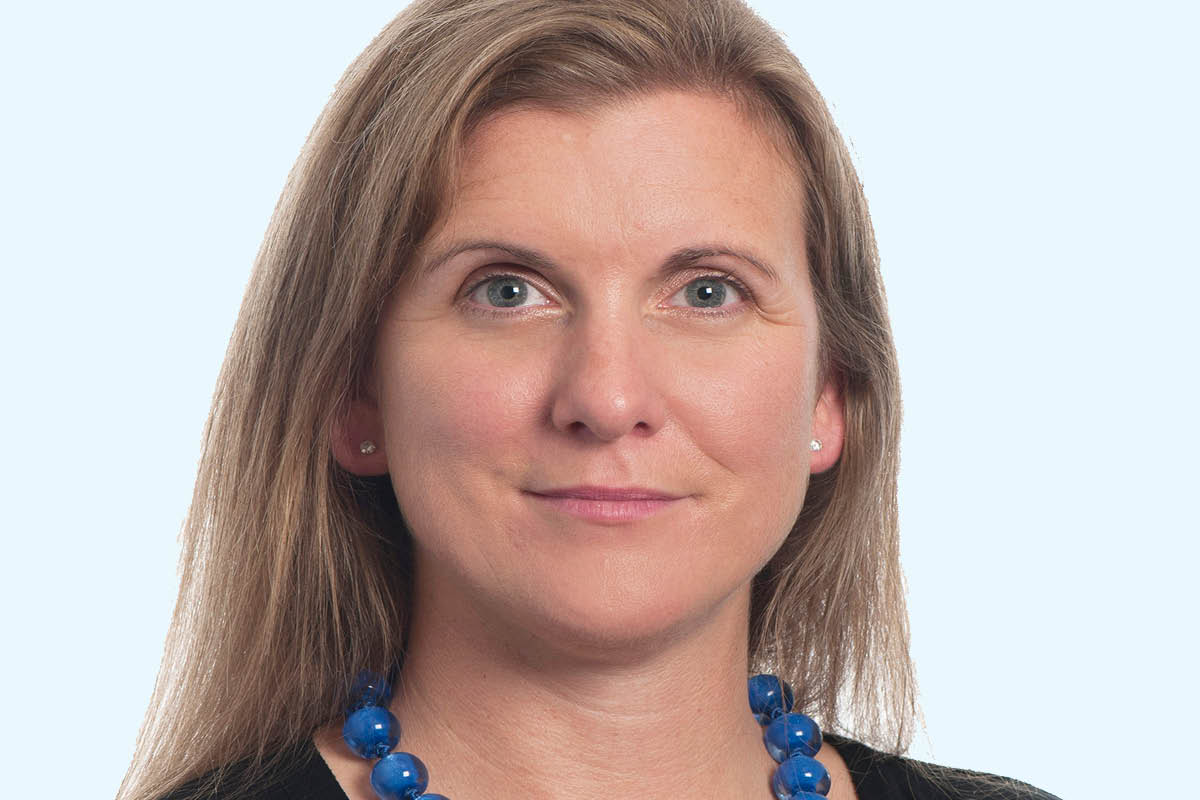
AMANDA LONG: The report is a superb piece of work. If we are going to fix a broken system, we need clear guidance on practical action and better collaboration across the entire value chain. I was delighted to see the synergy between the report and the Building a Safer Future Champions initiative, which aims to help companies drive the culture change in their organisations to put building safety first. Both present a new set of hallmarks for industry best practice after Grenfell.
Why has there been such a lack of focus on safety?
DA: There’s been a massive drive for efficiencies over the past 20 or 30 years, which has led to a problem of competence. Local authorities have tried to save money by replacing the most expensive – and knowledgeable – people with contract administrators who have less experience in construction. We’ve experienced several decades of de-skilling in social housing.
AL: There’s a mindset in the sector that compliance to a minimum standard is OK. It isn’t. We should be going beyond regulation, which is what the Procuring for Building Safety report calls for. Also, as Dame Judith Hackitt makes clear in her Building a Safer Future report, the industry is driven by a speed maximisation and cost minimisation culture. In other words: “Build it fast, build it cheap.” It’s a race to the bottom, and the industry cannot carry on being unaccountable and not responsible for it.
Are there any innovations in the report that are particularly significant?
DA: The report is divided into two. The first section is around principles: the four Cs (culture, compliance, competence and control) and eight pillars (taking responsibility, understanding risk, strong leadership, unique approach, competence, exceeding standards, detailed information and early engagement) to help executives understand what they need to achieve in a cultural sense. Then there are specifics aimed at procurement professionals.
Some of the practical innovations I really like include the Code for Construction Product Information, which provides assurance for manufacturers’ product information and recognition of their efforts to prioritise product safety; and the LEXiCON project – developed by the Construction Innovation Hub and Construction Products Association – which takes a big step towards a common approach to construction product information. Then there’s BSI Identity, a digital service which helps people trace products in the supply chain. All are really important for better building information modelling (BIM), which is vital in us getting better at what we do.
AL: I’m really glad you picked up on construction product management, David, because I’m currently responsible for the Building a Safer Future Charter, as well as the Code for Construction Product Information. I was delighted to see it in the report because it shows a more joined-up approach. I also like the structure of the report. Its four principles and eight pillars are meaningful and accessible.

David Ashby is a chartered building surveyor and a fellow of the Royal Institution of Chartered Surveyors. He has more than 30 years’ experience in social housing and leads SEC’s operations team, delivering procurement and technical services to its members.
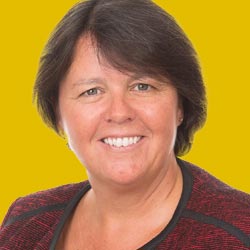
Amanda Long is chief executive of the Considerate Constructors Scheme and Building a Safer Future. She has expertise driving ethical business practice and developing corporate social responsibility frameworks to improve standards.
She also helps organisations in behavioural and culture change programmes.
How has the report changed practices at SEC?
DA: As a framework provider, we’re increasingly spending more time talking to our service users about what they want to achieve. Could there be a better way of doing it? Have they thought about different options? In this country, the mindset is inevitably: “Here’s the amount of money I have – what can I get for it?” Whereas in Germany the mindset is: “What’s the best way of building this – and how much will it cost me?” SEC has also become a corporate supporter of Building a Safer Future, and we’re generally being more outward-focused. We’re trying to educate our user group through training sessions, plus we’re taking part in external events and conferences to get the message across that the sector has to change.
Why did Building a Safer Future want to get involved with SEC’s Maintaining Building Safety workgroup?
AL: Our commitments are: collaboration to spearhead culture change that puts building safety first, to be transparent in the interests of safety, making safety a key factor of choice in decision-making, ensuring the voice and the safety of residents, and ensuring everyone understands their responsibility and accountability. There is such close alignment between our two organisations.
How difficult will it be to change mindsets on this issue?
AL: It’s like turning a supertanker, and it’s going to require a huge effort from the whole sector. Unfortunately the collective will to make it happen is not there yet. On the plus side, change has been achieved in other major hazard sectors – such as chemical, aviation and rail – which all now manage major hazard risk very effectively. The problem, I think, is that our industry doesn’t always see itself as a major hazard sector, despite Grenfell. It therefore lacks the required level of maturity around risk process and management that is necessary to deal with building safety.
DA: There are pockets of good practice which need to become more consistent across the board. But there has to be a carrot and stick approach because none of this can be achieved through ‘stick’ – ie legislation – alone. There needs to be carrot, too. People need to understand what’s in it for them and that by following the guidance in the report, they will get better results in terms of quality, price and predictability. We’re not asking people to go from zero to 10, but we are asking them to make the first step towards continuous improvement. It’s not about finger-wagging, either, which is unhelpful and counter-productive. It’s about support and encouragement.
Related stories




9 takeaways from HOMES UK 2026