You are viewing 1 of your 1 free articles
A golden era for housing? Devolution could make it happen
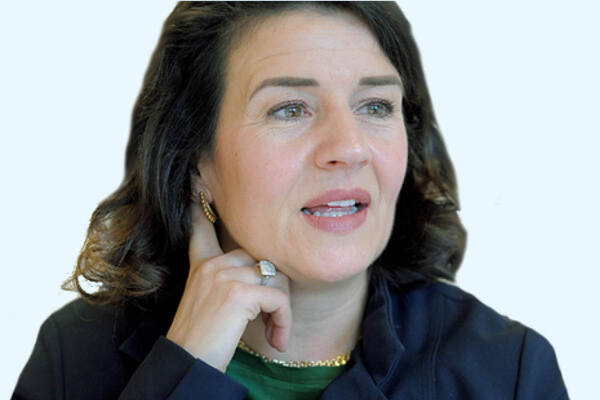
The English Devolution White Paper gives us the potential to build homes and communities based on local knowledge and meaningful collaboration, writes Nick Atkin, chief executive of Yorkshire Housing



 The English Devolution White Paper gives us the potential to build homes and communities based on local knowledge and meaningful collaboration, writes Nick Atkin, chief executive of Yorkshire Housing #UKhousing
In December 2024, the government published its long-awaited English Devolution White Paper. While it may not have captured widespread attention, for those of us in devolved regions, it marks a seismic shift.
The white paper lays the groundwork for a new statutory framework for devolution, rebrands combined authorities as strategic authorities, and hands mayors expanded powers across housing, regeneration, economic development and net zero. Most significantly, it sets out a path towards full devolution of affordable housing funding and delivery.
This is more than just a policy refresh. It gives us the potential to build homes and communities based on local knowledge, meaningful collaboration and solutions that actually fit the places we serve.
Here in Yorkshire, we’re already ahead of the curve.
Read more

The White Rose Agreement between the Yorkshire mayors is a powerful example of this in action. It sets out a collective commitment to work together on the big challenges facing our region, from housing and transport to climate and skills. It’s a genuine alignment of leadership across a diverse region.
Housing leaders across Yorkshire have taken inspiration from that same sense of working together. This has taken the longstanding, shared approach and collaboration I spoke about in this interview with Martin Hilditch, editor of Inside Housing, to new levels.
The four housing partnerships in each of the devolved areas bring together housing associations, stock-holding councils, Homes England and combined authorities in ways we have never seen before. Recently, all four came together for a joint submission ahead of the Spending Review. That was unprecedented, and shows what’s possible when we speak with one voice.
“Across Yorkshire, housing associations now share their development pipelines with the respective combined authority and Homes England. That kind of transparency was unthinkable until quite recently”
We’re already seeing the benefits of this approach. Across Yorkshire, housing associations now share their development pipelines with the respective combined authority and Homes England. That kind of transparency was unthinkable until quite recently. It allows the combined authority to act as an honest broker, spotting duplication and missed opportunities. Instead of bidding against each other for the same sites, we’re having mature conversations about who’s best placed to deliver. It’s a huge cultural change that’s taking hold across the region.
In York and North Yorkshire, this shared approach has gone even further. We’ve co-designed an affordable housing standard which sets out clear expectations for the standard of homes that will be built across the region, including Section 106s.
This level of place-based, responsive planning simply cannot be done from the corridors of central government. It requires local leadership and local accountability. Devolution makes that possible.
The English Devolution White Paper is driving these changes. It confirms how mayors will gain new powers over housing, regeneration, climate and energy. This includes strategic authorities shaping future funding programmes. Homes England will evolve, too, becoming more locally accountable and adopting a regional, place-based operating model that supports local ambitions.
This really matters in regions like Yorkshire. We’re not dealing with a single housing market. We have coastal communities, former industrial towns, rural villages, national parks and major urban centres, often within the same local area. A one-size-fits-all approach has never worked here. Devolution gives us the tools to respond with both nuance and precision.
But this isn’t just about increasing housing supply. Through our partnerships, we’re working with combined authorities to address broader priorities such as skills, employment, net zero and health. These are not side issues. They’re fundamental to placemaking and the long-term sustainability of our communities.
“We have coastal communities, former industrial towns, rural villages, national parks and major urban centres, often within the same local area. A one-size-fits-all approach has never worked here”
Affordable housing is more than a social good. It’s a powerful engine for economic growth. That’s why the government’s recent commitment to a £39bn Affordable Homes Programme over the next 10 years is so significant.
If we’re serious about building at scale and delivering lasting impact, then long-term investment like this is essential. Affordable homes are critical to a well-functioning economy. They support jobs, stimulate local growth, ease pressure on health and care services, and underpin regeneration. The coordinated approach we’re building in Yorkshire is a clear demonstration of how this investment can deliver not just homes, but better outcomes for everyone.
We’re also delivering better value by working smarter, by pooling expertise, coordinating procurement, sharing risk and increasing our collective efficiency. Homes England continues to play a crucial role, bringing national insight and experience to the table. The future is in co-delivery, and the evolution of Homes England will mean it remains a vital part of this new ecosystem.
Of course, there are challenges. Combined authorities are still developing the capacity they need to fully take on the increased responsibilities set out in the white paper. Building that capability will take time and support from the government and the housing sector. But the essential elements are already in place. We have strong relationships, clear direction and a strong alignment across the sector.
In all my years working in housing, I’ve never seen this level of collaboration. That’s what gives me confidence – not just in what we’ve already achieved, but in what we can do next.
This could be a golden era for housing. But to make that a reality, we must match our ambition with the tools and appetite to act. We need the freedom to make decisions locally, the investment to deliver at scale, and the continued trust from government to lead the way.
The recent Spending Review shows the government is on board. Now it is time to turn that support into delivery.
If we get this right, we will not just build more homes. We will build stronger communities, greater opportunity and a better future for everyone. And if that doesn’t get you excited, I don’t know what will.
Nick Atkin, chief executive, Yorkshire Housing
Nick Atkin will be speaking at Housing 2025. Hear from him during the session on ‘English Devolution White Paper: local approaches to meeting housing need’ at 12.05pm on Wednesday 25 June.
Sign up for our development and finance newsletter
Already have an account? Click here to manage your newsletters
Related stories