You are viewing 1 of your 1 free articles
Confidence, not technology, is what’s missing to make retrofit work
Residents want retrofit, but their lack of trust in the system delivering it is now one of the biggest barriers to improving the quality of our homes, writes Amanda Hack, Labour MP and chair of the All-Party Parliamentary Group for Future Homes, Skills and Innovation


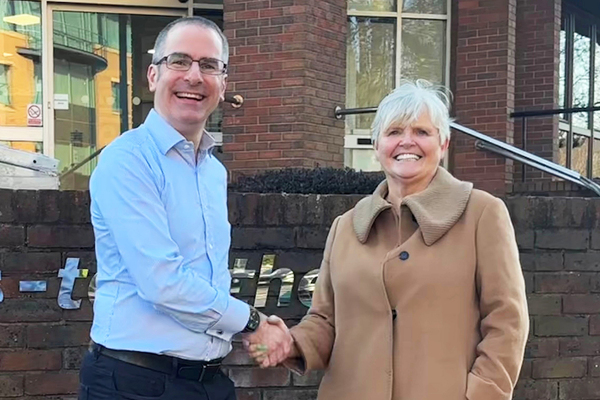
Amanda Hack is Labour MP for North West Leicestershire
 Residents want retrofit, but their lack of trust in the system delivering it is now one of the biggest barriers to improving the quality of our homes, writes Amanda Hack, Labour MP and chair of the All-Party Parliamentary Group for Future Homes, Skills and Innovation #UKhousing
With the publication of the government’s new Warm Homes Plan, retrofit is once again in the political and public spotlight. For most people, the decision to retrofit their home is not ideological.
It is not about hitting a net zero target or trialling the latest technology. It is about staying warm, keeping bills down, protecting their family’s health and having confidence that work done to their home will make life better, not worse. And yet confidence is exactly what is missing from the UK’s retrofit system.
At a recent parliamentary roundtable bringing together MPs, social housing providers, consumer bodies, skills leaders and industry experts, one message came through with striking consistency.
Residents want retrofit, but they do not trust the system delivering it. That lack of trust is now one of the biggest barriers to improving the quality of our homes.
Read more



The figures are stark. Independent audits show that the overwhelming majority of inspected external wall insulation installations fail to meet required standards. At the same time, consumer advice organisations report rising complaints, even while many households say they would still recommend retrofit when it is done well.
This contradiction tells us something important. The problem is not retrofit itself, it is how it is being delivered.
“The disconnect here is that these things are being done to you, rather than with you. This is not acceptable, and it is not inevitable”
For social housing tenants, the stakes are particularly high. Retrofit work is often disruptive and deeply personal. It affects how people sleep, how they manage long-term health conditions, how they ventilate their homes and how secure they feel in their own space. When things go wrong, residents can be left colder, facing mould or higher energy bills, with little clarity about who is responsible or how to put it right.
The disconnect here is that these things are being done to you, rather than with you. This is not acceptable, and it is not inevitable.
Too often, retrofit has been treated as a technical exercise rather than a human one. Measures are installed in isolation, assessments are rushed and residents are expected to adapt to systems that were never properly explained. A whole-home approach that looks at heat, ventilation, fabric, energy use and household behaviour in tandem should be the norm, not the exception.
From a consumer perspective, three things matter above all else.
First, clarity. Residents and homeowners alike need simple, trustworthy information about what work is being done to their home, why it is appropriate for that building and what outcomes they should expect.
At present, the landscape of standards, marks and schemes is so fragmented that even professionals struggle to navigate it. For residents, it is impenetrable. A single, recognisable quality and assurance scheme, the retrofit equivalent of Gas Safe, would go a long way towards rebuilding trust.
Second, competence. Qualifications alone do not guarantee good outcomes. Competence is about how work is assessed, how installers behave in people’s homes and how problems are identified and resolved. When retrofit fails, it is residents who live with the consequences long after contractors have left. Raising standards must therefore mean raising accountability, not simply adding another badge or certificate.
Third, support. When something goes wrong, residents need clear routes to redress that are accessible, independent and effective. Too many households currently fall between the gaps, unsure whether to turn to their landlord, installer, scheme provider or regulator. A system that works for consumers does not send them on a scavenger hunt for responsibility.
“Across housing providers, manufacturers, installers, colleges and innovators, there is a clear willingness to raise standards, improve skills and put residents first”
None of this exists in a vacuum. Skills shortages, stop-start funding and policy uncertainty all filter down to the front door. When programmes end abruptly or change direction, training pipelines collapse, experienced workers leave the sector and quality suffers. Residents pay the price for instability they had no hand in creating.
The encouraging news is that the sector is not short of commitment. Across housing providers, manufacturers, installers, colleges and innovators, there is a clear willingness to raise standards, improve skills and put residents first. Industry stands ready to work with willing partners in government and across the housing sector to deliver retrofit properly, at scale and with quality.
Equally, innovation must work for households, not just for balance sheets. New technologies, from smart controls to AI-driven energy management, are already showing real potential to cut bills and improve comfort, particularly for vulnerable households. But innovation only delivers for consumers when regulation, installation and aftercare keep pace.
What residents want is not complicated. They want warmer homes, lower bills, clear information and confidence that work carried out in their name will improve their lives. They want to be listened to, not managed. They want retrofit done with them, not to them.
As chair of the Future Homes, Skills and Innovation APPG, my priority is ensuring that consumer voices sit at the heart of this agenda. Retrofit must become a national mission grounded in quality, skills and trust, and delivered through genuine partnership between government, industry and communities.
If we get this right, retrofit can be transformative. Healthier homes, lower costs, skilled jobs and stronger communities are all within reach. But success will only come if we start where consumers start, with trust, dignity and lived experience.
Amanda Hack, chair, All-Party Parliamentary Group for Future Homes, Skills and Innovation
Sign up to Inside Housing’s Sustainability newsletter
Sign up to Inside Housing’s weekly Sustainability newsletter, featuring our in-depth coverage of the sector’s journey to delivering net zero.
Click here to register and receive the Sustainability newsletter straight to your inbox.
And subscribe to Inside Housing by clicking here.
Already have an account? Click here to manage your newsletters.
Related stories