You are viewing 1 of your 1 free articles
Funding alone will not fix the adaptations crisis
The recent uplift in Disabled Facilities Grant (DFG) funding is welcome, but the way adaptations are delivered continues to be slow, fragmented and reactive, writes Laura Wood, head of influence and innovation at PROCare



Laura Wood is director of Invisible Creations
 The recent uplift in Disabled Facilities Grant funding is welcome, but the way adaptations are delivered continues to be slow, fragmented and reactive, writes Laura Wood, head of influence and innovation at PROCare #UKhousing
The recent uplift in Disabled Facilities Grant (DFG) funding is welcome, and overdue. It signals a growing recognition that adaptations matter, and that people should not be forced to live in homes that undermine their safety, independence or dignity. But more money, on its own, will not resolve the crisis in adaptations facing social housing.
Recently, my colleague spoke to a tenant who had been assessed as needing a level-access shower after losing mobility in one leg. In principle, everyone agreed. In practice, nothing happened.
Responsibility moved between housing, occupational therapy and council teams, each constrained by rules that made sense in isolation but not together. While decisions stalled, he was left washing in a sink, unable to properly manage a serious skin condition. Funding was not the barrier. The system was.
Read more
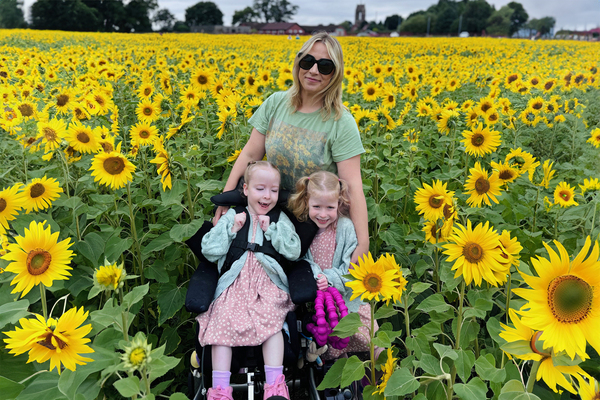
When Foundations launched its Fit for our Future campaign at the House of Lords in July 2024, it was built on a simple principle: adaptations should support everyday life, not feel like a clinical add-on. But the evidence is now clear – the real risk is not simply how much funding is available, but whether the delivery system itself can cope with rising demand and complexity.
Demand is increasing as people live longer with disabilities and age-related conditions. Yet, the bigger challenge for social housing is whether current delivery models can respond quickly, coherently and safely when needs change.
“It’s common to see people waiting months for a bathroom they can use safely, or families managing known risks while referrals, assessments and approvals move between teams”
Working alongside housing providers and local authorities for many years, certain patterns become hard to ignore. Since 2019, complaints to the Housing Ombudsman have risen by more than 470%. Repairs and adaptations account for a significant share of those cases, with investigations repeatedly identifying delays, poor co-ordination and weak early decision-making as root causes of maladministration.
The DFG remains essential, and increased investment matters. But the way adaptations are delivered continues to be slow, fragmented and reactive. It’s common to see people waiting months for a bathroom they can use safely, or families managing known risks while referrals, assessments and approvals move between teams.
Adaptations often sit across multiple systems with different priorities, budgets and timescales. When ownership is unclear, decisions are delayed and risk escalates.
Evidence from Foundations and local authority partners consistently shows that delays are driven less by funding availability and more by process complexity, multiple handovers and unclear accountability.
The scale of unmet need reinforces this picture. Research by Habinteg and the Centre for Ageing Better shows that just 13% of homes in England are accessible, only 7% have an adapted bathroom and more than half of households that require a bathroom adaptation do not have one. The same research estimates a shortfall of 12.8 million accessible homes relative to need.
Bathrooms sit at the point where safety, health and dignity intersect. Housing Ombudsman casework shows that failures involving bathrooms frequently coincide with injury, increased care needs and delayed hospital discharge, escalating quickly from service failure into formal findings.
From a governance perspective, this matters. Ombudsman reports consistently point to the importance of early decision-making and proactive risk management. When adaptations are delayed or poorly co-ordinated, the consequences are not just operational. They are legal, financial and reputational.
It’s understandable that the sector focuses on funding. But money alone does not address how decisions are made, how work is co-ordinated or how outcomes are measured.
“Two-thirds of people believe they would struggle to live independently in their current home if their health declined... delivery structures have not yet caught up with those expectations”
Evidence from the Centre for Ageing Better shows that retrofitting homes later in life costs significantly more than planning for accessibility earlier. Reactive approaches generate waste, repeat work and refusal, while fragmented responsibility makes it harder to identify risk early and harder to resolve it when things go wrong.
Public expectations also reflect this gap. Polling by Habinteg and the Centre for Ageing Better found that two-thirds of people believe that they would struggle to live independently in their current home if their health declined, and that new homes should support independent living as standard. Delivery structures have not yet caught up with those expectations.
This problem can be solved. In Wigan, a planned programme of bathroom refurbishments highlighted the limits of simply replacing old bathrooms with updated versions of the same standard design. New baths and layouts were installed, even in homes where residents already had mobility issues or were likely to develop them.
As a result, some bathrooms were only in place for weeks or months before they had to be removed and replaced again with designs that better supported accessibility and changing needs.
A different approach was then tested. Occupational therapists were involved earlier, and a specialist delivery partner was brought in to support surveys, specification and decision-making before work began.
Assessment, design and delivery were aligned at the outset rather than treated as separate stages. In property types where future need was predictable, such as bungalows, more adaptable and accessible layouts were agreed upfront, avoiding the need for further disruptive changes later on.
The result was less rework, fewer delays and bathrooms that worked first time. It showed that when assessment, specification and delivery are aligned early, risk reduces and outcomes improve.
The ambition is there, and the policy intent is clear. What is missing is delivery capability.
Fit for Our Future is calling for a move away from disconnected tasks and short-term fixes towards delivery models designed to work in practice. That means stronger co-ordination across housing and social care, clearer ownership of outcomes and decisions made early enough to prevent harm rather than respond to it.
It also means thinking about housing assets over decades, not funding cycles. How adaptations are delivered directly affects safety, long-term cost, resident confidence and the condition of homes themselves.
The risk of not making homes fit for the future is no longer abstract. It is visible in complaint data, in health outcomes and in the widening gap between need and delivery. If the sector continues to focus primarily on financial inputs, it will continue to absorb the cost of failure through rework, escalation and loss of trust.
A greater focus on delivery, and on how systems and strategic partnerships are designed to support it, offers a more sustainable way forward for residents, providers and public services.
Laura Wood, head of influence and innovation, PROCare
Sign up to Inside Housing’s Care and Support newsletter
Sign up to Inside Housing’s Care and Support newsletter, a fortnightly bulletin featuring care and support news and analysis.
Click here to register and receive the Care and Support newsletter straight to your inbox.
And subscribe to Inside Housing by clicking here.
Already have an account? Click here to manage your newsletters.
Related stories