Bristol City Council reveals affordable viability change as botched IT system causes a repairs backlog of 20,000
Bristol City Council’s transition between two IT systems has seen its repairs backlog jump to 20,000, in the wake of it allowing developers to renegotiate affordable housing on sites with viability concerns.


 Bristol City Council’s transition between two IT systems has seen its repairs backlog jump to 20,000, in the wake of it allowing developers to renegotiate affordable housing on sites with viability concerns #UKhousing
A report that went before the council’s Homes and Housing Delivery Policy Committee this month saw repairs increase from 8,000 to 20,000 in the last three months of last year.
The council maintains that the actual compliance figures will be “significantly higher”.
This is because the transition between the housing department’s IT systems has led to an increase in repairs on the system that are showing as outstanding, but are actually closed.
Read more

The report states: “Data on repairs completion... does not reflect the actual repair completion position.
“This issue has also impacted on teams needing to undertake a number of workarounds, which is having some impact on service delivery. An example is the increase in gas services that have become overdue.”
The roll-out of the new IT system began in March 2022. Its implementation was supposed to take two years and cost £7.5m, but the council has approved an additional £1.3m to help with its introduction.
However, Labour councillor Rob Logan told a council meeting: “It’s really difficult to know how to interpret the figures. Effectively what it [the report] says is ‘these figures are rubbish, we don’t trust them’.”
Bristol Council was one of the first providers to be given a non-compliant C3 consumer rating, which means there are “serious failings” and the council must make “significant improvements”.
The English regulator found that the council could not provide evidence that it was meeting carbon monoxide safety requirements for more than 22,000 of its 26,700 homes.
It also reported 1,900 open damp and mould cases, 16,000 overdue repairs and 3,000 overdue fire safety actions. In addition, the council did not have up-to-date information about the condition of its tenants’ homes.
As the council works through its repair backlog, Inside Housing Living has also reported how Bristol will allow developers to renegotiate the affordable housing provision on sites with planning consent to combat viability pressures.
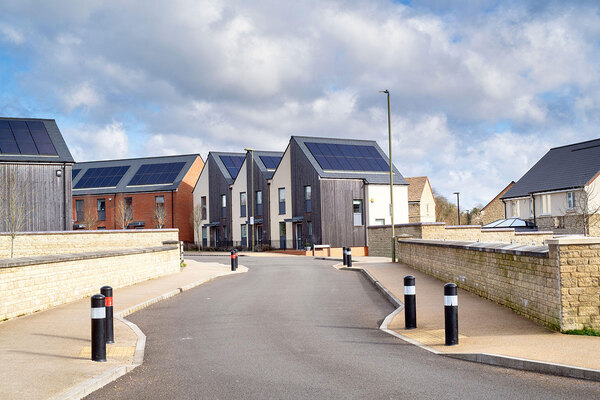
Bristol has published a new ‘viability addendum’ to its affordable housing policy, which allows developers to reopen discussions over affordable housing provision to help consented schemes struggling with cost pressures.
The local authority said that it would be willing to explore the use of affordable housing subsidy in some or all of the subsidy-free provision, to maintain the delivery of affordable homes.
‘Subsidy-free’ refers to the homes delivered through Section 106 purely at the developer’s cost, and without the use of Homes England or other affordable housing grants.
The council acknowledged that the cost of housebuilding in Bristol has “escalated significantly” since 2022, because of costs associated with construction, labour and meeting new building safety regulations.
Sign up to Inside Housing’s Council Focus newsletter
Sign up to Inside Housing’s weekly Council Focus newsletter, featuring the latest affordable housing news focused on local authorities delivered to your inbox.
Click here to register and receive the Council Focus newsletter straight to your inbox.
And subscribe to Inside Housing by clicking here.
Already have an account? Click here to manage your newsletters.
Related stories