Jules Birch is an award-winning blogger who writes exclusive articles for Inside Housing
It’s way past time for government to step up to the challenge of decarbonising homes
The government has not yet set out a strategy for decarbonisation of our housing stock. The case has never been stronger, and it is way past time to do so, writes Jules Birch


 The government has not yet set out a strategy for decarbonisation of our housing stock. The case has never been stronger, and it is way past time to do so, writes Jules Birch #UKhousing
The prospect of underspent decarbonisation funding for social housing being sent back to the Treasury is worrying enough in itself – and that’s before you consider the bigger picture.
The warning from a senior civil servant at the Department for Business, Energy and Industrial Strategy was delivered at the Housing 2022 conference this week as he urged landlords to bid for the upcoming second wave of the Social Housing Decarbonisation Fund (SHDF).
In the wake of alarming lack of progress by councils that received funding from the Social Housing Decarbonisation Fund Demonstrator, the fact that the money is being released in one-year tranches may be part of the problem.
Read more

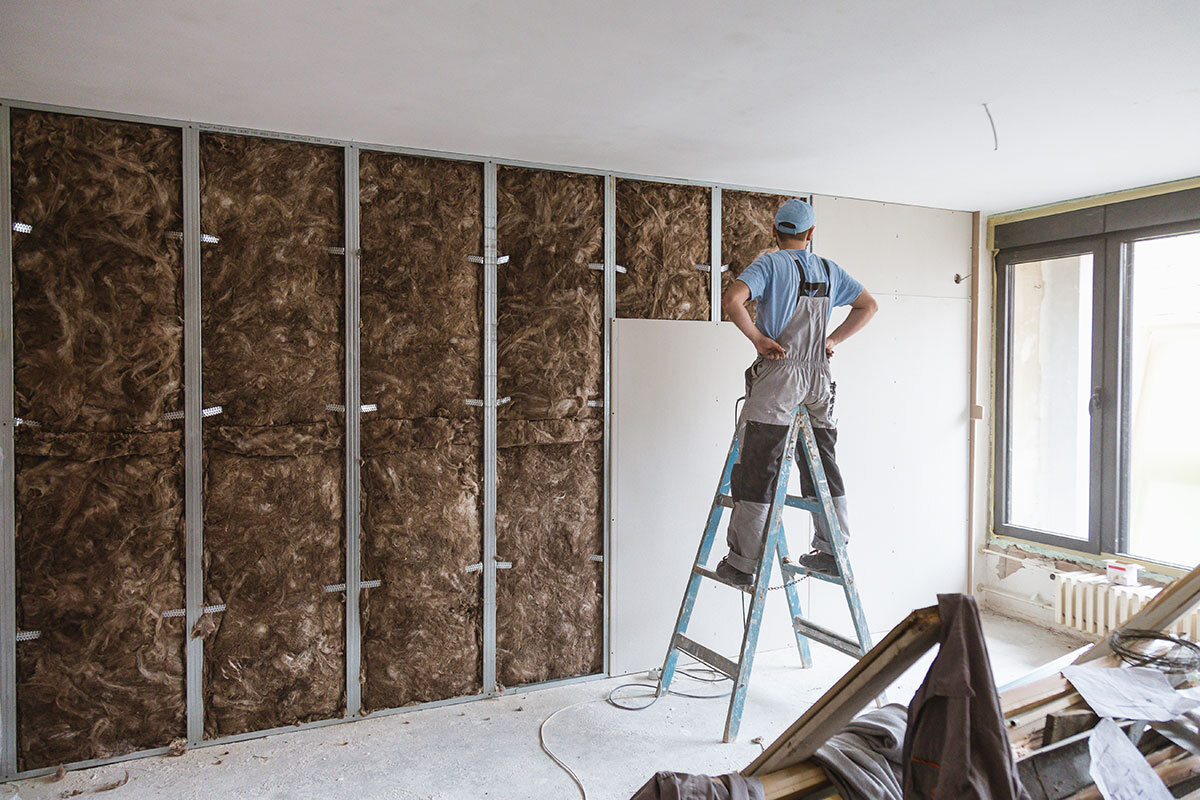

There are also still major concerns about skills and capacity to carry out the work.
However, at least the fund is there. The really alarming thing is that this is just about the only part of plan to decarbonise housing as a whole that is even close to being on track to achieving the progress needed to achieve net zero.
A sobering report from the Climate Change Committee (CCC) published on Wednesday revealed the scale of the challenge and the lack of progress so far.
Absurdly, as Lord Deben, chair of the CCC, said in his introduction, we are still building new homes that will not meet minimum standards of energy efficiency and will require significant and expensive retrofitting. This is six years and counting after the original target for all new homes to be zero carbon.
The Future Homes Standard will not apply to new homes in England until 2025 and the CCC is “not confident” that interim measures will drive sufficient change before then since they will still add to the stock of gas boilers that will need to be retrofitted.
But progress is even slower on existing homes, and the vast majority of the housing stock that will exist in 2050 has already been built.
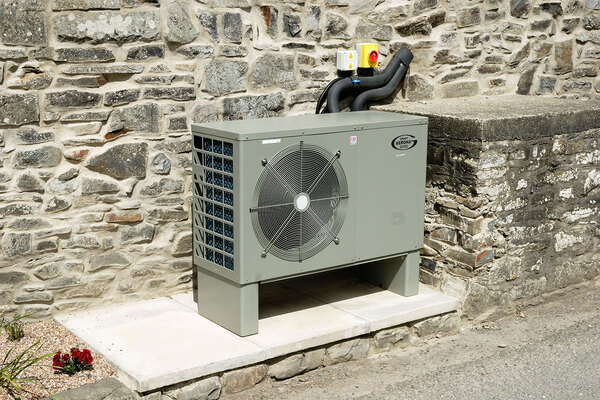
Much depends on the take-up of low-carbon heat pumps. Although installations increased to 54,000 in 2021, this still needs to be increased by 12 times to achieve the government’s target of 600,000 a year by 2028, and even that is less than the 900,000 the CCC said is needed for a balanced net zero pathway.
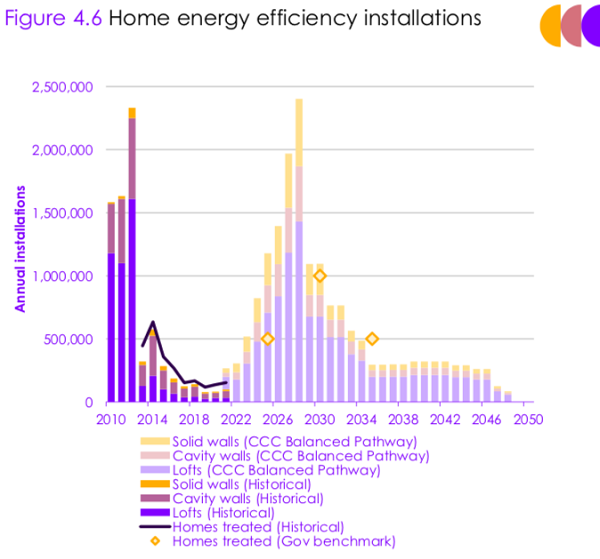
The picture is even grimmer on homes installed with energy-efficiency measures such as insulation, which will be essential to meeting the government’s target ambition for all homes to achieve an energy performance certificate (EPC) rating of C by 2035.
This graph (below) from the CCC’s report shows not just the gap between what’s being achieved now and what’s needed, but also the scale of the slump after the government cut support for retrofits and cut the ‘green crap’ in 2012:
Another 12 months have ticked by on the road to 2050 since the CCC delivered a similar warning last year, but surging energy prices mean the context for consumers has changed radically.
In the short term, the cost of living crisis reduces the squeeze on spending on energy efficiency. In the longer term, it strengthens the link between decarbonisation and consumers’ pockets and increases the viability of retrofit.
“The value for money case of energy efficiency has never been stronger,” the CCC said.
Equally, while there has been progress in decarbonisation schemes like the SHDF for fuel-poor homes, far more households are now in fuel poverty (between two and four million depending on the definition used) and budgets will be stretched to breaking point.
However, the CCC said it is energy efficiency in non-fuel poor homes that represents the most significant gap of all.
Only the private rented sector is covered via the consultation on increasing the minimum standard for rental properties to EPC C by 2028, although it remains to be seen how that will be met without a reduction in supply.
For owner-occupied homes, there is no funding to support retrofits, no regulations to drive improvements and only a vague prospect of targets on boiler manufacturers to drive more heat pump installations.
The only other policy being considered by the government here is voluntary energy performance targets on mortgage lenders.
The CCC said that this policy gap needs to be addressed with credible policies and suggested requiring EPC C from 2028 at point of sale and/or a mandatory minimum energy requirement on mortgage lenders.
The impact of either of those measures on owners of older homes, and the likely headlines in government-friendly newspapers, perhaps tells you all you need to know about why that policy gap still exists.
Even if that political problem could be addressed, there are still major risks with public awareness (a comprehensive energy advice service is due to be launched this summer) and shortages of the skilled workers needed to do retrofits and install heat pumps.
At the moment we don’t even count how many there are and how many are being trained, and a net zero skills strategy promised by this spring has still not been published.
The prospect of climate change already made an overwhelming case for housing decarbonisation even before the energy price crisis and surging fuel poverty added extra urgency. It’s way past time for government to step up to the challenge.
Jules Birch, columnist, Inside Housing
Sign up for our asset management and sustainability newsletter

Already have an account? Click here to manage your newsletters
Sign up to the Tenant and Resident Engagement Conference

Join us at this leading one-day event designed to help landlords and tenants achieve meaningful engagement following the Social Housing White Paper sector reforms, covering culture change, co-production and how to engage tenants on climate change, building safety, disrepair and more.
There is a free tenant place for every delegate pass booked by a landlord.
To view the agenda and book your delegate pass, click here.
Related stories