You are viewing 1 of your 1 free articles
Regenerating council estates can deliver the new social housing Londoners need
Estate regeneration is an opportunity to create a better future for London social housing, writes Joanne Drew, co-chair of the London Housing Directors’ Group



Joanne Drew is strategic director of housing and regeneration at Enfield Council, and co-chair of the London Housing Directors’ Group
 Estate regeneration is an opportunity to create a better future for London social housing, writes Joanne Drew, co-chair of the London Housing Directors’ Group #UKhousing
London boroughs are proud social landlords. We want to provide high-quality homes to our tenants. We are also committed to delivering more social housing to meet the huge levels of unmet demand in the capital.
The desperate need for homes could not be clearer. There are 336,000 households on social housing waiting lists in the capital. A staggering one in 50 Londoners is currently homeless and living in temporary accommodation.
Beyond the devastating human impact, the homelessness emergency is draining resources and pushing council finances to the brink. Analysis by London Councils shows that boroughs collectively spend almost £5m every day on temporary accommodation.
Read more


The chronic shortage of affordable housing is the fundamental factor driving homelessness. This is why it is crucial to ramp up housing delivery in the capital. The government has set ambitious targets and London needs to build 88,000 homes a year.
At the same time, our existing social housing faces immense challenges. Too much stock is outdated and failing to provide the high standards tenants deserve.
Our new report, A Decade of Renewal: The Contribution of London Estate Regeneration, argues estate regeneration is an opportunity to bring together these different strands of the housing crisis and weave a better future for social housing in the capital.
This really matters to boroughs. As place-makers and stewards of our local communities, it is something we are well-positioned to lead on, with and alongside our residents and elected members.
“Through regeneration, we can replace outdated buildings with more modern homes, all while creating thriving estates”
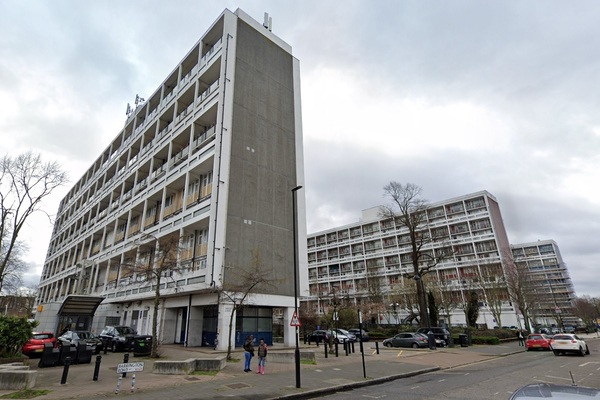
Regenerating council estates – which can range from refurbishing existing estates, all the way to the demolition and rebuilding of entire sites – enables us to increase the number of homes while also improving housing quality.
In the context of the massive and worsening pressures on London’s housing, boroughs need to maximise all available housing sources. Estate regeneration is a key part of this. Through regeneration, we can replace outdated buildings with more modern homes, all while creating thriving estates with improved community spaces, parks and transport for residents, plus new employment and skills opportunities.
One example of how estate regeneration can help Londoners is the Joyce and Snells Estate in my borough, Enfield. When complete, this estate will include 2,028 high-quality homes, half of which will be affordable, in a new residential neighbourhood replacing the 795 ageing properties currently on the estate.
The development will also create around 5,000 jobs and offer 605 apprenticeships, and includes a revitalised high street, two large community parks, new play space, a nursery and an energy centre to provide heating to all homes from a shared system.
These are significant local benefits, while also representing invaluable progress towards national goals.
However, as our report highlights, regeneration schemes across the capital have stalled. Amid increasing regulatory requirements, spiralling construction costs and a lack of necessary infrastructure, the delivery challenges have too often become insurmountable.
Underlying all this is the tightening financial squeeze in the social housing sector. London boroughs need to make a real-terms reduction of £269m in council housing budgets over the next four years.
We want to be investing, building more council homes and giving a new lease of life to our estates. But the financial reality makes this increasingly difficult to achieve.
To realise the full potential of estate regeneration in London, we need the right tools, financial footing and policy direction at a national level. The government’s decisions on social rent will be vital.
“We want to be investing, building more council homes and giving a new lease of life to our estates. But the financial reality makes this increasingly difficult to achieve”
London boroughs have welcomed the government’s commitment to reintroduce rent convergence. Housing directors are clear that this will be the single most important measure for restoring stability to social housing finances – so long as it is set at the required level.
In London, convergence needs to be £3 a week to make a substantive difference to our social housing ambitions. Analysis by London Councils shows that the introduction of a £3 a week mechanism could raise £588m for council housing budgets over five years and £1.78bn over 10 years, boosting boroughs’ ability to invest in existing homes and accelerate the delivery of new ones.
Enabling investment on that scale would be a game-changer. With social housing finances in a far healthier long-term position, we could overcome far more of the challenges we face and unlock more housing delivery in the capital – including through regeneration of our council estates.
The prospects are exciting. Boroughs are as committed as ever to securing a better future for council housing in the capital, and we hope the government will continue working with us to achieve this.
Joanne Drew, co-chair, London Housing Directors’ Group
Sign up for our development and finance newsletter
Already have an account? Click here to manage your newsletters
Sign up to HOMES UK and Unlock Net Zero Live 2025

Whether your focus is building safety, sustainability, development, AI and digital transformation, housing management, procurement, or resident engagement, this is a must-attend event for all UK housing professionals.
Explore opportunities to increase affordable housing supply and improve the quality and sustainability of existing homes.
Related stories