The G15 Residents’ Group: our top three priorities for the Autumn Budget
The Autumn Budget must be a turning point in tackling London’s social housing crisis, writes Daisy Armstrong, chair of the G15 Residents’ Group



Daisy Armstrong is chair of the G15 Residents’ Group
 The Autumn Budget must be a turning point in tackling London’s social housing crisis, writes Daisy Armstrong, chair of the G15 Residents’ Group #UKhousing
The recent housing announcements by government and the Mayor of London confirmed what we’ve all known for a long time: the social housing system in the capital is in crisis.
The decision to cut London’s affordable housebuilding threshold to 20% is a step in the wrong direction. At a time when councils are nearing financial collapse and spending £5.5m a day on temporary accommodation, the government’s priority should be fixing the capital’s broken social housing system, rather than easing private house builders’ affordable housing obligations.
Read more
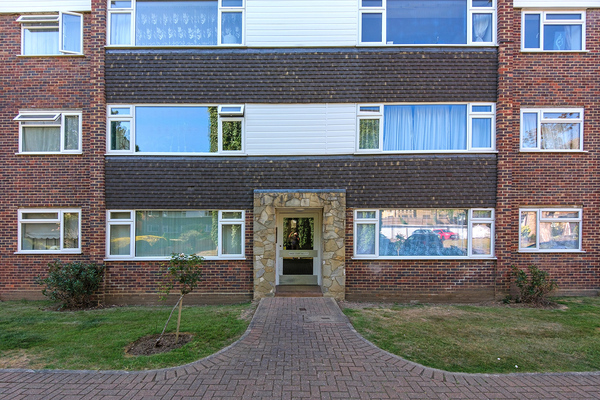

Like all social housing residents, the G15 Residents’ Group are experts by experience, living in the homes provided by London’s largest not-for-profit housing associations. Ahead of the Autumn Budget on 26 November, we are calling for urgent, strategic action to protect and invest in a system under immense strain.
Far from being a drain on public resources, social housing is vital national infrastructure that saves money, supports health and well-being and drives economic growth. As residents, we feel the impact every day as the shortage of quality homes forces landlords to pour money into short-term fixes that fail to address the root causes.
“We are calling for urgent, strategic action to protect and invest in a system under immense strain”
This Autumn Budget is a chance to shift from reactive, economically inefficient policies to long-term, cost-effective investment and reform. We outline three priorities that would begin to turn the tide.
First, invest in Decent Homes 2.0. Too many residents still report damp and mould, draughty windows and inefficient heating.
While affordable rents are the foundation of social housing, in London the average G15 rent of £128 a week no longer covers the cost of maintaining homes. Inflation, rising energy bills and regulatory pressures are pushing the system to breaking point.
We’re calling for a ring-fenced capital fund for Decent Homes 2.0, with a clear focus on damp prevention and energy efficiency for at least a decade. This would be an essential, preventative investment that would deliver savings for the taxpayer and improve lives.
Additionally, poor housing costs the NHS £1.4bn each year. Therefore, warmer and safer would homes mean fewer GP visits, hospital admissions and children missing school because of illness.
The original Decent Homes programme, backed by £22bn investment, transformed housing standards after it was introduced in 2006. Austerity measures followed by Brexit, the building safety crisis, Covid and rapid inflation have eroded that progress. A renewed version of Decent Homes is the future.
Secondly, we need to build more social housing. The rise in temporary accommodation is a national scandal. Families are growing up without stability or security, and councils are spending record sums housing people in hostels and B&Bs.
To reverse this trend, housing providers need higher grant rates for social homes and a reformed approach to regeneration funding – one that includes all homes within regeneration schemes, not just additional ones.
This would help improve both the supply and quality of homes. Furthermore, offering low-interest loans to housing associations with low cash interest cover would unlock the capacity to build more homes.
Good-quality homes for social rent are the backbone of a functioning housing system. The private sector alone cannot meet the scale of need. Government must empower housing associations to deliver.
“Families are growing up without stability or security, and councils are spending record sums housing people in hostels and B&Bs”
The third and final step we need to take is to protect affordability in social housing. In a time of high inflation, maintaining affordable social rents whilst creating capacity for landlords to invest is a delicate balance. But affordability must remain non-negotiable.
Welfare thresholds should always be sufficient to cover social rents. This is not only fair but cost-effective, and more efficient than covering private rents.
In the short term, poverty is being driven by a broken housing system. The Autumn Budget must act to protect people now. We’re calling for housing benefit to rise in line with social rents, Local Housing Allowance restored to at least the 30th percentile of local market rents, with annual uprating, and a review of the benefit cap to ensure families aren’t unfairly penalised.
Without these steps, more residents will fall into debt, arrears and poverty – outcomes that cost far more to fix than to prevent. As residents we are committed to working in partnership with government, landlords and others to ensure policy is shaped by our lived experience.
This Budget can either continue to manage decline or mark a turning point. It’s time to invest in the future of social housing.
Daisy Armstrong, chair, G15 Residents’ Group
Related stories