You are viewing 1 of your 1 free articles
The government must honour its manifesto commitment on Warm Homes funding for the social housing sector
The sector is making great progress on retrofit, but maintaining momentum requires funding stability, says Kate McDonald, policy officer at the National Housing Federation



Kate McDonald is policy officer at the National Housing Federation
 The sector is making great progress on retrofit, but maintaining momentum requires funding stability, says Kate McDonald, policy officer at the National Housing Federation #UKhousing
For millions of households, especially those on low incomes, high energy bills remain a source of financial stress and anxiety. And this winter, due in large part to the war in Iran, it is likely that energy costs will rise again.
Improving the energy efficiency of social homes is one of the most effective ways to cut bills for low-income households. But there are wider benefits to undertaking retrofit work at scale, from helping to grow the economy and jobs market, to strengthening the country’s energy security alongside improving the overall quality of social housing.
Housing associations are committed to this work, and we’re proud of the progress so far, with 75% of their homes now having an Energy Performance Certificate rating of Band A to C, thanks to sustained and significant investment in improvements.
Read more

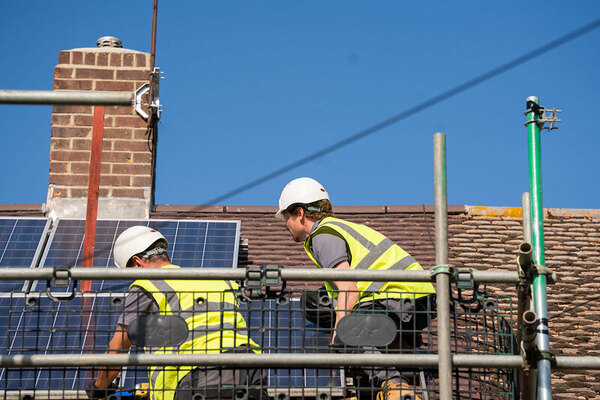
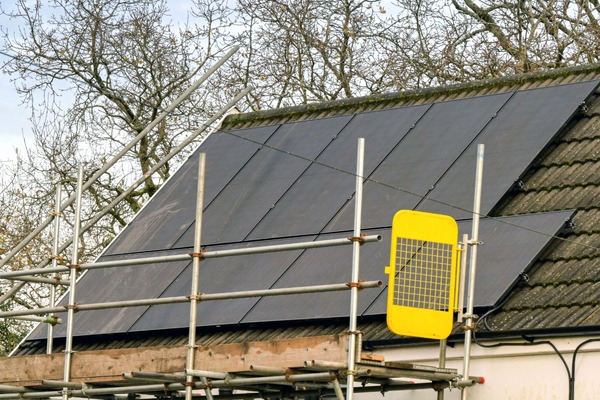
We want to go further and faster, but maintaining this momentum and scaling retrofit to the level required depend on stable, long-term funding from the government.
Currently, the certainty needed is missing. The third wave of the Warm Homes: Social Housing Fund is due to end in 2028, and while additional funding for low-income households was announced through the Warm Homes Plan, housing associations still do not know how much of this funding will be available to them, how it will be distributed, or precisely what it will support.
Initial announcements on a low-income grant scheme were expected in the spring; it is now October. This confirmation is urgently needed in the autumn Budget.
“Certainty is one thing, but funding must also be sufficient for the task at hand, administered in the most effective way and flexible, to ensure the best outcomes”
Demand for these funds is strong – the £295m top-up to the third wave of the fund was oversubscribed, as was the expression-of-interest process for £100m of solar funding announced in April – and the lack of certainty is having knock-on effects.
Major retrofit programmes require housing associations to survey homes, consult residents, procure contractors and technology, secure specialist skills and plan work over several years. Without clarity, it becomes harder to retain supply chains and deliver improvements efficiently.
Certainty is one thing, but funding must also be sufficient for the task at hand, administered in the most effective way and flexible, to ensure the best outcomes.
We already know there won’t be enough funding. Having called for £3.7bn of grant to retrofit housing association homes up to 2030, based on the National Infrastructure Commission’s recommendation, only £3bn has been announced and this must cover both housing association and council homes.
In addition, this funding is expected to be devolved to strategic authorities.
In the longer term, decisions about how and where money is spent will be made regionally and locally. We support any approach that targets funding where it’s most needed and supports local economies, but want to ensure the transition is smooth. This is because, in the short term, rapid devolution may risk creating a patchwork approach that conflicts with national regulations and may ultimately make it harder for housing associations to reduce residents’ bills.
Retaining a level of national consistency is vital for enabling housing associations – some of whom work across several local and mayoral authorities with different requirements and restrictions – to access and use this funding without adding complexity and costs, which ultimately impacts the full benefits to low-income households.
“In Greater Manchester, limits on solar funding mean many providers are not able to utilise solar installations, even where they are the best option”
Funding must also be flexible, to allow housing associations to install the right measure for each home and resident. For example, external wall insulation is right for some properties, but for others it can be prohibitively expensive. Solar panels aren’t suitable for all buildings. Providers need freedom to choose the right mix of interventions, both to meet standards and to reduce costs to residents.
We are already seeing the impact of area-specific restrictions. In Greater Manchester, limits on solar funding mean many providers are not able to utilise solar installations, even where they are the best option to reduce bills for residents, or the best choice to bring the home in line with Minimum Energy Efficiency Standards.
Housing associations have demonstrated their ambition to make all their homes energy efficient while at the same time maximising benefits and savings to residents. With certainty, the right funding conditions and necessary flexibility, the government can help us tackle the cost of living crisis head on, making all social homes cheaper to heat and creating thousands of jobs.
With further delays risking detrimental setbacks, we must make the most of this opportunity.
Kate McDonald, policy officer, National Housing Federation
Sign up to Inside Housing’s Asset Management newsletter
Inside Housing’s Asset Management newsletter brings you comprehensive in-depth news, comment, insight and analysis of how affordable housing providers are managing their homes.
Already have an account? Click here to manage your newsletters.
Related stories





9 takeaways from HOMES UK 2026