You are viewing 1 of your 1 free articles
Income streams
Derwentside Homes has developed a model that brings in private rental income - and helps tenants buy their own home. Cassie Ward reports


Video:
Features style
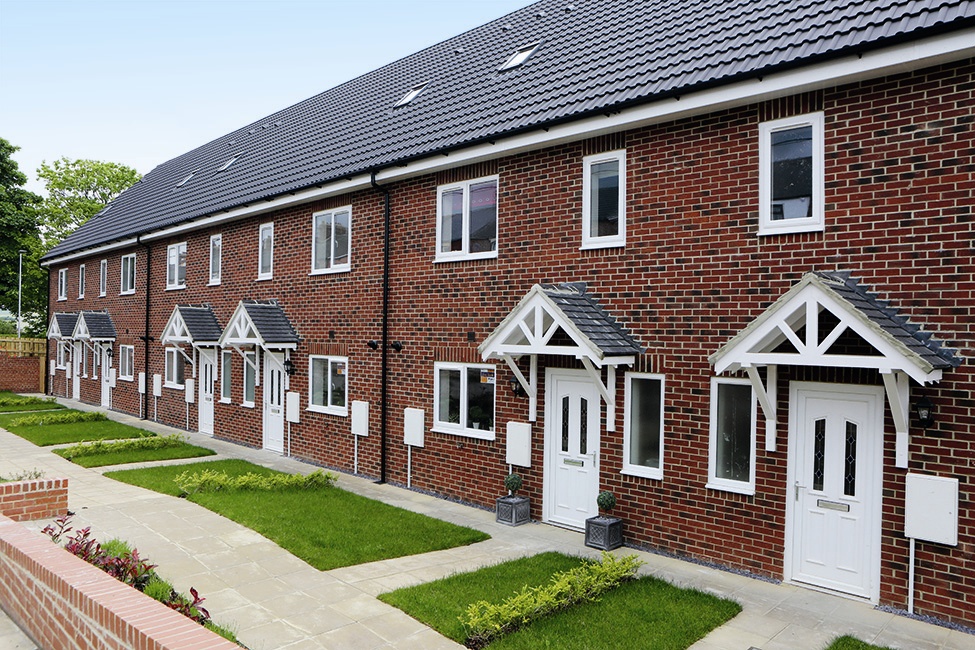
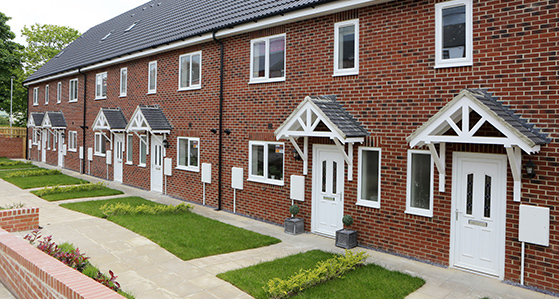
Sleetburn Court, New Brancepeth, County Durham
The government has spent much of the last few months stressing that it wants social landlords to help more people into homeownership.
In turn, social landlords have been feeling the squeeze due to policies such as the requirement that they cut social rents by 1% a year for the next four years.
These are tricky times for the housing sector. But one provider, 6,800-home Derwentside Homes, has quietly been operating a model for the last few years that seems both to help the government’s homeownership agenda and give the landlord a useful income stream to boot.
Video:
Ad slot
“The days of 40-50% grant funding by the government were never coming back. We had seed money but needed a model that didn’t rely on grant funding,” says Geraldine Kay, chief executive of Derwentside Homes.
Exercising options
The Durham-based landlord, which was set up in 2006 following a stock transfer from Derwentside District Council, chose a model that enables tenants to rent their home at market rent before exercising an option to buy. While sharing similarities with schemes such as Rent to Homebuy, the landlord thinks its model provides a distinctive approach that other associations may find attractive.
So where did the model spring from, how has it been working so far, and is it something that other providers could learn from?
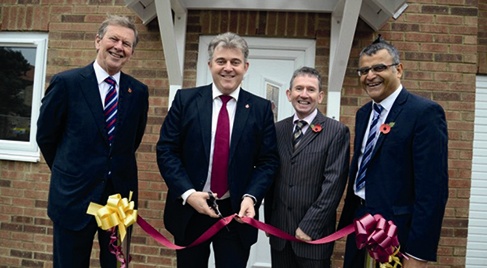
Cutting the ribbon: Housing minister Brandon Lewis unveils the north’s first Build to Rent scheme with John Swanson, chair of Prince Bishops Homes, Keith Tallintire, CEO of Prince Bishops Homes and Naz Parker, executive director at the Homes and Communities Agency
In 2008, Derwentside Homes’ board tasked the executive team with using £18m of its surplus in a way that would best advantage the housing association and the local communities.
At the time, the country was in the midst of what is considered by many economists to be the worst financial crisis since the Great Depression of the 1930s.
“The days of 40-50% grant funding by the government were never coming back. We had seed money but needed a model that didn’t rely on grant funding.”
Geraldine Kay, chief executive of Derwentside Homes
First-time buyers were struggling to get on the housing ladder, while large developers such as Taylor Wimpey and Barratt Homes were sitting on unsold and half-finished housing sites that they could no longer afford to develop.
The team saw an opportunity to obtain the properties at a discount and sell them back to the community at an affordable price, while still making a profit that could be reinvested into Derwentside Homes.
After reviewing several established housing models, the organisation decided to create a hybrid version of their own.
It formed a subsidiary called Prince Bishops Homes (PBH) in 2009, to offer market-rent properties on a rent-now-buy-later basis. Using an initial investment loan from its parent company, PBH bought batches of 25 new build properties at a significant discount from developers.
The model differs from the government’s Rent to Homebuy scheme, which was launched in 2008, because the tenant is not obligated to buy the property at a predetermined time; most Rent to Homebuy agreements, by comparison, operate on a three or five-year term and tenants would need to be rehoused if they are not in a position to buy at that point. With PBH, after four years the tenant can either opt to buy - but is under no obligation to do so - or can remain as a tenant for as long as they like.
The model also differs from Rent to Homebuy as the property is not purchased through shared ownership, but is bought outright at a discount.
Continuous cycle
Derwentside Homes’ initial plan was to create a subsidiary that would add 20-30 properties to Durham’s private rented stock. Five years on, it has invested £60m and has 600 new homes in the pipeline over the next 18 months. The same model is applied to each of its market rent tenancies, although some properties are sold straight away in order to fund new development.
To measure the success of the model you need only look at the balance sheet. In 2014/15, PBH made an operating profit of almost £1.3m, of which £317,000 was reinvested into Derwentside’s social housing operation. The operating profit is projected to increase by 65% for 2015/16, with £750,000 set to be reinvested.
All of PBH’s available homes are advertised via property website Rightmove. An allocation policy ensures properties are offered to local families or households with an annual household income of around £25,000.
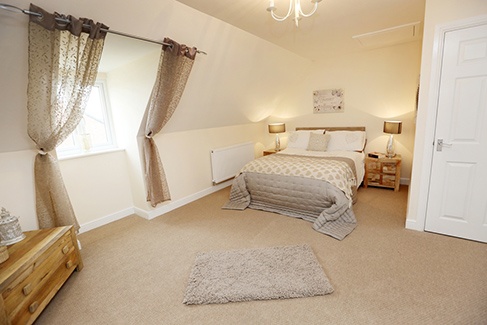
Sleetburn Court, New Brancepeth, County Durham
An initial valuation is carried out prior to sign-up. After four years, if the tenant decides to buy then a second valuation is carried out. Tenants are protected from sky-rocketing home prices. If the home’s price has increased, the tenant only has to pay half of the increase in valuation. Or, if the price has decreased, they pay the original valuation.
Debbie Tempest lives in a PBH property with her partner Gareth Phenny and their three children. She says: “We chose PBH because we want to buy and this seems like the most accessible route.”
“The model remains affordable as the tenant’s share of the valuation increase is capped at £20,000, even if the property doubles in value by the time the tenant wants to purchase it,” says Keith Tallintire, managing director of PBH and director of resources at Derwentside Homes. This would remain the case even if the tenant waits as long as, say, 15 years before buying.
Apart from a credit check charge and a month’s deposit, there are no other costs to the tenant and any money saved through the discount of valuation increase can be used to fund the mortgage deposit.
“While many social landlords claim to be the first to achieve private rented sector on a social scale, or assert that they’re the largest, we have yet to come across one similar and which pre-dates us or exceeds the size of our property portfolio,” says Mr Tallintire.
The scheme now includes 288 properties across 13 sites with a combined value of £25.8m.
To fund more new homes, Derwentside issues PBH with development loans at a margin of 1.25% above its own interest costs, providing the association with an added income.
“Over the next 18 months, we are planning to build 600 homes.”
Keith Tallintire, managing director of PBH and director of resources, Derwentside Homes
The surplus on the interest alone for the 288 current properties equates to £300,000 each year.
PBH then use the loans to purchase land and develop homes, and the cycle continues.
The subsidiary has also successfully accessed the government’s Build to Rent fund, which provides bridging loans to developers to facilitate the construction of homes for private rent.
The fund’s first round was oversubscribed, receiving a total of bids worth £1.4bn, and was finalised in June 2015.
Build to Rent makes up roughly 20% of PBH’s funding and Derwentside Homes is the only social landlord in the north to secure funding under the scheme. Only two other social landlords - Genesis and Notting Hill Housing Trust, both London-based - were successful.
PBH’s successful bid of £4.8m is being used to finance 100 new properties at a total development spend of £10m.
“Prince Bishops was a hybrid model of Rent to Buy and outright sale, and the Homes and Communities Agency (HCA), in partnership with the registered provider, sought to use the Build to Rent programme to best effect in order to deliver much needed houses in the area,” says a spokesperson for the HCA.
“The loan will be repaid at point of sale or point of re-finance at an average of one to two years. However, the HCA anticipates PBH’s repayment to be around five years, and payment is expected by 31 March 2020.”
The model’s main selling point is that it is self-funding with no need for grants - in other words, it is sustainable without being dependent on outside intervention.
This means Derwentside Homes and PBH maintain a high level of control over the scheme, and development levels can be adjusted in line with market shifts.
“The control is a fundamental aspect of its success,” says Mr Tallintire. “Over the next 18 months, we are planning to build 600 homes. If the market changes, then we will hold back. Alternatively we can sell a number of the properties and rent the rest, putting a little bit back into the pot.”
It’s not all plain sailing, however. The main challenge with replicating this specific model lies in the cost of land. “The market rent model works because land rates in the North East are low. They have hardly altered in the last four to five years,” says Ms Kay.
PBH looks at around five new development sites a week, but only 10-15% of them are viable.
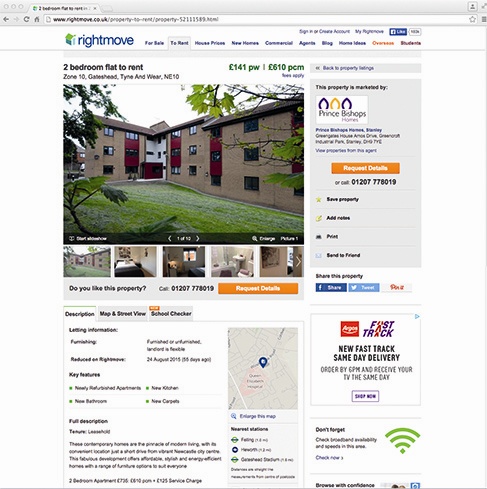
Advert on Rightmove
“Bidding for land is highly competitive, particularly prime development land with nearby facilities and transport links,” adds Mr Tallintire.
Yield, or annual rental income expressed as a percentage of property value, is also an important factor in the scheme’s success - and yield is location-specific.
Not without challenges
For the scheme to remain financially viable, PBH requires a minimum yield on investment of 6%; it is currently achieving 6.7%.
There is a concern that the scheme could not be fully replicated because of the variance in property values and market rent levels across the UK, indicating yield could be much lower in some parts of the country.
Although insisting the surplus makes the scheme viable, PBH says it would be possible to achieve similar results through the Build to Rent Fund.
However the HCA does not give housing associations preferential treatment, even though they are regulated.
PBH has the flexibility to sell, flex the rents up and down, and increase and decrease discounts for tenants to buy - all flexible luxuries not afforded to social landlords.
As a replicable or modifiable archetype, the PBH model is not without its challenges. Land prices, yield and funding all play significant roles in the company’s success. However, if these obstacles can be overcome, then as a business and secondary income stream, the PBH hybrid could just be an answer.
Related stories