You are viewing 1 of your 1 free articles
Latest housing research: unlocking housing inequality
New reports consider strategies for rebalancing housing wealth, as well as supply-side interventions, writes Francesca Albanese, executive director of policy and social change at charity Crisis


 New reports consider strategies for rebalancing housing wealth, as well as supply-side interventions, writes Francesca Albanese, executive director of policy and social change at charity Crisis #UKhousing
In the weeks running up to the Spending Review, organisations took the opportunity to set out the funding needed to deliver both the long-term housing strategy and cross-government strategy to address all forms of homelessness.
Delivering homes at social rent is a rallying cry to unlock economic growth, address the backlog of housing need and, most critically, deliver the right type of homes to end homelessness.
This month’s Thinkhouse review focuses on reports which consider interventions to create a more equitable and sustainable housing system and deliver the right type of support for people facing homelessness.
Read more
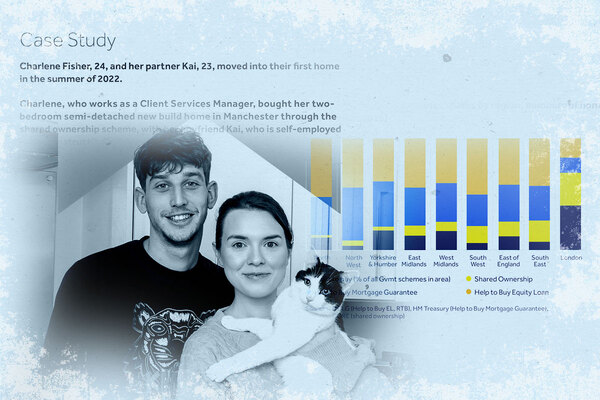

Simply About Supply? How Housing Issues Vary by Region by the Institute for Public Policy Research North thinktank examines the regional disparities in housing across England. The report argues that housing policy should be tailored to address the specific needs and issues of different regions, rather than adopting a one-size-fits-all approach.
Analysis of English regional submarkets show difference and divergence in relation to affordability, tenure and housing quality. The North West has the most non-decent homes across all tenures, and long-term empty properties. In contrast, London has the highest rates of overcrowding, juxtaposed with the highest number of second homes.
Despite the polarities highlighted in the report, there is one unifying factor: no region in England meets the government’s affordability criteria for house buying, and in nearly all regions, low-income households spend 30% or more of their annual income on rent.
This reinforces the case for national investment in social housing supply, but also makes the argument for housing strategies at the mayoral city-region level, working with local authorities to be responsive to local need.
Moving away from England, Sustainable Housing Policy in Scotland: Reforming Devolved Property Taxation by the UK Collaborative Centre for Housing Evidence (CaCHE) examines the state of property taxation in Scotland and proposes reforms to enhance fairness and efficiency in the housing market. Making the case to abolish both council tax and land and buildings transaction tax, CaCHE interestingly undertook a citizens’ assembly to explore attitudes to this policy shift, alongside economic modelling to explore the impact.
Housing taxation is traditionally seen as politically risky and therefore electorally costly, but the panel in the research actually favoured reform, and the majority of the assembly were willing to look more closely at fundamental transformation.
The report reinforces the existing literature’s consensus on housing taxation: the current system in England and Scotland is regressive and disproportionately affects lower-income households. As many as half of properties in Scotland are in the wrong council tax band because of how much the housing market has shifted since 1991. While there is still a way to go to test and implement the proposals put forward in the report, it highlights an important debate regarding housing wealth as a driver of inequality, and a potential policy lever to raise revenue for housing and other redistributive ends.
Finally, two reports look at gaps in Housing First provision in England, addressing how the widely evidenced housing-led model could be adapted for rural areas and to house couples affected by domestic abuse.
Unseen, Unhoused, Unacceptable: Housing First for Rural England by charities Commonweal Housing and Porchlight, and research organisation Rural England, addresses the growing problem of homelessness in rural communities and advocates for adapting the Housing First model. The report emphasises affordability pressures in rural housing markets and the lack of support services for people facing homelessness. It recommends a less-dispersed housing model, to concentrate support, in addition to funding for travel, to address social isolation in rural areas.
The Housing First for Couples Feasibility Study by the Single Homelessness Project, Solace and Commonweal Housing charities, spotlights an under-researched area: services when there is known domestic abuse in a relationship. Support providers are often reluctant to take the risk of housing such a couple together, as domestic abuse may then occur within their service. They tend to focus on the needs of the victim/survivor instead. The outcome is often that the victim/survivor is left homeless unless they are willing or able to leave the relationship, which is compounded by the additional risks of domestic abuse and health and social care needs.
Using Housing First principles, which separates housing and support, the report emphasises the importance of prioritising the safety, autonomy and choices of survivors of domestic abuse. Its model suggests separate but concurrent housing solutions for these couples, with integrated support services.
This month’s reports show that solutions to address the housing crisis must be tailored, recognise submarket differences and be adapted to local conditions. Many policy levers are available to increase supply and also rebalance housing wealth and inequality. Let’s not miss the opportunity to act on these now.
Francesca Albanese, executive director of policy and social change, Crisis, and Thinkhouse Editorial Panel member
Sign up to our Best of In-Depth newsletter

We have recently relaunched our weekly Long Read newsletter as Best of In-Depth. The idea is to bring you a shorter selection of the very best analysis and comment we are publishing each week.
Already have an account? Click here to manage your newsletters.
Related stories