Data links stillbirths to temporary accommodation for first time as child deaths rise
For the first time, data has linked stillbirths to temporary accommodation as the number of child deaths in this type of housing continues to rise across England.


 Data links stillbirths to temporary accommodation for first time as child deaths rise #UKhousingFor the first time, data has linked stillbirths to temporary accommodation as the number of child deaths in this type of housing continues to rise across England #UKhousing
Overall, temporary accommodation has been listed as a contributing factor in the deaths of 104 children in England over the past six years, sparking urgent calls for government intervention.
A report prepared for the All-Party Parliamentary Group (APPG) for Households in Temporary Accommodation has found that nearly three-quarters (73%) of the deaths were babies under one, with 76 deaths recorded.
Children aged between one and 17 accounted for the remaining 28 deaths (27%).
This figures marks an increase on the 80 child deaths reported at the end of September 2024.
New data collected for the first time by Mothers and Babies: Reducing Risk through Audits and Confidential Enquiries across the UK (MBRRACE-UK) further uncovers the disproportionate risks faced by pregnant people experiencing homelessness.
Read more
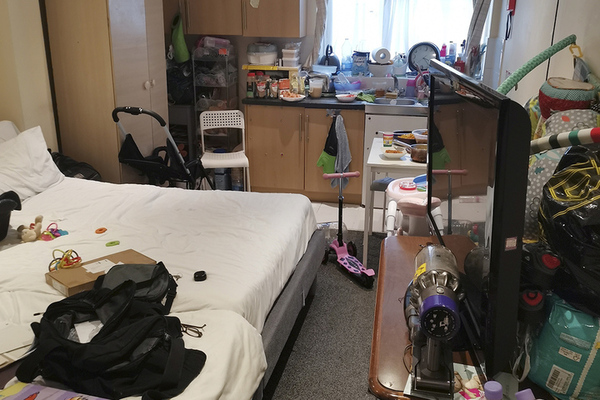
It showed that mothers or pregnant people who had experienced homelessness were significantly more likely to suffer neonatal deaths or stillbirths.
Out of 3,303 total deaths of babies born between 1 January and 3 December 2024, at least 91 were to mothers living in temporary accommodation. This accounts for 64 stillbirths (3% of the total) and 27 neonatal deaths (2.27% of the total).
Living in temporary accommodation puts mothers more than twice at risk of stillbirths and 1.75 times more likely to lose a newborn.
The APPG for Households in Temporary Accommodation argued that the overall figure of child deaths in this housing type is likely higher.
Between October 2023 and September 2025, 140 children died with their main residence listed as temporary accommodation, accounting for 3% of all child deaths during that period.
The significance of temporary accommodation as a contributing factor to these 140 deaths will be assessed by child death overview panels through the usual review process in due course.
Dame Siobhain McDonagh, chair of the APPG for Households in Temporary Accommodation, said: “I am appalled to see yet another rise in the number of children whose deaths have been linked to temporary accommodation, bringing the total to 104 between 2019 and 2025.
"Equally shocking is the finding that 3% of stillbirths and neonatal deaths in 2024 involved mothers who experienced homelessness during pregnancy. We should all be outraged by these figures.
“I welcome the government’s commitment, through the National Plan to End Homelessness, to address the impact of temporary accommodation on children, particularly its aim to reduce child mortality. This is a vital step towards preventing the most devastating consequences faced by families at the sharp end of the housing crisis.”
The APPG report highlighted that when families are forced out of routine, live in unstable housing and have their healthcare pathways disrupted, children face a greater risk of mortality.
Poverty, deprivation and race inequalities are cited as major factors leading to child mortality where temporary accommodation also contributes.
These risks are compounded by a lack of access to safer sleeping options. The report noted that ensuring families have access to cots is still not routine practice across local authorities despite being included in statutory guidance.
Dr Laura Neilson, chief executive of the Shared Health Foundation, said: “Each year this data is released, we continue to see an increase in these figures. One death is too many. 104 deaths is absolutely scandalous.
“Every number represents a child who has died, a future lost and a family left to carry that grief for the rest of their lives. These deaths are not inevitable. They are the direct result of political choices, of systems that are not fit for purpose and of a housing crisis that is pushing families into conditions that endangers their lives.
“It is also devastating that there were 91 stillbirths and neonatal deaths in 2024, where the pregnant woman had recently experienced homelessness or was currently homeless.
“That should stop us in our tracks. Pregnancy should be a time of care, stability and support. It should not be filled with uncertainty, insecurity and the stress of not knowing where you will sleep.
“This must be a turning point. Because if we continue to see these figures rise year after year, it will be because we have chosen to tolerate them. That is indefensible.”
In response, Alison McGovern, minister for homelessness and local government, said: “It breaks my heart that B&Bs are tragically contributing to the deaths of children.
“We must and we are improving the whole system, so every child can get the best start in life.
“In the Child Poverty Strategy, we set out our commitment to do everything we can to eradicate unsuitable or poor-quality accommodation and ensure children in temporary accommodation do not experience gaps in health care provision.
“Alongside this, the Children’s Wellbeing and Schools Bill will provide the strongest protections in a generation, making sure vulnerable children are identified, supported and never again allowed to fall through the cracks.”
Sign up to Inside Housing’s Homelessness newsletter
Sign up to Inside Housing’s Homelessness newsletter, a fortnightly round-up of the key news and insight for stories on homelessness and rough sleeping.
Already have an account? Click here to manage your newsletters.
Related stories