You are viewing 1 of your 1 free articles
Setareh Neshati: I couldn’t turn down the opportunity to regenerate Westminster
Katharine Swindells speaks to Setareh Neshati of Westminster City Council as part of Inside Housing’s series on women in development. They talk about the development director’s plan to maximise affordable housing in one of London’s most expensive boroughs, the career transition from the private sector and her passion for social housing


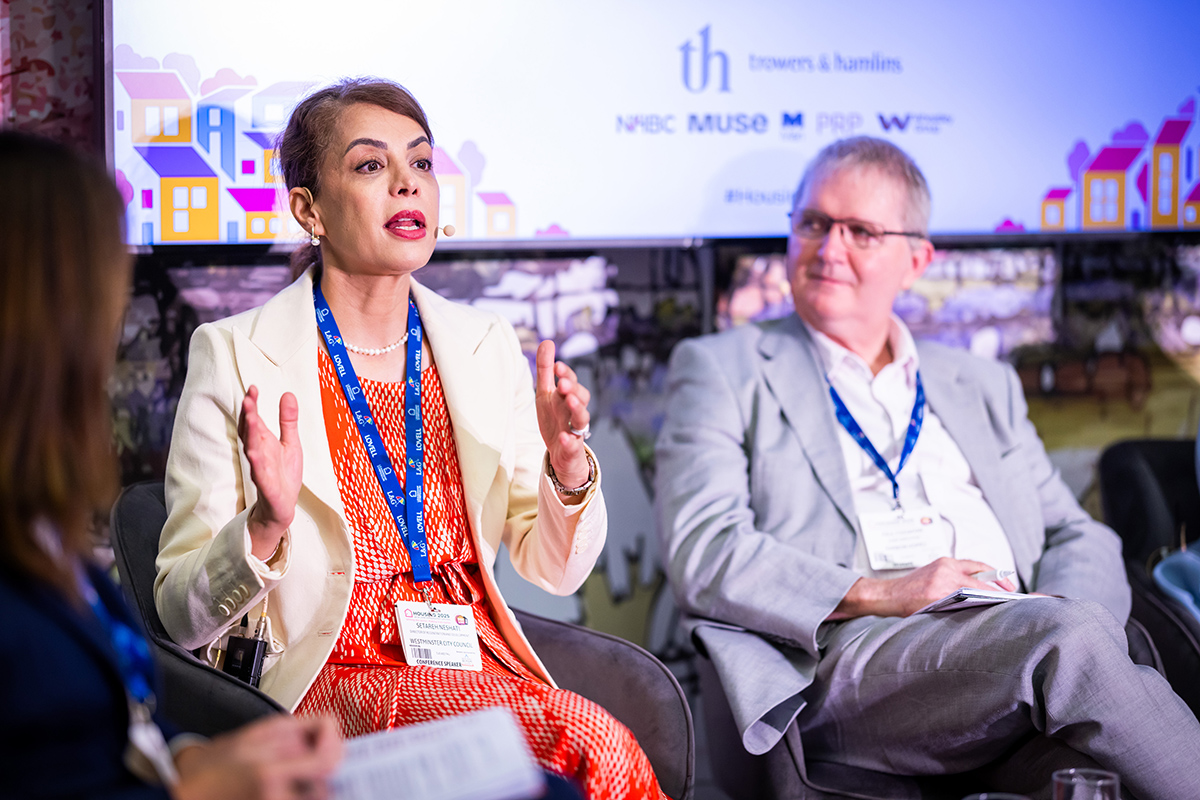 Setareh Neshati: I could not turn down the opportunity to regenerate Westminster #UKhousingDevelopment director Setareh Neshati speaks to Katharine Swindells about maximising affordable housing in one of London’s most expensive boroughs #UKhousing
When Setareh Neshati was told she was being transferred to work at Westminster City Council when it brought its development arm in-house, she was not convinced. “I said, ‘I’m not sure,’ because most of my career I had been suffering working with local authority offices and I didn’t want to be associated with that.”
Fast-forward just a few years and Ms Neshati, director of regeneration and development – delivery and operations at Westminster Council, was on stage at the Women in Housing Awards in 2024 being named ‘professional of the year’.
How does a person go from a career in the private development sector with a not-so-flattering opinion of local authorities, to receiving awards for leading one of the capital’s most ambitious regeneration programmes?
As part of our series on women in development, Inside Housing spoke to Ms Neshati about the steps that led her to her current role, her thoughts on the current development landscape, and how she hopes to support other women to progress in the sector.
Read more


Born to Iranian parents studying in Germany, Ms Neshati grew up in Berlin. As a teenager she was fascinated by architecture and moved to the UK to study at the University of Leeds, in the hopes of following in the footsteps of her role model, British-Iraqi architect Zaha Hadid.
“While I was doing architecture, I learned the lessons of life: which is not everybody can be Zaha Hadid,” she jokes. “It’s all well and good that we design fascinating buildings, but there is another art into this, which is how we put all these ideas and buildings next to each other.”
Ms Neshati had planned to return to Germany after her degree, but at university she had met the man who would go on to become her husband. As a result, she stayed in Leeds to study a Masters in town planning. She moved on to a career in London in the private development sector; first at consultancy CgMs, which later became RPS, and then at Greenland Holding Group.
“For years, of course, I did the design work, I did the town planning work. And it’s all well and good, but can I go and survive a site environment? Do I know these challenges?” she says. This is what led Ms Neshati to study a PhD at UCL in modern methods of construction.
“As a result, I learned the cradle to grave – from an idea on a piece of paper, through building regulations and planning policy, all the way through to start on site,” she says. “It’s fascinating to be able to appreciate what it takes at each stage.”
In 2018, Ms Neshati was less than two months into a new job at CityWest Homes, Westminster Council’s development arm, when she was told she was being transferred to the local authority, as the company’s functions were being brought back in-house. She was not pleased, as her development career so far and experience navigating the planning process had hardly given her a positive impression of local authorities.
But she found she couldn’t turn down such a unique opportunity. “You don’t get the opportunity to regenerate areas, especially in London, especially in Zone 1, very often. That was the catch that I told myself, ‘Let’s give it a go.’”
Working in regeneration, Ms Neshati gets to combine the practical knowledge she amassed in her town planning and private sector career, with the artistry she dreamed of as a teenager, she explains.
“You have to go through the existing roads and streets and alleys that have been there for years, it’s so complex and amazing,” she says. “What we do has a direct impact on so many lives – not just the residents, but also the businesses and the people who visit Westminster. We owe everyone something and we need to get it right.”
Speaking to Ms Neshati now, it is hard to imagine that just seven years ago, she was initially resistant to the job. She acknowledges that the role reversal is strange.
“In my previous jobs, I’ve always had to negotiate affordable housing down,” she says. “But when I joined Westminster, I realised that our first and most important mission is to deliver as much affordable housing as possible.”
She has seen the conditions that many Westminster residents are living in, which she says are “absolutely not acceptable”, and is adamant that new developments will be homes to be proud of.
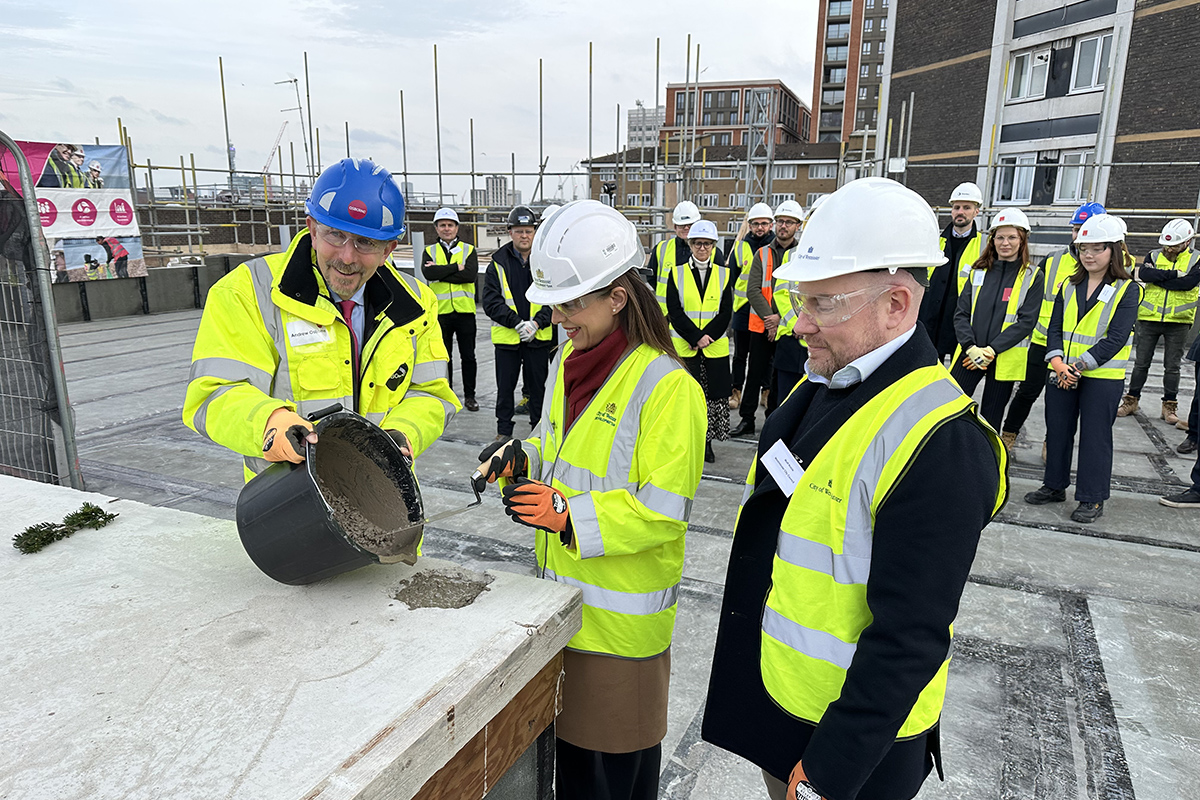
“People say, ‘Don’t offer affordable residents roof terraces with an amazing view.’ But why do we believe that people shouldn’t enjoy life?” Ms Neshati says. “Let’s create an environment that people who live there feel so proud of that they look after it themselves.”
“Affordable doesn’t mean cheap and cheerful. It can be creative. It can be sustainable.”
Ms Neshati still has her commitment to efficiency and value for money from her private sector days.
“If I am soft on letting money out of the door, every half a million equals one affordable home,” she says. “So that’s why every time I want to agree to something extra, I always think, ‘Is this the best value for money for residents?’”
Having seen the speed and efficiency of development in other countries in her time working at global firms, Ms Neshati is frustrated by processes that slow delivery timelines in this country – whether that is compulsory purchase orders, or “this new monster”: the Building Safety Regulator.
“As a proud town planner, I can criticise our planning process,” she says. “My hope is that one day we accelerate with special powers and legislation in place so that we don’t have to go through all of this for so long.”
Ms Neshati is proud of the journey she took to get to this place in her career, and wants to support other ambitious individuals to do the same, particularly young women.
She says the skills gap in local authority development departments, caused by years of councils not building, gives her the opportunity to find talent from the private sector and convince them to come aboard.

“As someone who comes from the private sector, I know there’s a stigma. They look at councils like Westminster and think, ‘What do they do, those losers?’” she laughs. “So I reached out to all my networks in the industry and I don’t know how many coffees I drank while I was trying to tell them that Westminster is an amazing place to work.”
Her efforts paid off, she says, attracting “rising stars” from major firms in the development world. She is particularly proud that of the 15 new hires in her department, 10 are women.
“When I joined as an assistant and a graduate over 20 years ago, it was a very clearly a male-dominated industry, and often I would be the only woman in the room. And people would make you feel like you don’t belong in that room,” Ms Neshati says.
She credits as her “role model” and mentor Erica Mortimer, who was the managing director at CgMs when Ms Neshati joined as a graduate.
“Everybody told me in the first couple of weeks, ‘Be very careful. She’s very scary,’” Ms Neshati remembers. “I worked with her directly for eight years and I learned a lot from her, both hard skills and soft skills. I learned a lot about how you can have difficult conversations with people, but in as nice a way as possible.”
“She offered that support and mentored me without any official arrangement. She was so generous with her time and I learned a lot, and I’m trying to apply that in my journey when I’m working with my team.”
That is what Ms Neshati hopes to emulate with the members of her team, giving them the opportunities to learn and to prove themselves, just as she was given.
“I want to make sure no other girls ever feel, ‘I don’t belong to this room.’ I want their genuine credentials, knowledge, experience and added value when they are around the table to earn them their place.”
Sign up for our development and finance newsletter

Already have an account? Click here to manage your newsletters
Sign up to HOMES UK and Unlock Net Zero Live 2025

Whether your focus is building safety, sustainability, development, AI and digital transformation, housing management, procurement, or resident engagement, this is a must-attend event for all UK housing professionals.
Explore opportunities to increase affordable housing supply and improve the quality and sustainability of existing homes.
Related stories