You are viewing 1 of your 1 free articles
The Grenfell Tower insulation: a timeline
This week new claims have been made in a BBC Panorama documentary about how the insulation used on Grenfell Tower passed a fire safety test before it was installed. Pete Apps traces the story back over several years


 As @BBCPanoroma puts the spotlight on Grenfell insulation @PeteApps traces the timeline back to 2005 #ukhousingA timeline explaining how Grenfell Tower came to be insulated in the way it did @PeteApps #ukhousing
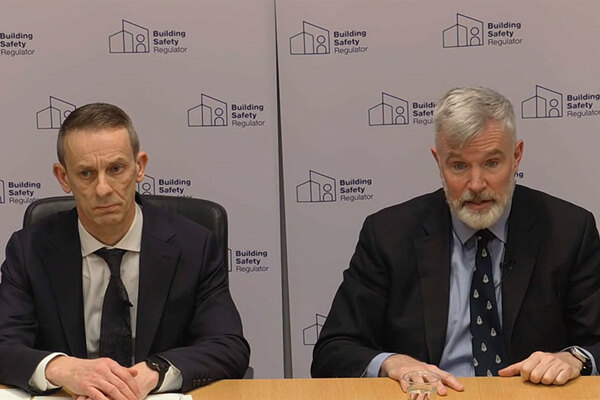
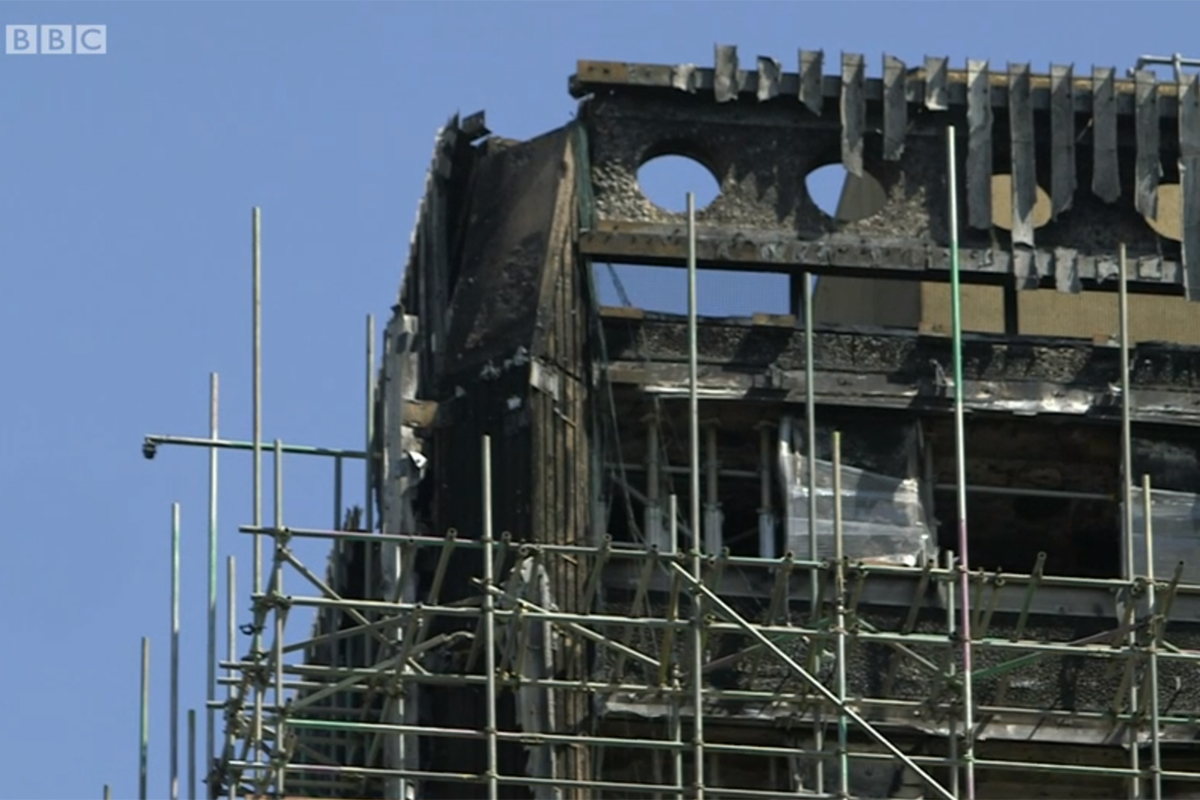
A screenshot from Monday night’s episode of Panorama
Click here to watch the Panorama episode Grenfell: who is to blame?
The story leading up to the BBC’s Panorama episode on Monday started 13 years ago.
The timeline
2005/6
Changes to building regulations as a result of climate change commitments sets off a new wave of work retrofitting insulation onto residential homes to make them more energy efficient. In its annual results for 2005, insulation manufacturer Celotex says: “With the government committed to Kyoto Protocol – the international treaty on climate change – Part L of the building regulations will be amended in the spring of 2006.
“Celotex expects significant growth as a result and will continue a process of investment in buildings and equipment to cope with this growth.”
At the same time, regulations governing the use of combustible materials on high rises are quietly amended: a ban in place since 1992 is lifted and replaced with a system which allows the use of combustible materials if they are part of a system which passes a test known as BS 8414.
Read more

2011
Celotex’s RS5000 insulation product, made of a plastic material known as polyisocyanurate, is tested for ‘surface spread of flame’ and ‘propagation of flame’. It receives a Class 0 rating. This alone would not be enough to permit its use on high rises under building regulations as insulation products are required to be of the higher standard, limited combustibility.
June 2012
Giant multinational building materials firm Saint Gobain buys Celotex for an undisclosed sum.
May 2014
Celotex pay the Building Research Establishment (BRE) to test the RS5000 insulation under the BS 8414 test. It is tested in combination with fibre cement board cladding and passes. This means it is now legal under building regulations to use it on high rises in the very specific combination it was tested in.
But Celotex’s marketing now describes the product as “acceptable for use in buildings above 18 metres in height”. Jon Roper, product manager for Celotex, says: “As a company, we are always looking to innovate and develop solutions for new applications. RS5000 will allow contractors, architects and specifiers to use premium performance PIR in externally cladded walls for the first time in high-rise constructions.”
April 2014 to May 2016
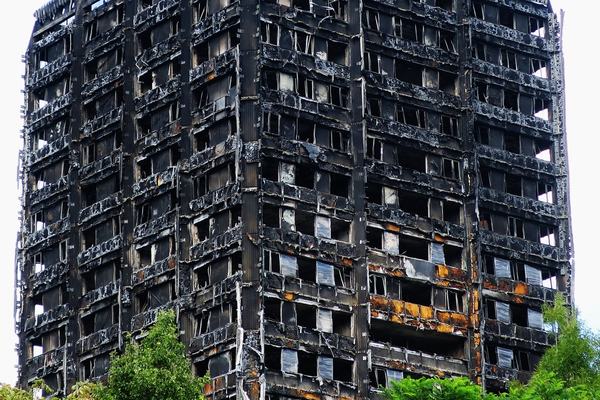
The refurbishment of Grenfell Tower in west London installs Celotex RS5000 to the outside of the tower, in combination with aluminium composite material cladding with a highly flammable polyethylene core.
July 2016
The National House Building Council (NHBC), which has the power to sign off projects as compliant with building regulations, publishes a guide: Acceptability of common constructions containing combustible materials in high rise buildings. This document describes RS5000 as “among the most common wall and façade types encountered on high rise buildings” and says that NHBC “would no longer require a desktop study to demonstrate compliance” when it was used with Euroclass B cladding – the combination which was installed on Grenfell. The guidance is withdrawn after the Grenfell fire.
14 June 2017
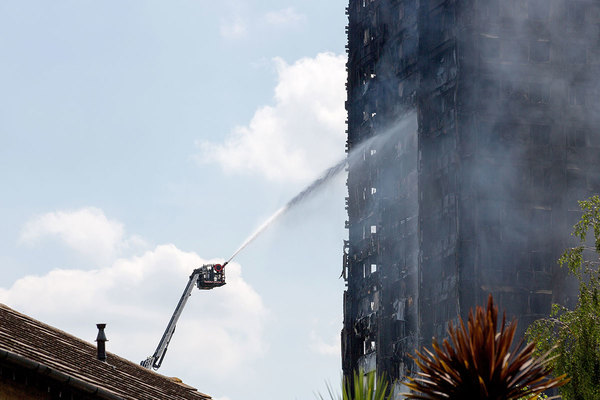
A fridge fire on the fourth floor of Grenfell Tower spreads to the external cladding and insulation, setting the entire building ablaze and killing 72 people.
23 June 2017
Celotex suspends the sale of RS5000.
August 2017
The government commissions BRE to carry out a BS 8414 test on the combination of products used on Grenfell, and several other combinations of cladding and insulation.
The fire on the combination used on Grenfell spreads to the top of a nine-metre rig in under nine minutes, despite being installed to precise standards and using fire barriers three times stronger than the minimum prescribed by building regulations.
However, RS5000 does achieve a pass when it is combined with limited combustibility aluminium cladding.
1 September 2017
Celotex reveals RS5000 failed a repeat of the 2011 Class 0 test, achieving the lower standard of Class 1. It commissioned the repeat of the test in April 2017, before Grenfell, but received the results in August. As a result, it also suspends the supply of some associated products.
Celotex says: “We do not currently know why the RS5000 sample did not achieve a Class 0 rating in these later tests, given the results from 2011 and we are investigating this. In light of this test result and the desire to act responsibly, we believe it is right to temporarily suspend supply of these 5000 ranges.”
30 January 2018
Celotex releases a statement announcing that the 2014 BS 8414 test on its RS5000 product contained “differences between the system as tested for BS 8414:2 and the description of that system in the report of the test”. It adds that “these differences were carried through into our marketing of RS5000”. As a result, the BRE withdraws the test result.
2 May 2018
Celotex announces it has commissioned a repeat of the 2014 safety test, and the insulation and cladding system has once again passed. Celotex says the suspension of the product from sale remains in place.
It adds: “We are following [Dame Judith Hackitt’s] independent review of building regulations and fire safety, and the comments from the industry and its stakeholders around testing.”
17 May 2018
Dame Judith Hackitt reveals her report into building regulations which advises against banning the use of combustible insulation on high rises, or making substantial changes to the testing regime. Challenged over this decision, she says she “does not know of” any combination which passed an official test containing combustible materials. When Inside Housing challenges her over the accuracy of this statement, she clarifies that she meant to say she didn’t “know of any combustible materials of the type that were used on Grenfell Tower that have passed the test”. In fact, this is still inaccurate as RS5000 passed the test in May 2014, August 2017 and just weeks before in April 2018 in combination with various cladding materials.
21 May 2018
BBC Panorama releases a documentary which claims the formula for the insulation which passed the withdrawn 2014 test contained additional fire retardant. It says it has taken legal advice which suggests this allegation could amount to corporate manslaughter.
A day later, Celotex releases a statement saying it is investigating the claims “as a matter of urgency”.
Inside Housing reports that the description of the product as “suitable for use on buildings above 18m” is still being carried on many websites, including Saint Gobain and some third party websites offering it for sale, although when contacted they advised sales had been suspended.
Never Again campaign
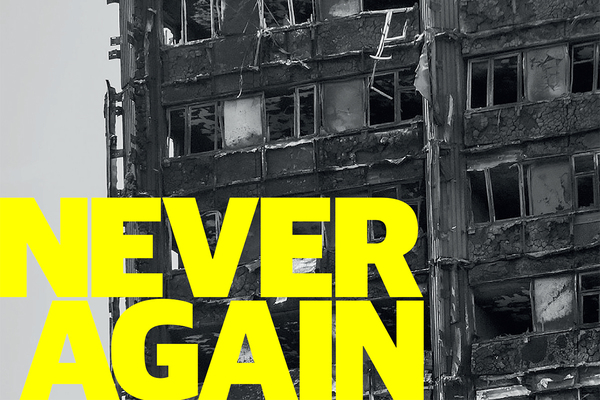
In the days following the Grenfell Tower fire on 14 June 2017, Inside Housing launched the Never Again campaign to call for immediate action to implement the learning from the Lakanal House fire, and a commitment to act – without delay – on learning from the Grenfell Tower tragedy as it becomes available.
One year on, we have extended the campaign asks in the light of information that has emerged since.
Here are our updated asks:
GOVERNMENT
- Act on the recommendations from Dame Judith Hackitt’s review of building regulations to tower blocks of 18m and higher. Commit to producing a timetable for implementation by autumn 2018, setting out how recommendations that don’t require legislative change can be taken forward without delay
- Follow through on commitments to fully ban combustible materials on high-rise buildings
- Unequivocally ban desktop studies
- Review recommendations and advice given to ministers after the Lakanal House fire and implement necessary changes
- Publish details of all tower blocks with dangerous cladding, insulation and/or external panels and commit to a timeline for remedial works. Provide necessary guidance to landlords to ensure that removal work can begin on all affected private and social residential blocks by the end of 2018. Complete quarterly follow-up checks to ensure that remedial work is completed to the required standard. Checks should not cease until all work is completed.
- Stand by the prime minister’s commitment to fully fund the removal of dangerous cladding
- Fund the retrofitting of sprinkler systems in all tower blocks across the UK (except where there are specific structural reasons not to do so)
- Explore options for requiring remedial works on affected private sector residential tower blocks
LOCAL GOVERNMENT
- Take immediate action to identify privately owned residential tower blocks so that cladding and external panels can be checked
LANDLORDS
- Publish details of the combinations of insulations and cladding materials for all high rise blocks
- Commit to ensuring that removal work begins on all blocks with dangerous materials by the end of 2018 upon receipt of guidance from government
- Publish current fire risk assessments for all high rise blocks (the Information Commissioner has required councils to publish and recommended that housing associations should do the same). Work with peers to share learning from assessments and improve and clarify the risk assessment model.
- Commit to renewing assessments annually and after major repair or cladding work is carried out. Ensure assessments consider the external features of blocks. Always use an appropriate, qualified expert to conduct assessments.
- Review and update evacuation policies and ‘stay put’ advice in the light of risk assessments, and communicate clearly to residents
- Adopt Dame Judith Hackitt’s recommended approach for listening to and addressing tenants’ concerns, with immediate effect
CURRENT SIGNATORIES:
- Chartered Institute of Housing
- G15
- National Federation of ALMOs
- National Housing Federation
- Placeshapers
The Paper Trail: The Failure of Building Regulations
Read our in-depth investigation into how building regulations have changed over time and how this may have contributed to the Grenfell Tower fire:
Related stories