You are viewing 1 of your 1 free articles
Cardiff Capital Region to unlock 3,300 affordable homes in five years while seeking to replicate Homes England
Cardiff Capital Region (CCR) has locked in the delivery of over 3,300 social and affordable homes as it looks to replicate the work of Homes England.


 Cardiff Capital Region to unlock 3,300 affordable homes in five years while seeking to replicate Homes England #UKhousing
Figures shared exclusively with Inside Housing revealed that the regional body – which covers around half of Wales’ population – has confirmed the delivery of 3,337 homes with housing associations and local councils between the current financial year and 2029-30.
This includes new affordable homes that will be delivered thanks to CCR’s Housing Viability Gap Fund, a £35m pot which aims to unlock stalled sites.
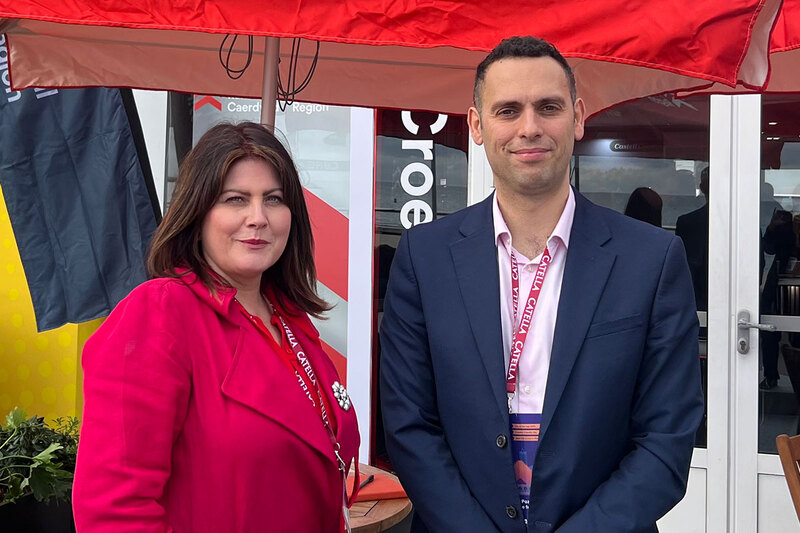
At the MIPIM 2026 property conference in Cannes, CCR’s chief executive Kellie Beirne told Inside Housing the fund has been “really successful” and is something the regional body can “scale and do much more on”.
She said the fund is “absolutely replicating” similar gap funding programmes by Homes England, and that CCR is looking to function as a development agency.
Read more


“We’ve got some aspirations for that in the future. It’s early days. We’ve only been up and running since 2016 so we’re coming up to the end of our first decade,” Ms Beirne said.
CCR comprises 10 local authorities in South East Wales and has statutory duties around economic well-being, regional transport and spatial planning.
The chief executive said social landlords in Wales are working with CCR and are “very aligned to the wider agenda”.
“It’s a tuning, I think, to that ‘housing plus’ agenda that we’ve seen in places like Manchester and Liverpool, which we aspire to as well,” Ms Beirne added.
But Dimitri Batrouni, Newport City Council’s leader, suggested that registered social landlords [RSLs] are not moving fast enough on delivery.
He said his council, which is part of CCR, is dealing with big increases in private sector rents as a result of people moving across the border from Bristol, and that he “can’t build houses quick enough”.
Mr Batrouni said: “It’s pricing some people out... and that’s where the [RSLs] need to wake up and smell the coffee. The market’s moving quicker than all of us... had anticipated, even Welsh government.”
He urged social landlords to get building. He added: “The original [purpose of RSLs] was to be freer of local authorities, to manoeuvre quickly and be more agile.
He also suggested there needs to be more competition between social landlords rather than an “easy grant system”.
Mr Batrouni told Inside Housing: “Actually, what you needed to create was a market of RSLs competing with each other... not just, ‘here’s the money, don’t worry, you don’t have to work hard for it, you just crack on’. You know, actually it’s, ‘we’ve got the money and we need the houses – sorry, who’s got the best offer?’
“And again, that’s a change of attitude [from] an easy grant system. Because we need some competitive edge. We need some dynamism. And that’s the beauty of capitalism, right?”
But he recognised too that Newport City Council needs to up its own delivery ambitions through its local development plan.
“On the planning side, on the [regulation] side, we need to be more ambitious,” he added. Mr Batrouni also said the goal to garner more investment at MIPIM is a “self-reinforcing process”.
He said: “If investors see more jobs, more investment in the private sector space, they’re more willing, we get more affordable housing because of higher percentages, RSLs are willing to borrow more and take more risk, because the risk is de-risked as they see more and more money, and more and more growth, right?”
Sign up to Inside Housing’s Wales newsletter
Sign up to Inside Housing’s Wales newsletter, a fortnightly round-up of all the key news and insight affecting the Welsh affordable housing sector.
Already have an account? Click here to manage your newsletters.
Related stories