You are viewing 1 of your 1 free articles
Concern about incorrect charges for repairs comes amid belief that AI is ‘only thing’ that will make Awaab’s Law effective
Incorrect schedule charges are adding to landlord repair costs, at a time when a senior figure said AI will be needed to make Awaab’s Law effective for his housing association when it comes into force this autumn.


 Incorrect schedule charges are adding to landlord repair costs, at a time when a senior figure said AI will be needed to make Awaab’s Law effective for his housing association when it comes into force this autumn #UKhousingDirector of housing group says AI is the only thing that will make Awaab’s law effective for it #UKhousing
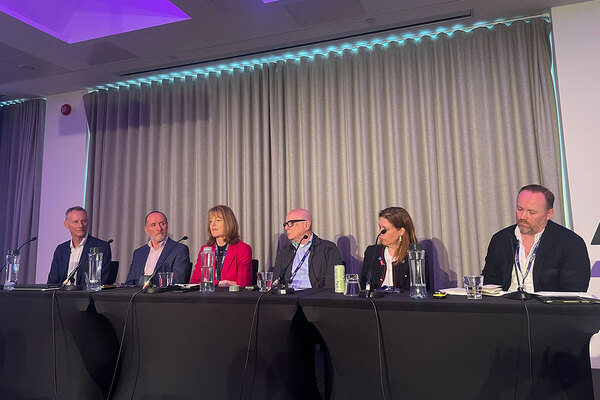
At Housing 2025 in Manchester on Tuesday, panellists discussed a range of possible explanations for rising housing association spending on repairs.
Social landlords are preparing for new strict time limits on investigating and repairing damp and mould, set to be brought in this October under a law named for two-year-old Awaab Ishak, who died after being exposed to mould in his home.
Today’s panel heard how incorrect service charges “often” made up 7% of landlord repair costs; that there was a rise in non-technical staff being employed in technical roles; and that AI might help meet the timescales under the new legislation.
Read more
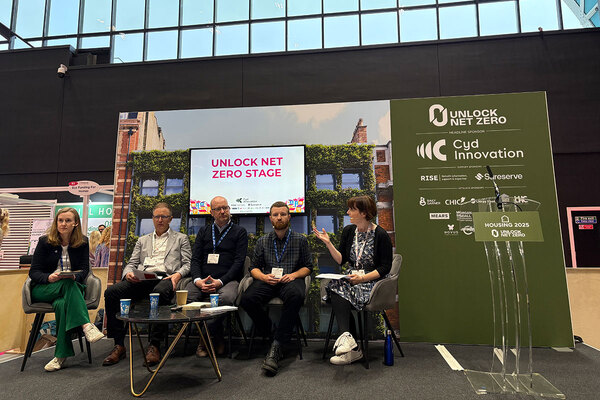

Chris Patient, head of consultancy at Rand Associates, which specialises in social housing surveys and asset management, said that, for a lot of their clients, the number of repairs had risen by a fifth in the past two years, with costs also up by 20%.
There were “various different theories” about why this was happening. These included an increase in the number of people working from home, meaning residents were both more aware of problems in their homes, and available to have the repairs done, he said.
But there was also “a lot of misuse of the schedule, or inaccurate use of the schedule, so charges being made incorrectly which can add in extra costs”, he added.
“Some of the reviews that we do when we look at charges used in the schedule, we’ll quite often see misuse values being around 7% [of the] total repair spend.
“And some of the reason for that is that we see quite a lot of acceleration of non-technical staff into technical roles. So people perhaps haven’t brought with them the skills they need to interrogate the data, or the charges that are being made by the contractors.”
This was “as a result of a lack of skills within the industry”, he added. The panel was later questioned on their use of technology in “an age where AI and robotics are rapidly transforming all sectors”, as Peter Apps, a contributing editor at Inside Housing who chaired the session, put it.
Ian Johnson, an executive director at Karbon Homes, said machine-learning technology that predicted repairs had probably saved the housing association around three-quarters of a million pounds.
He added: “We will have to get to grips very quickly, I think, with AI. I personally believe that will be the only thing that really makes Awaab’s Law effective for us over the next three years, as all the hazards come online.
“Unless we do something different around that, we won’t be able to send out 50,000 reports a year to customers within 48 hours of the inspection taking place.
“Technology probably is the answer, but making the right choices for us as a sector is going to be incredibly difficult, because there are so many opportunities out there,” he added.
Sign up for our asset management and sustainability newsletter
Already have an account? Click here to manage your newsletters
Related stories