You are viewing 1 of your 1 free articles
Councils report worsened viability for housebuilding while building safety issues ease, finds new report
Conditions for council housebuilding remain tough despite progress on building safety, with councils reporting worsened viability and market confidence in a new annual review.


 Councils report worsened viability for housebuilding while building safety issues ease, finds new report #UKHousing
The findings come as part of the second annual review of the campaign, ‘1.5M New Homes: The Local Government Challenge’. The review was launched at The Housing Forum’s National Conference in London yesterday.
It concluded that funding remains the “main constraint” on how many homes councils can deliver, especially at social rent.
Last year, the campaign identified 10 challenges that, if resolved, would do the most to speed up council housebuilding. The latest review asked 19 councils and delivery bodies whether each challenge had gotten better, worse or stayed the same.
Read more
Since the last review, prime minister Andy Burnham has set out an ambitious commitment to the “biggest council housebuilding since the post-war era”, and councils have been ordered to review their development plans and “scale up now”.
All of the councils that responded to the survey are in London and other “high-pressure areas where there is a strong need for more housing”.
Many also described large housebuilding programmes. The report recognised that its sample is “self-selecting as councils most keen to talk about housing delivery are those most interested in doing it, and not every council shares this drive”.
Eight out of the 16 councils that responded said viability had worsened over the past year, while the remaining eight said there had been no change.
Councils interviewed by the review pointed to falling or flat house prices in London, construction costs remaining high, higher financing costs, and policy costs including levies and standards.
“Contractors, and in two cases a housing association joint venture partner, have gone out of business. Registered providers are pulling back from new development because they are spending more on existing stock and on interest,” the report said.
On market stability and confidence, just over half of councils said it had worsened, partly as a result of global uncertainty.
The report said councils are also “more cautious” about income-strip and lease-and-leaseback deals, which “can leave them underwriting the risk”.
But the review also indicated positive steps for building safety, with 11 out of 16 councils reporting an improvement.
The Building Safety Regulator recently reported that 55 out of 57 decisions on new higher-risk buildings and conversions in the 12 weeks to 5 October were approvals.
However, the review urged caution, noting that this figure excludes withdrawn and invalidated applications, and 180 applications covering over 40,000 homes are still waiting.
On planning, five councils said the landscape had improved while nine reported no change and two said it had worsened.
There were mixed or broadly stable views on land availability, community engagement and trust, council capacity, density and infrastructure, and construction industry capacity.
The challenge of funding housing delivery was evenly split among survey respondents, but the review noted this was before first-wave allocations of the Social and Affordable Homes Programme (SAHP).
Three councils were confirmed as strategic partners as part of the £10bn allocations outside of London, and the government has indicated funding was held back from the strategic partnership route in order to prioritise councils via continuous market engagement.
The report said: “The review concludes that funding is the main constraint on how many homes councils can deliver, especially at social rent.
“It finds that, for social housing, viability and market confidence, the two issues that worsened most this year, come down to whether grant and borrowing can cover the cost.”
Councils told the campaign that the subsidy gap for building a social home is widest in urban areas, where temporary accommodation pressure is also most acute.
“They also said that the same accounting rules produce different outcomes depending on the auditor, and that being able to capitalise pre-development costs can be ‘make or break’ for a scheme,” the report added.
The campaign called on the government to work with the Chartered Institute of Public Finance and Accountancy and auditors on “consistent guidance on capitalising pre-development costs”.
It also urged the government to confirm future SAHP allocations promptly and with clear feedback on how bids were assessed, and to cut the cost of council borrowing.
This would include a guarantee on council housing debt and Public Works Loan Board loans at inflation-linked rates, the review said.
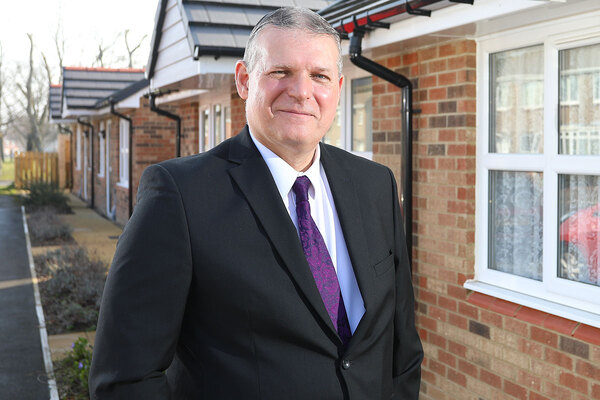
Toby Fox, founder of the campaign, said: “Ambition is not what the councils we have worked with are missing. What councils tell us is getting worse is the money side: viability and market confidence.”
He also pointed out that one London borough has shown it can deliver at scale but is now considering reducing that capacity because it cannot borrow more.
“If government expects councils to go further, the funding and the rules need to go further with them: grant that closes the viability gap, borrowing at a cost social housing can bear, and the certainty of multi-year commitments,” Mr Fox added.
Inside Housing recently published its annual Biggest Council House Builders list, revealing which councils are building the most homes across the UK.
Sign up to Inside Housing’s Development and Finance newsletter
Sign up to Inside Housing’s weekly Development and Finance newsletter, featuring a round-up of business, development and regeneration news and analysis.
Already have an account? Click here to manage your newsletters.
Related stories