ao link

Government mulls ban on referral fees to tackle ‘unscrupulous’ claim-farming in housing disrepair

A ban on referral fees for housing disrepair claims is one of the measures being floated by the government as it seeks to tackle “unscrupulous” claim-farming activity in the sector.
Linked InTwitterFacebookeCard
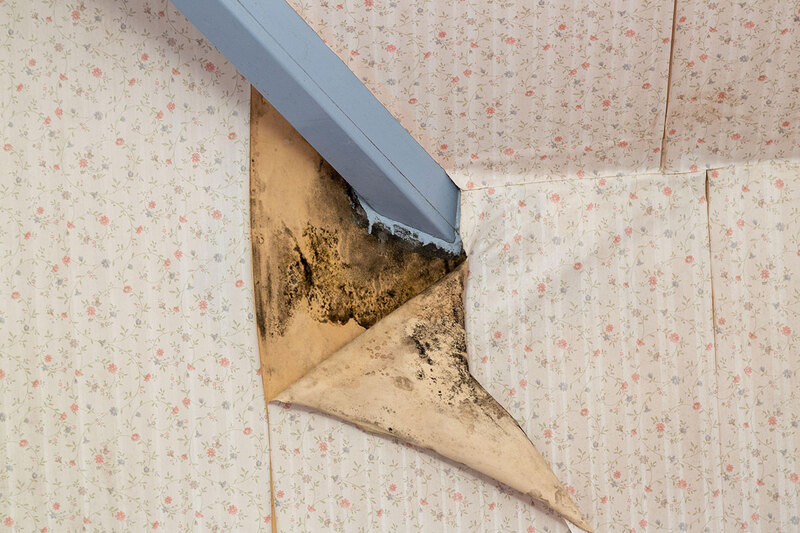
Wallpaper peeled back to reveal damp
The government is seeking views from tenants and landlords on claim-farming activity relating to housing disrepair (picture: Alamy)
Sharelines

LinkedIn IHA ban on referral fees for housing disrepair claims is one of the measures being floated by the government as it seeks to tackle “unscrupulous” claim-farming activity in the sector #UKhousing

The Ministry of Housing, Communities and Local Government (MHCLG) and the Ministry of Justice published a joint call for evidence focusing on tenants seeking redress for housing disrepair through the courts.

The government is seeking evidence from tenants, landlords, solicitors and claims management companies on the problem of claim-farming, where third parties contact individuals to bring compensation claims which are then passed on to a solicitor, sometimes on a “no win, no fee” basis. 

The recent introduction of Awaab’s Law is expected to see a rise in disrepair claims. To complement the new regime, the government said it would seek evidence on claim-farming to ensure that both tenants and landlords were “not unfairly targeted”.


Read more

Mansfield warns of ‘no win, no fee’ cold callers pretending to be council officersMansfield warns of ‘no win, no fee’ cold callers pretending to be council officers
Solicitor told to pay tenant’s legal bill after ‘no win, no fee’ disrepair claim failsSolicitor told to pay tenant’s legal bill after ‘no win, no fee’ disrepair claim fails
The rise in unethical ‘no win, no fee’ firms is a threat to social landlords and residentsThe rise in unethical ‘no win, no fee’ firms is a threat to social landlords and residents

In the document, the government said that too many renters put up with poor conditions in their homes and that it was “unacceptable” that 10% of social housing and 21% of privately rented homes do not meet decency standards.

It acknowledged too that claims management companies (CMCs) can play a “valuable role” in connecting tenants with legal remedies, but added that there may be cases where “unscrupulous activity” is resulting in vulnerable tenants being exploited.

The document added: “We are aware that there may be issues with some CMCs and solicitors not acting in tenants’ best interests. Tenants may also face unclear or unexpected costs.”

The MHCLG said it was looking at previous reforms of personal injury claims and considering whether there were any lessons that could be applied to housing disrepair.

Referral fees are a type of commission paid to a third party such as a CMC as a reward for making a successful introduction to a law firm, and were banned in personal injury claims in 2013.

The government said that banning referral fees for housing cases would tackle the issue of claimants being passed to the firm willing to pay the highest referral fees, rather than to the one most appropriate for their claim.

“Banning their use would not prevent claimants with valid claims from pursuing their case, but would enable a claimant to choose a solicitor based on their specific needs, rather than being referred to the highest bidder,” it added.

The government is also seeking evidence on track allocation for housing disrepair cases, the process by which the court assigns a civil case to one of four routes based on its complexity and value.

Generally, a housing disrepair claim will be allocated to the small claims court, which is used for simpler cases, if the estimated cost of repairs or the financial value of any damages is not more than £1,000.

But if either the costs of the repair or damages exceed £1,000, the claim will typically be allocated to the fast track, which is used for more complex cases. At this level, the process is expensive for losing defendants, as in most claims they must pay out for cost of repairs as well as cover the legal fees of both parties.

“The ability to recover costs can also encourage unmeritorious claims to be made as defendants can often choose to settle such claims rather than risk the expense of fighting a claim,” the document says.

Increasing the small claims track limit to ensure all housing disrepair claims are heard in the small claims track could reduce and rebalance these costs across both parties to the claim, the government said.

In September, Dambu Tenner, head of legal at housing association Abri, wrote in Inside Housing about the “worrying trend” of claim-farming and unethical ‘no win, no fee’ firms.

Ms Tenner said the landlord had seen cases more than double, from 56 in 2023-24 to 114 in 2024-25, with the extra cases resulting in increased costs, primarily made up of legal fees to bulk litigation firms.

Gateshead Council recently issued a warning to residents about a rise in approaches from “rogue” claims management companies targeting social housing tenants and encouraging them to pursue housing disrepair claims.

At the end of November, Chris Buckley, the council’s cabinet member for housing, said: “We are seeing far too many tenants being misled by claims companies, whose only aim is to make money. These companies often leave people worse off, facing debts, court fees and unnecessary stress. We want tenants to know that they can come to us directly.”

The Solicitors Regulation Authority (SRA) is also concerned about the issue of bulk claims, and earlier this year said it had over 80 live investigations across 74 firms with potentially more than 200,000 claims between them, most commonly relating to financial products, housing disrepair and cavity-wall insulation.

An SRA Spokesperson said: “We welcome the call for evidence on housing disrepair claims and tenants’ experience in seeking redress. We have concerns about how well the high-volume claims market is working, including in this area.

“As well as taking action to investigate poor practice from law firms, we are also considering wider changes to improve protections for consumers.”

The call for evidence is open until 12 February 2026.


Sign up to Inside Housing’s Regulation and Legal newsletter


Sign up to Inside Housing’s Regulation and Legal newsletter, featuring a weekly bulletin with news and insight on regulation, key legal rulings, legislation and court cases. 

Click here to register and receive the Regulation and Legal newsletter straight to your inbox.

And subscribe to Inside Housing by clicking here.

Already have an account? Click here to manage your newsletters.

Linked InTwitterFacebookeCard
Add New Comment
You must be logged in to comment.