You are viewing 1 of your 1 free articles
Homebuyer sues for £1m after being deceived by Section 106 ‘conspiracy’, court papers allege
A homeowner is suing for nearly £1m in losses after she was “deceived” into spending more than £700,000 on a former shared ownership flat that she would later discover was embroiled in a “conspiracy” set up to avoid affordable housing contributions, it has been alleged in court papers.


 Homebuyer sues for £1m after being deceived by Section 106 “conspiracy”, court papers allege #UKhousing
The allegations came from lawyers acting for a woman who is attempting to sue Terry McMillan for damages incurred after she bought a flat from one of his companies at full price despite it being bound by affordable housing obligations.
The entrepreneur claims he understood that his scheme to avoid affordable housing contributions was legal and that “there was never any intention to harm the purchasers”.
Kausa Raja claims she was “deceived” into making the £714,350 purchase, which she says turned out to be “disastrous” for her after she was subject to legal action by Southwark Council, eventually having to sell the flat to the authority for a fraction of the price she paid.
As part of her case, Ms Raja’s lawyer claimed that the previous owner of the property was paid money to “pretend” to be a tenant in need of social housing before being financed by a Mr McMillan-owned company to staircase to 100% ownership and hand over control of the flat to the same company.
Mr McMillan’s representatives admitted payments were made, but argued that he believed this previous owner qualified for affordable housing.
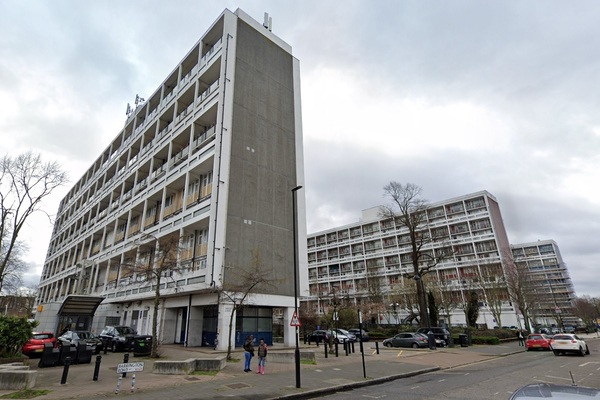
A judgement on the case handed down by the Court of Appeal said the council granted planning permission in November 2011 to Neobrand Limited – which has not been linked to Mr McMillan – for a mixed-use development called the Signal Building.
As part of the Section 106 planning agreement, 11 flats in the block had to be for affordable tenures for people in need of affordable housing and could only be used by a registered provider.
Neobrand granted London District Housing Association (LDHA) headleases for the affordable flats in 2015, with the premium paid by a company owned by Mr McMillan.
LDHA was described by Ms Raja’s lawyers as “effectively controlled” by Mr McMillan. Southwark Council has previously alleged that the housing association’s chair was a friend and business associate of Mr McMillan’s.
Mr McMillan had come up “with a scheme to enable him to be able to take advantage of what he perceived to be a loophole in the affordable housing requirement”, the judgement stated.
It said the affordable flats were then sub-leased on to supposed shared owners, who were funded to staircase to 100% ownership by another of Mr McMillan’s companies before the flats were sold on the open market at a profit.
The court papers described how in August 2015, the flat later purchased by Ms Raja was ostensibly sold by LDHA on a shared ownership lease to a man who staircased to 100% ownership on the same day.
But this man’s acquisition of 25% of the equity, valued at £620,000, as well as the staircasing, was financed by Mortgage & Equity Partners No 16 LP (M&E), owned and controlled by Mr McMillan.
As part of the lease agreement, the man had “agreed to execute a Declaration of Trust” which “granted to M&E the absolute right to deal with the flat including its sale”.
By the time Ms Raja bought the flat in April 2016, the man’s interest in the flat had been transferred to another individual, this time a woman.
The man was paid £3,000 and the woman £2,500 for their parts in the scheme, the court was told.
Ms Raja’s lawyer argued “that this was in effect paying bribes to them to pretend to be tenants in need of affordable housing” and that the paid man was a “stooge”.
While the judgement said “it was admitted” that the payments were made, Mr McMillan’s counsel said he “did not know what steps LDHA had taken to vet them as prospective tenants” – a claim which Ms Raja’s lawyer argued was “incredible”.
He pointed out that the flat had been let out to someone else by another one of Mr McMillan’s companies on a 12-month assured shorthold tenancy in March 2015, with evidence it was at open market rent, to argue the man given the £3,000 was “never intended to live there”.
The court papers suggest that “similar arrangements” applied to the other affordable flats in the Signal Building, and Mr McMillan is alleged to have run 12 similar schemes across London before by 2010 and 2015.
Southwark Council began legal proceedings over what it has branded “sham transactions” at another development involving a Mr McMillan company in June 2015, as previously reported by Inside Housing.
The council also issued proceedings against LDHA and others including Ms Raja in June 2016, arguing that the scheme “did not work and that the flats were still subject to the affordable housing obligation”.
It “sought to enforce that obligation against the purchaser”, eventually leading to Ms Raja agreeing to sell the flat back to the council for £283,657 in October 2018, more than £430,000 less than she paid for it.
Ms Raja settled a claim against the solicitors which advised her on buying the flat, recovering £470,693.
However, she is now claiming nearly £1m in damages from Mr McMillan because of losses arising from “interest payments, charges, penalties and legal costs arising out of bridging loans taken out by her to purchase the flat, together with other legal costs”.
She alleges that she “was deceived into buying the flat by certain fraudulent misrepresentations, namely that the flat had been leased to a tenant in need of affordable housing, that the lease had been staircased to 100% and that the flat was being sold free of the affordable housing obligation”.
Mr McMillan is not claimed to have made those representations himself but to have “masterminded the entire scheme”, according to the court document.
The businessman claims he “had advice, and believed, that the scheme was lawful and effective”.
He applied to have Ms Raja’s case struck out, arguing that because of this advice he could not be “liable for deceit”.
But in April 2020, the High Court dismissed Mr McMillan’s application, with last month’s judgement rejecting his subsequent appeal and concluding that the matter should go to civil trial.
Mr McMillan is now seeking permission to have the Court of Appeal judgement revisited in the Supreme Court, with a decision on his application pending.
Ms Raja argues that “the plan was to pull the wool over the eyes of the purchasers such as Ms Raja from the outset”, the recent judgement said.
Her lawyer highlighted evidence that Mr McMillan would have been aware of legal action by Southwark Council at other schemes by the time she purchased the flat in April 2016.
The Court of Appeal judges agreed that these pieces of evidence “at least raise real doubts as to what Mr McMillan did think about the lawfulness and effectiveness of the scheme by April 2016”, raising “a triable issue that is unsuitable for summary judgment, and that can only be decided after full disclosure and oral evidence with cross-examination”.
In October 2019, the Regulator of Social Housing de-registered LDHA, which by that time had changed its name to Pathfinder Housing Association.
The regulator had previously declared Pathfinder non-compliant with regulatory standards on governance and financial viability, saying the organisation could not provide evidence that its arrangements with third parties had not “inappropriately advance[d] the interests of third parties”.
Southwark Council’s cases against Pathfinder reached confidential settlements, with the provider denying all allegations and that it was part of any sham transaction or conspiracy.
Sign up for our regulation and legal newsletter

Already have an account? Click here to manage your newsletters
Related stories