You are viewing 1 of your 1 free articles
Less than 5% of government housing spending used for development, says CIH
Only 4.3% of government housing spending goes towards boosting development, new research from the Chartered Institute of Housing (CIH) has found.


 95% of housing subsidy spent on benefits and mortgage support, says CIH #ukhousingCIH publishes UK Housing Review 2018 #ukhousingUK Housing Review shows housing spending tilting away from development towards benefits #ukhousing
That figure is down from 82% of the 1975/76 total – while the housing benefit bill soared during the past 40 years.
In 2015/16, 95.7% of the Westminster housing budget went on housing benefit and mortgage interest support, up from only 18% four decades ago, with welfare making up the vast majority of spending.
The figures are unveiled in the CIH’s annual UK Housing Review, published today.
Read more




Investment in social housing has dropped from £13.7bn in 1979/80 to £5.1bn last year based on today’s prices, with 79% of spending up to 2020/21 reserved for the private sector.
“Investing in new homes would help make housing more affordable for people who are struggling – and it is also the only sustainable way to cut the housing benefit bill in the long-term,” said Terrie Alafat, chief executive of the CIH.
“We need to increase the number of homes we are building but it’s not only a numbers game – we need to make sure we are building the right homes, in the right places, at the right prices.
“For many people on lower incomes, the only truly affordable option is social rent.”
What is the UK Housing Review?
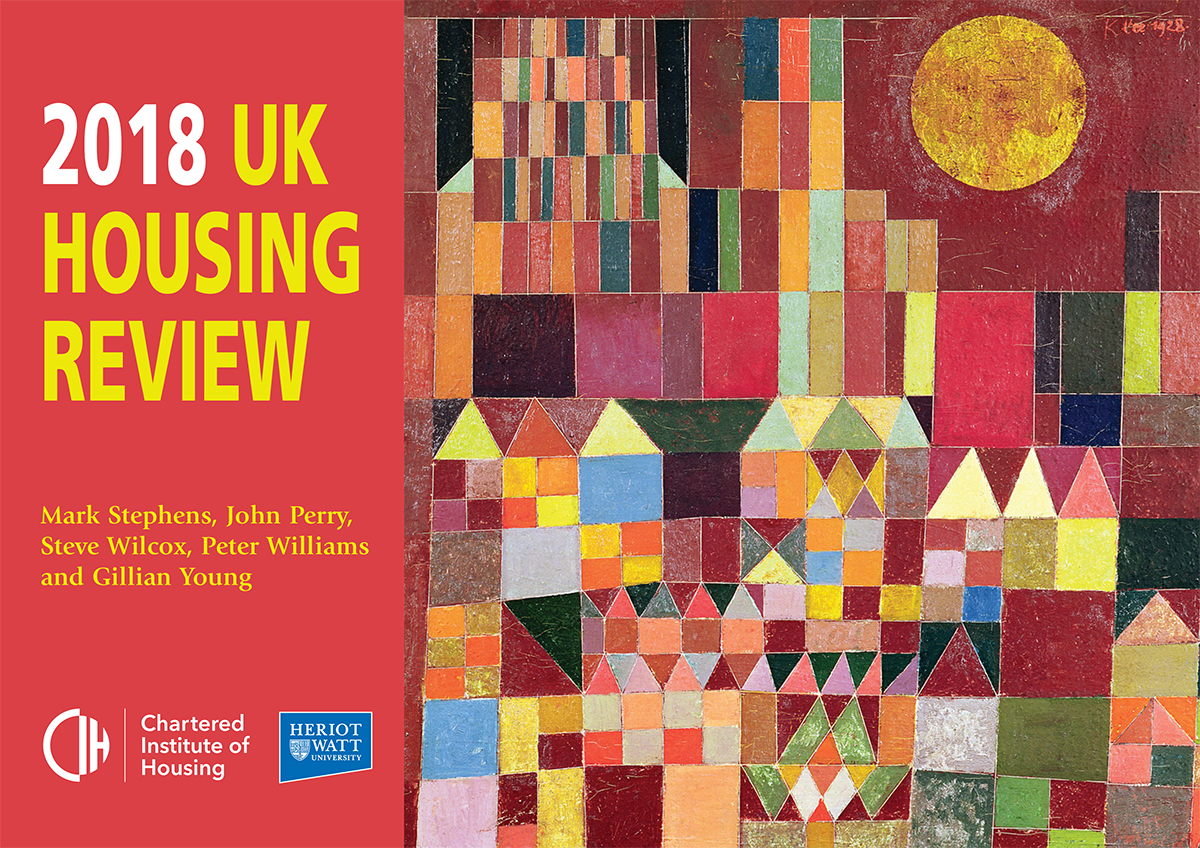
The front cover of this year's edition
The UK Housing Review is published and sold every year by the Chartered Institute of Housing.
This year's edition is 248 pages long and features commentary, data and insight on the current state of the housing sector.
It includes information across a wide range of areas including the wider housing market, affordability of rents, economic environment, homelessness, housing need, lettings, stock condition and tenure trends.
The 2018 review was written by Mark Stephens, director of the Urban Institute at Heriot-Watt University, John Perry, policy adviser at the CIH, Steve Wilcox, former professor of housing policy at the University of York’s Centre for Housing Policy, Peter Williams, land economy departmental fellow at the University of Cambridge, and Gillian Young, honorary research fellow at Heriot-Watt University.
Related stories