LFB did not act on stay put and building failure warnings when it drafted national guidance, inquiry hears
The London Fire Brigade (LFB) ignored calls to include stronger warnings about building failures and when to revise the ‘stay put’ advice in draft national guidance it prepared for central government following the Lakanal House fire.


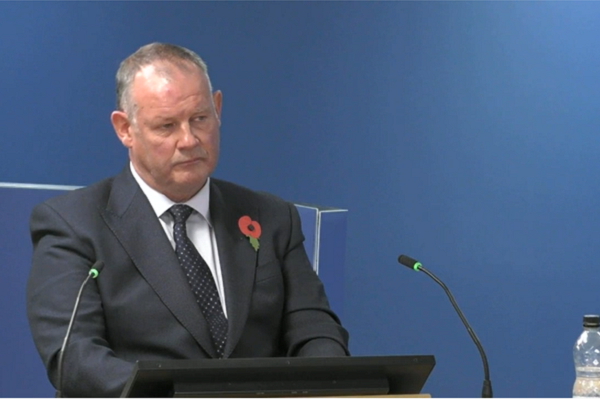 LFB did not act on stay put and building failure warnings when it drafted national guidance, Grenfell Tower Inquiry hears #UKhousing
Today the inquiry heard from Peter Cowup, a former head of operational policy at the LFB, who led the redraft of ‘Generic Risk Assessment (GRA) 3.2’ – the document that set national guidelines for firefighting in high-rise buildings – in the early 2010s.
The LFB was asked to lead this redrafting process to update a 2008 version of the document by the Department for Communities and Local Government (DCLG) to incorporate the lessons emerging from the Lakanal House fire, a blaze in a south London tower block which killed six in 2009.
The inquiry examined the process of consultation on various draft versions, which revealed several instances where concerns were raised that it did not go far enough to deal with the need to evacuate buildings.
In July 2012, for example, when the draft document was sent out to chief fire officers across the UK for comment, Gary Brandrick from North Wales wrote that a paragraph on evacuation “did not do the necessity for getting the evacuation strategy correct”.
Read more
“If a building was fitted throughout with a sprinkler system than a stay put policy would generally be warranted. But without such a system, how can we be sure that any built in or engineered solutions have not been compromised?” he wrote.
However, this comment was marked ‘rejected’ in a spreadsheet of consultation responses shown to the inquiry today.
“What he’s basically saying is you can’t safely assume that a building will perform as intended. Now, that’s a sound legitimate point of view, isn’t it? Did you agree with him?” asked counsel to the inquiry Andrew Kinnier QC.
“I do agree, yes,” said Mr Cowup.
“And I think you also agree with me that the observations he puts in his first paragraph deserved a greater, more reasoned response rather than a simple rejection didn’t they?” asked Mr Kinnier.
“I would accept that. And I would accept that in our response we could have been clearer than we were,” replied Mr Cowup.
The inquiry also heard that when the document was sent out for ‘proofreading’ checks in February 2013, two firefighters responded suggesting changes relating to the danger of fire spread in high-rise buildings.
One, Stephen Dudeney, specifically referenced large panel system buildings (a construction method linked to the Ronan Point collapse in the 1960s) to warn that some high rises could allow smoke and flames to spread “through parts of the compartments that may otherwise be deemed fire resistant”.
The other, Michael Curran, made several suggestions for changes, including the need to consider a “re-evaluation” of advice to trapped callers to ‘stay put’ “as circumstances change”.
But neither suggestions were taken on board, with Mr Cowup saying he was reluctant to change a document which had already been subject to consultation and he had already faced criticism for making the document too detailed.
“One of the criticisms that we’d had of the GRA at this point going on, and I was probably very mindful of this, is that it was too long, too complicated and too detailed,” he said.
“I was very mindful that if we continued to change it, I’d be adding fuel to the fire and also I was going to be changing it at a point when I’d already said it was the final draft.
“So on reflection, I think [the suggested comments] would have added value without a doubt. But at the time I had a rationale for not accepting it.”
Following the Lakanal House coroner’s inquest, which made clear findings that the six victims may have survived if they had fled the building earlier, Mr Cowup sent an email to colleagues to say that his draft document “provides national guidance on all of the issues which have been identified for review by the coroner”.
However, he added that he may need to “amplify certain points” relating to “the risk that fire and smoke can spread more rapidly” through a building than sometimes expected.
“Isn’t that just a euphemistic underplaying of the fact that the draft offered no practical advice or guidance to incident commanders about what they should be trained to do when faced with unexpected fire behaviour?” asked Mr Kinnier.
“No, I don’t accept that because I don’t accept that the basic draft was flawed in that respect. It just didn’t contain the detail and the emphasis on it,” replied Mr Cowup.
Earlier, the inquiry heard that words making specific reference to the risk of “rapid fire spread” relating to cladding systems had been included in the 2008 version of the guidance but were dropped from Mr Cowup’s draft.
He described this as an “oversight”. “The way that I understood cladding was not as a hazardous material in its own right, because I believed that it would have as an external item of construction [and therefore] it would have been non combustible because that was my understanding of the regulations,” he said.
“My understanding of the risk that cladding posed was that it had the potential to create a void and it was the void rather than the cladding which created the risk of fire spread.”
The inquiry continues with further evidence from Mr Cowup tomorrow.
Sign up for our weekly Grenfell Inquiry newsletter

Each week we send out a newsletter rounding up the key news from the Grenfell Inquiry, along with the headlines from the week
Already have an account? Click here to manage your newsletters
Related stories