Former minister ‘ashamed’ of state's ‘wholly inadequate’ response in Grenfell aftermath
A former government minister said today that he was “ashamed” of the state’s “wholly inadequate” response to the Grenfell Tower fire, adding that he could see why it would have “led some people to believe there was institutional indifference” towards the community.


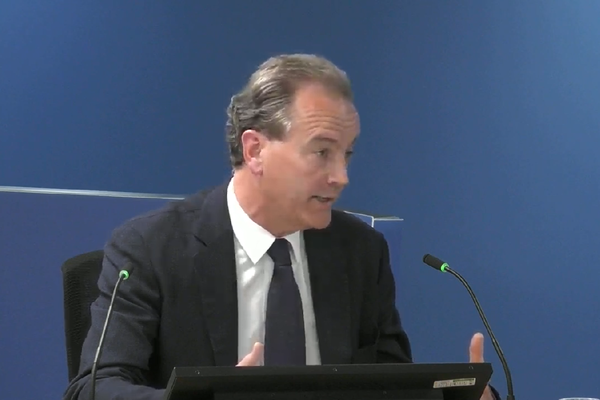 A former government minister said today that he was “ashamed” of the state’s “wholly inadequate” response to the Grenfell Tower fire #UKhousing
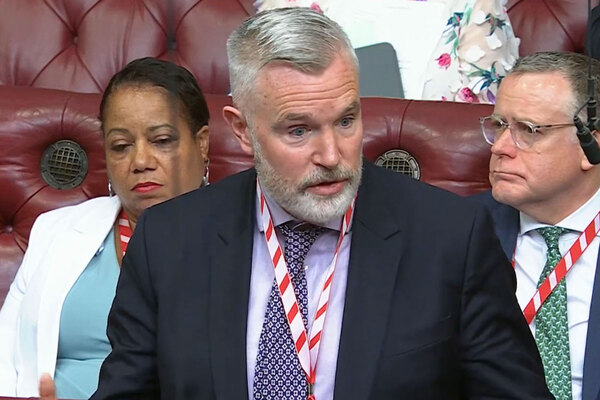
Nicholas Hurd, the former fire and policing minister, attended the tower on the morning of the blaze and chaired the first meeting of central government in the afternoon.
He said today that the government should have provided more support to the local authority the Royal Borough of Kensington and Chelsea (RBKC) at this point, but lacked genuine information about how much the council was struggling to cope.
The inquiry has previously heard that RBKC elected not to call for ‘mutual aid’ from other local authorities, with then chief executive Nicholas Holgate telling colleagues: “That looks like we can’t cope.”
Lawyers for bereaved and survivors have said the council’s efforts to respond “collapsed in spectacular fashion”, with a lack of communication, an absence of official figures, no information about whether loved ones had lived or died, chaos at ‘rest centres’ and other survivors “abandoned” in hotels for days.
Read more
Mr Hurd was asked today about the first government meeting, which took place at 4pm on the 14
June 2017, the day of the fire.
Mr Hurd, who had taken the role only days previously, chaired the meeting, with an email referring to the lack of “availability” of then home secretary Amber Rudd.
He told the inquiry today that the meeting should have been chaired “at the most senior level from the start”.
“We are talking about a situation in which the country has woken up to one of the worst disasters in our memory,” he said. “We all remember how we felt that day and I just felt that response was not proportionate to the anxiety, the trauma in the community and in the country, and that people expected to see a more senior level of leadership from the start.”
As the inquiry has previously heard, the meeting was not attended by Mr Holgate and featured no conversation about critical issues such as the establishment of ‘rest centres’ to support the community.
“Of course, this is unforgivable in hindsight, but in the absence of anyone raising a problem, the conversation moves on,” said Mr Hurd.
The meeting also discussed the provision of trauma support to firefighters and police who had attended the incident, but made no reference to the need to provide a similar service to residents and bereaved.
Mr Hurd said he had raised this issue in regard to the emergency services personnel following a specific request from Dany Cotton, then commissioner of the London Fire Brigade.
The meeting noted the need to ask the local government minister whether other local authorities were supporting RBKC in its response, but did not discuss this point further.
“Can you explain why there wasn’t a debate about those matters?” asked Richard Millett QC, counsel to the inquiry.
“I can’t,” he replied. “I think part of the explanation may lie in the absence of the council.”
Mr Hurd repeatedly said the meeting had not been given a clear enough picture about the struggles on the ground, which led to him later telling journalists that “the resources are in place and the capacity is in place to support people”.
“That meeting was not adequately informed by the ground truth of what was happening in the area,” he said. “To my eyes now, in hindsight, there were clear failures of intelligence in terms of bringing the right information to that meeting and therefore, unacceptable as it looks today because it reads terribly complacently, I could only report what the feeling of that meeting was.”
He told the inquiry that central government figures realised that more intervention was needed the following day, when Mr Holgate phoned into a meeting and his failure to answer questions led to the “complete collapse of his credibility”.
“This meeting was a defining moment,” said Mr Hurd. “This was the first time, effectively, the council was open to question… there was a growing concern about data and the reliability of numbers and he really wasn’t able to answer some questions that anyone might reasonably have expected him to answer.”
He said this meeting was “instrumental to the dropping of the penny” that the council was failing to cope.
“It became quite clear from the questioning in that meeting that the council weren’t on top of the numbers, both in terms of numbers of people in the tower and the broader housing requirement. I could see the faces around the room of incredulity,” he said.
Mr Hurd said that from this point “the wheels started turning” towards “regime change”, with Mr Holgate ultimately handing over control of the response to a London-wide body the next day, before being removed from office at the request of central government a week later.
“Mr Holgate was trying to maintain a line that the council could cope on its own, and the evidence was beginning to weigh very heavily that they couldn’t,” said Mr Hurd.
However, he also accepted that a number of problems with the response continued for days even after the response was handed over – including the provision of cash to survivors and communication with those in hotels.
In an email sent on 29 June – more than a fortnight after the fire – he outlined several areas where the community had told him the state response was still falling short. Asked why this had happened, he cited “the failure to grip it in the early days”.
“If you don’t get a grip on these things early, then it becomes very hard to reassert any sense that the system has gotten the situation under control,” he said. “I think the perceptions were set very early and were very difficult to shift.”
Mr Hurd was also shown the witness statement of Sadiq Khan, the mayor of London, who said that the government initially wanted to provide only £500 of the £5,000 typically paid to displaced households up front.
This was in contrast to the position in flooding incidents where the entire sum was paid at once.
“I couldn’t understand why the residents of Grenfell Tower would be treated any differently and said so,” Mr Khan said in his witness statement.
“It was eventually agreed that this would be paid as one lump sum of £5,000. Looking back, I consider this as symptomatic of the prejudice and institutional indifference towards the bereaved, survivors and residents we would see in the months and years that followed.”
Asked if he accepted Mr Khan’s criticism, Mr Hurd said he did not, but added: “I do actually accept that the response in the immediate aftermath of the fire was wholly inadequate, and might have led some people to believe there was institutional indifference. I know there wasn’t, but I understand why some people might have felt it.”
Mr Hurd, despite having stood down as an MP in December 2019, remains a special advisor to Boris Johnson on issues relating to Grenfell Tower.
Mr Millett asked if this role, which includes consideration of the recommendations of the inquiry, posed a conflict of interest given his role as a witness.
“Was any consideration given within central government to how it could be that you could be a factual witness to the inquiry, but at the same time be the prime minister’s independent advisor in respect of it?” asked Mr Millett.
Mr Hurd said his appointment was “rooted in a desire to see some continuity” amid a recognition that ministers had “come and gone” since the fire.
At the end of his evidence, Mr Hurd said: “I’m ashamed of the failure of the system I was part of to provide fellow citizens with the most basic support and comfort and they had every reason to feel totally entitled to in their darkest hour.”
He said he felt he had “done the best I could with the information and experience available to me”, but would accept criticism from the inquiry if it did not agree.
He added that in the years that have passed since Grenfell, the areas of the government response that have worked are where it has “done things with people rather than to people” and thanked those in the community who had taken “a very brave decision to engage with us… despite having every reason not to trust the state”.
“I know many people would just want to register our thanks and gratitude for that. It is an extraordinary community that deserved a lot better,” he said.
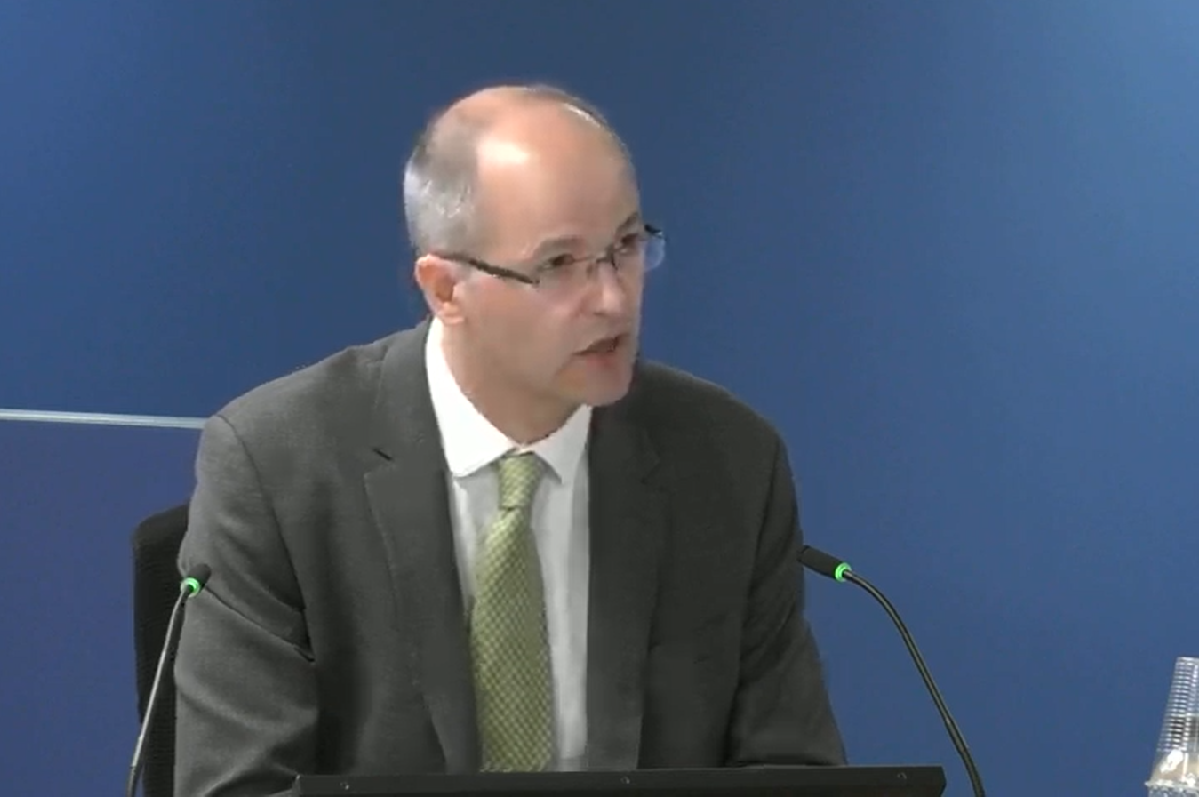
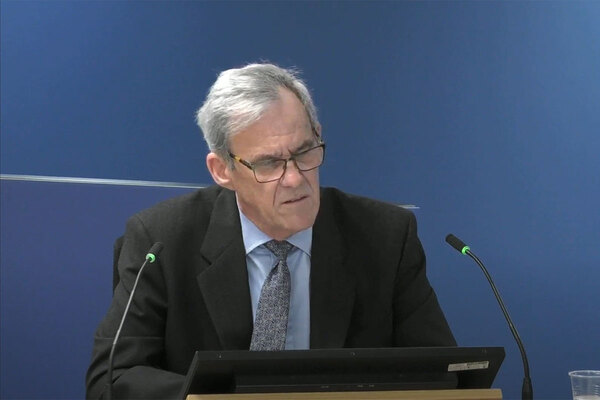
Earlier, the inquiry had heard from David Bellamy, chief of staff to the mayor of London, Mr Khan.
It saw evidence that a colleague at City Hall had raised concerns about RBKC’s response early on the morning of the fire.
In his witness statement, he said Mr Holgate had been “more preoccupied… with minor issues, such as the mayor’s proposed visit to the scene and the possible attendance rather than more important strategic issues regarding the handling of this crisis”.
He added that the lack of plans to hold a ‘gold group’ meeting until 11am “suggested a lack of any strategic direction at RBKC”.
But this colleague does not appear to have raised the concerns with Mr Bellamy, and then received news of a personal bereavement and went off shift.
“On one interpretation, Mr Bellamy, this could be a missed opportunity. Would you agree with that?” asked counsel to the inquiry Priya Malhotra.
“It would be a missed opportunity if you took the RBKC decision not to have a gold group until 11am as a major indicator of their problems,” Mr Bellamy replied.
Mr Bellamy pointed out that the mayor had no legal powers to take control of the response, or insist mutual aid was provided, in the event that a council failed to request it.
Sir Martin Moore-Bick, chair of the inquiry, said whether or not the mayor should receive these powers was a “political question”.
The inquiry continues.
Sign up for our weekly Grenfell Inquiry newsletter
Each week we send out a newsletter rounding up the key news from the Grenfell Inquiry, along with the headlines from the week
Already have an account? Click here to manage your newsletters
Related stories