You are viewing 1 of your 1 free articles
Platform boosts year-on-year new home completions by over a third
Platform boosted its new home completions by over a third in the first nine months of the financial year, while its surplus and margins saw pressure from investment in existing homes.


 Platform boosts year-on-year new home completions by over a third #UKhousing
In its unaudited trading statement for the nine months to 31 December 2025, Platform said it had completed 1,000 affordable homes, up 37% from 732 in the previous period.
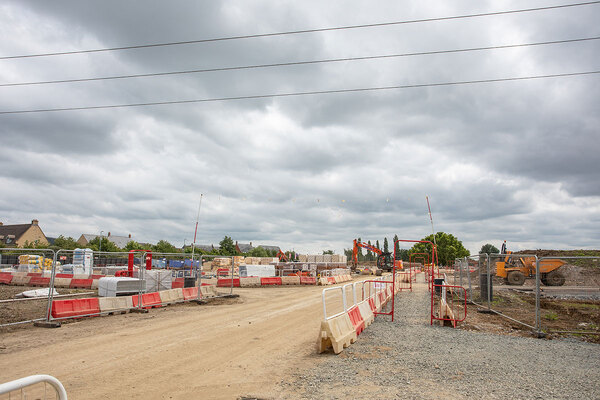
Despite its development progress, the 60,000-home landlord highlighted that “resource pressures” in statutory authorities are impacting timelines for delivering infrastructure and the sign-off of pre-occupation planning conditions.
Turnover at Platform was £287.3m in the nine-month period, up slightly from £285m in 2024, which was driven by inflationary rental increases and a year-on-year increase in social housing units.
But its operating margin was down three percentage points to 23.7%, while its operating surplus fell by over 10% to £68.1m.
Read more

“Operating surpluses and margins are both down on the prior year due to investment in existing homes and services, and cost challenges in revenue maintenance,” the trading update said.
Platform said its costs have been affected by accelerating some works to bring homes back into management, as well as clearing a backlog of jobs.
The Midlands-based landlord has also seen high damp and mould costs in 2025, but noted that “there are signs that case numbers are moderating”.
On development, the trading statement said Platform is on track to reach around 1,600 new starts on site for the second consecutive year, and will start 2026-27 with close to 70% of the pipeline identified.
Of the 1,000 new homes completed in the first nine months of the year, 319 were for affordable rent, 211 were for social rent, 432 were for shared ownership and 38 were Rent to Buy.
Investment in new homes rose year-on-year by over 18%, from £230.5m to £273m.
Platform’s turnover from shared ownership first tranche sales fell by just under a third to £29m, from £41.6m in the same period last year.
The trading statement said this was “primarily due to the timing of the development cycle”, but also pointed to delays in delivering infrastructure such as highways, power and water.
It said: “We have also seen some challenges with local authority resources, impacting the sign-off of our pre-occupation planning conditions.
“These delays have affected the speed with which schemes are completed and had a moderating effect on sales turnover as a consequence.”
Platform’s EBITDA MRI interest cover for the end of the nine-month period was 126%, down from 132% in December 2024.
“The year-on-year movement is driven by a planned increase in investment into existing homes, combined with increases in interest expense due to financing activities, as we push ahead with quality and sustainability improvements,” the update said.
The housing association has also seen its lowest ever rate of rent arrears, at 2.3%, down from 2.9% at the same point last year.
Kevin Bolt, Platform’s interim chief executive officer, who took up the role this month, said he had “inherited a well-run and financially robust organisation”.
“Our solid financial outturn has been underpinned by the predicted revenue growth in our core lettings business, record-low arrears and a reduction in vacant homes, which in turn supported interest cover and gearing ratios,” he said.
Mr Bolt said there have been “cost inflationary and activity pressures” on the organisation as a result of Awaab’s Law being introduced last year.
He continued: “Sales exposure from our development programme is limited to first tranche sales of shared ownership homes for which demand remains high in our areas of operation.
“This has helped to improve margins in comparison to last year, albeit turnover has been lower with delays in some schemes, due to infrastructure planning sign-off, such as highways and utilities connectivity, by statutory authorities.”
Sign up to Inside Housing’s Development and Finance newsletter
Sign up to Inside Housing’s weekly Development and Finance newsletter, featuring a round-up of business, development and regeneration news and analysis.
Already have an account? Click here to manage your newsletters.
Sign up for Housing 2026
Join us at Housing 2026 and hear from the sector’s most influential voices. Leading housing organisations curate their stages, showcasing the speakers and discussions that matter most.
Take part in purposeful, tech-enabled networking – see who’s attending, handpick the people you want to meet, and engage in meaningful, in-person conversations.
Connect with every key decision-maker under one roof, from local authorities and housing associations to investors, developers and operators.
Related stories