You are viewing 1 of your 1 free articles
Quality, skills and workforce capacity are ‘most pressing’ retrofit challenges
High-quality retrofit, skills and workforce capacity are “fundamental” to successful projects that meet climate targets.


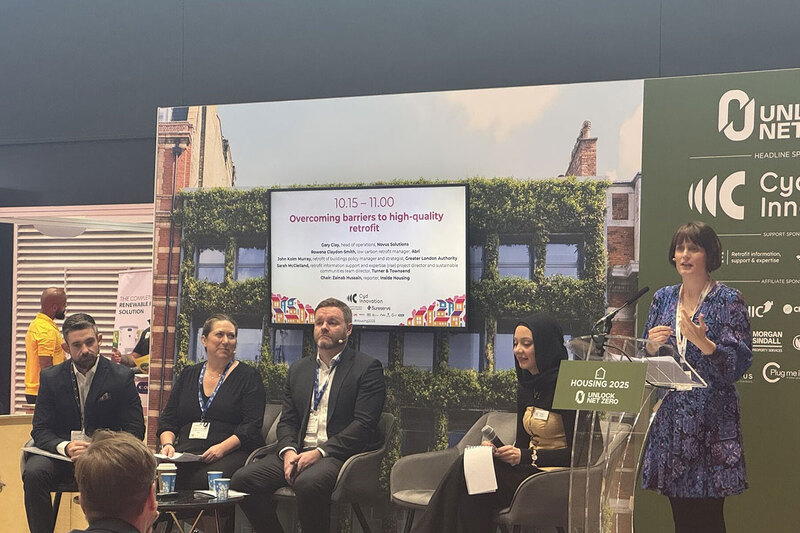 High-quality retrofit is ‘fundamental to success’, according to a panel discussion at Housing 2025 #UKhousing
High-quality retrofit is “fundamental to success” and not an “optional luxury”, Rowena Claydon-Smith, head of retrofit at Abri, said during a panel discussion at the Housing 2025 conference.
She said that a retrofit done “poorly” was a waste of money, and that collaboration, innovation and commitment must be considered.
Her concern comes as landlords are spending record amounts on repairs and maintenance.
Ms Claydon-Smith noted that retrofitting existing homes was critical to meeting climate targets, enhancing living standards, reducing energy costs for residents and future-proofing housing stock.
Read more


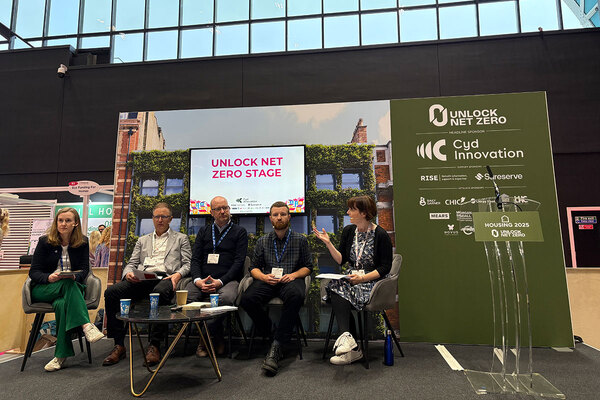
But she also noted challenges, including maintaining consistent quality across retrofit projects, technical complexity and financial constraints.
Other “most pressing” challenges included skills and workforce capacity, funding and financial barriers, and regulation.
“Without adequately trained designers, co-ordinators, assessors [and] installers, maintaining standards becomes an uphill battle,” she said.
“While we have received some great news from this government that they’ve committed to deliver £13.2bn into housing retrofits by 2030, there’s still lengthy and complex bid application forms to navigate as well as understanding the criteria and eligibility.”
Ms Claydon-Smith was joined by Gary Clay, head of operations at Novus Property Solutions; John Kolm Murray, retrofit of buildings policy manager and strategist at the Greater London Authority; and Sarah McClelland, retrofit information support and expertise project director and sustainable communities teams director at Turner & Townsend.
The panel discussion was chaired by Zainab Hussain, reporter at Inside Housing.
To overcome barriers, Ms Claydon-Smith suggested working together across industry standards, government bodies and community organisations.
She also suggested driving meaningful improvements, investing in training and accreditation, standardising best practices, expanding financial support mechanisms and establishing clear pathways to skills development.
Smaller housing associations also need to have more easily accessible funding, and help and support.
Mr Murray added that receiving public confidence is also important. “There’s no point in putting in heat pumps and then residents get higher bills than before,” he explained.
“There’s no point in putting in insulation, for example, with unintended consequences that may increase the damage of property.”
Meeting net zero challenges and making existing stock improvements are huge challenges across the sector.
On Tuesday, delegates heard how transitioning to the Decent Homes Standard could be affected by supply chains that are not there yet, and not enough feedback from residents on what they want from the new rules.
Sign up for our development and finance newsletter

Already have an account? Click here to manage your newsletters
Related stories