You are viewing 1 of your 1 free articles
Supply chain and tenant engagement lacking in roll-out of Decent Homes Standard
Transitioning to the Decent Homes Standard could be impacted by supply chains that aren’t there yet, and not enough feedback from residents on what they want from the new rules, according to a Housing 2025 panel.


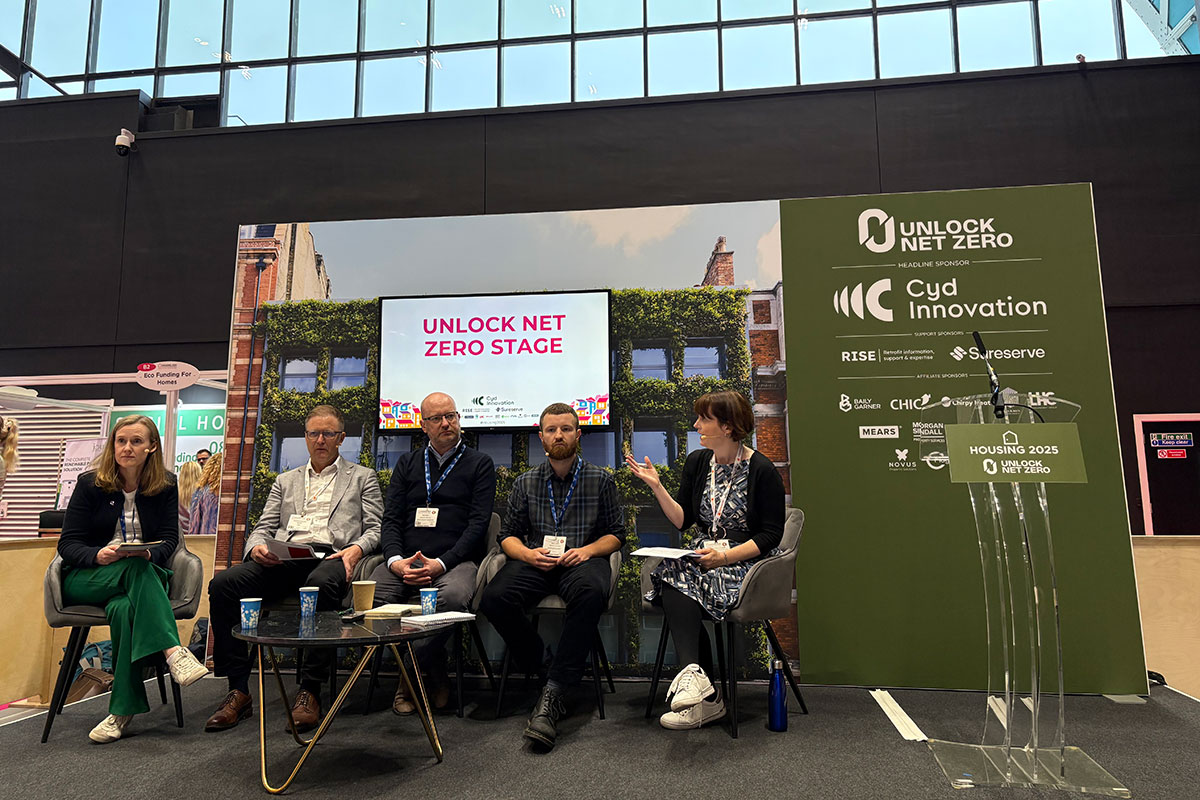 Transitioning to the Decent Homes Standard could be impacted by supply chains that aren’t there yet, and not enough feedback from residents on what they want from the new rules, according to a Housing 2025 panel #UKhousing
This concern about the roll-out of the Decent Homes Standard was a point made by Branwen Evans, group director of public policy at Places for People housing association, during a panel discussion at the Housing 2025 conference in Manchester on Tuesday.
She highlighted how the transition to implementing the standard was “very expansive”, with “a lot to do” instantly.
It needed to be supported by a supply chain, which was currently “not there”, and tenants needed to be engaged further, to understand what they wanted, so that the money was allocated there, she said.

A risk when it comes to social housing lay in ministers who have “levers” and can use regulations “to do things faster than everybody else”, she said.
“There is a risk that we roll stuff out that is not ready yet, that is not good for customers, and just not good enough,” Ms Evans added.
Another challenge was certainty, Ms Evans said, as investing in the right areas had become increasingly unclear as targets kept changing.
“We don’t know what to deliver yet, so it makes it harder for us to make the right decisions about what to deliver,” she explained.
Joining Ms Evans was Rob Wall, assistant director at the British Property Federation, Andrew Mellor, partner at PRP architects, and Nye Jones, head of campaigns at campaign group Generation Rent.
The discussion was chaired by Sarah McClelland, retrofit information support and expertise project director and sustainable communities team director at professional services firm Turner & Townsend.
Ms Evans said a decent home was affordable and a place where residents could thrive, but affordability had changed over time.
When affordable housing was introduced, it focused on the cost of homes. Now it included the cost of energy bills, which had increased, making homes less affordable, she said.
“What is going to be good in 2025 is not going to be good in 2050,” Ms Evans said.
Echoing Ms Evans, Mr Wall said there were five challenges when it came to decarbonising homes to make them “warmer, cleaner and greener”. These included how to finance that transition; how to access data on buildings and their performance; energy and grid access to buildings which used more electricity; and retrofitting heritage and listed buildings.
“But the number-one challenge that we hear from our members is the lack of policy certainty,” he said.
“So, when reflecting on how to navigate the policy framework to deliver warmer homes, the lack of clarity and the lack of certainty over that policy framework is really key, and a real challenge.”
Vanessa, an audience member and social housing tenant in Birmingham, said, in her experience, most of the problems around healthy social homes stemmed from foundational problems in properties.
“The authority has basically neglected us… We’ve had to put that money in from our own pockets, so there isn’t really any support from social housing,” she added.
Ms Evans responded that it was “really hard”, because there were different quality standards across different homes.
“I think that’s why it’s sometimes hard to roll things out quickly,” she added.
“What every landlord needs to be doing is a stock condition survey, where they go out and they understand what’s happening with every single house on a regular basis.”
Sign up for our development and finance newsletter

Already have an account? Click here to manage your newsletters
Related stories