



Engaging residents to understand how a retrofitted home works is a crucial part of the decarbonisation journey
To meet net zero carbon targets, monitoring of emissions and energy use must be standard – and can be transformative for challenging areas that need to become more efficient. Lizzy Westmacott explains more


 Engaging residents to understand how a retrofit home works is a crucial part of the net zero carbon journey, says Lizzy Westmacott, head of sustainability @ECDArchitects #UKhousing @morgansindallps (sponsored)“A key solution to making properties safer and healthier may lie in data and Internet of Things,” says Phil Copperwheat, information systems director @morgansindallps #UKhousing (sponsored)“We have much of the knowledge we need already to ensure that homes are sustainable, but we need to share this across the design & delivery process and with residents,” says Lizzy Westmacott, head of sustainability @ECDArchitects (sponsored) @morgansindal
In association with:

To make the buildings we commission, design, build and live in more sustainable and healthier, we first need to understand them. This has implications throughout buildings’ life cycles, for both new build and retrofit.
We need to keep our designs relatively simple, focusing on building fabric, and fully understand existing buildings and their occupants before we start trying to retrofit homes.
As occupiers of buildings, we need to think about how they work and how that affects our comfort. We need to think not just about energy use, but also air quality, outdoor spaces and community.
And we need to use the experience and data we already have to inform our understanding. This will mean we need to keep learning and remain curious.
Read more


Those who are commissioning building works, such as asset managers, need to set ambitious briefs. There may be some additional upfront costs to testing a design’s energy performance early on. Avoiding overheating while maximising solar gain might mean accepting a different orientation. Maintenance will include more than just servicing a gas boiler.
In order to meet net zero targets, we must all make ourselves aware of what this means. If monitoring can be included as a standard part of a brief, then clients and the wider industry will be able to continue learning lessons, at little additional cost. This will only work productively if it is integrated with existing asset management interfaces, so that issues can be identified over time and dealt with, highlighting the need for those involved in asset management and maintenance to be involved in brief-setting, as well as being part of the project team.
‘Retrofit’ work is typically focused on reducing carbon emissions and cutting energy bills, while ‘regeneration’ is often more focused on the overall environment that people live in.
Given the upheaval involved in retrofit, the opportunity should be taken to integrate this with wider works to improve the spaces around homes, adding to biodiversity, improving access to nature and so on. This can be transformative and is a lower-embodied carbon approach to challenging areas than knocking them down.
Understanding spaces
We need to consider the spaces we are designing, both as places for humans to flourish, but also as systems that use energy. The more we understand how heat and air are moving around them, the better placed we are to ensure that heat is where we need it and that we’re not creating long-term problems with heat and moisture in the wrong place. To do this, we need to have a better understanding of what other consultants do.
Too often reports are required for planning, but never properly interrogated or used to inform the design. If we need, say, an overheating analysis, we should discuss the findings among the whole team, ensuring it’s a reflection of how the building will be used and that the design is improved in response to the outcomes. This way we get better buildings and the whole team learns more.
The people putting our buildings together must understand the positive outcomes of doing their jobs. We use our ‘toolbox talk’ safety meetings to bring together everyone who is working on a project. We find that sharing the reasons for our design choices with the contractors working on site helps everyone work better.
Few residents can be unaware of the increased price of energy, and any motivation for using less energy has co-benefits for the environment. However, finding a ‘hook’ that appeals to each resident is key to creating behaviour change.
We’ve enjoyed working with residents on several retrofit projects, making videos to explain how their homes are working (or not) at present, and where improvements can be made. Combined with webinars, in-person events, pilots and site visits, we’ve been able to convey enough understanding of topics such as ventilation, condensation and renewables to enable an informed conversation where residents can challenge us.
Continuing this through the delivery process should result in homes that work for those who live in them, as well as residents who understand their homes. When we get in a car, we adjust the temperature and ventilation, yet many people in their own homes don’t know simple things, such as their windows have trickle vents that can be adjusted to let in air.
So this is all about understanding. We have much of the knowledge we need already to ensure that homes are sustainable and healthy, but we need to share this better – across all stages of the design and delivery process, and with residents. This should be built into each project, so that over time, more people start to see their homes as something they can actively change to work more efficiently for them.
Lizzy Westmacott, associate director and joint head of sustainability, ECD Architects
Case study: Basildon Borough Council, Essex – 10,500 properties
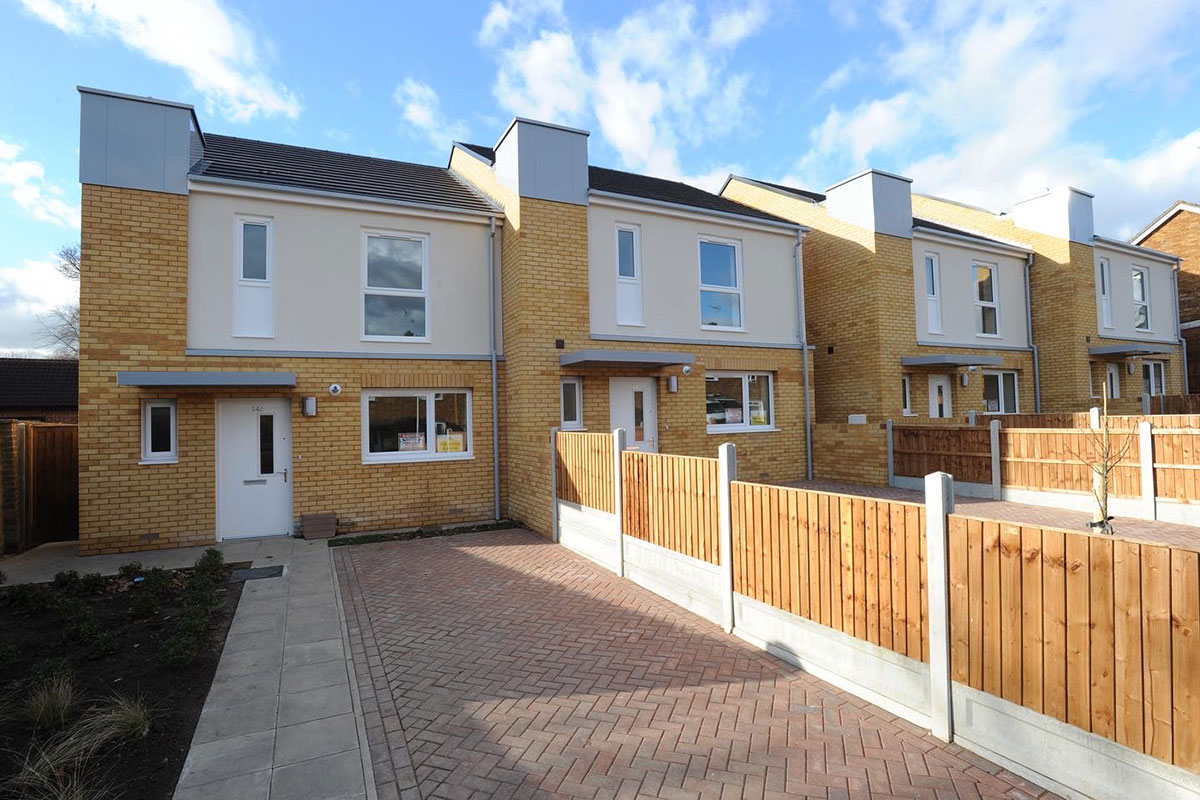
When it comes to making sure that social homes are safe, healthy and sustainable, housing associations and councils are under the microscope like never before.
“I’d like to think that we have always been focused on this,” says Peter Long, housing property manager at Basildon Borough Council. “But, without a doubt, the Grenfell tragedy and the sudden onslaught of disrepair claims have woken up the sector.”
Mr Long is a big believer that intelligent technology – such as machine learning – can be a game-changer for property management and result in healthier homes. For instance, the council uses a home health software platform called Goldeni, from maintenance contractor Morgan Sindall Property Services, to deliver real-time insight into the performance of its housing stock and ensure that individual buildings are functioning correctly.
Switchee smart thermostat devices and interconnected sensors (or data loggers) installed throughout the home capture data on internal environmental conditions, including temperature, air pressure, light levels, humidity and carbon dioxide. All information is relayed directly to the social landlord’s dashboard, without the tenant having to get involved.
The technology can also monitor heating systems and electricity and gas consumption, and detect for water leaks, help identify potential damp and mould issues (which are major causes of disrepair claims) and provide early warning of fuel poverty and vulnerability. It can even give maintenance and service teams early warning that a resident’s boiler is about to fail.
“If a boiler goes down, we sometimes know about it before the tenant does,” says Mr Long. “We’ve had some big successes with [this system]… It has unlocked a whole new level of insight.”
As an example, he recalls how the council used Goldeni to monitor the situation when one of its new properties – a former commercial building repurposed into 94 residential flats – suffered flood damage.
“The week we were going to start moving people in, a major flood occurred on the top floor, which soaked lots of flats underneath. Purely by chance, I had instructed each of these flats to have three Goldeni sensors installed in them. That meant we were able to see how wet and humid they were. We could control the heating and dry out the properties; and, literally, as each property became dry, we were able to let them. We wouldn’t have been able to do any of that without intelligent data-loggers.”
Of course, residents have to be on board with having the sensors – which are smaller than a matchbox – installed in their properties. Some can be suspicious of them.
“When we fit the data-loggers, we inform people what they are, how they work, how they help us and what sort of information we get from them,” says Mr Long. “[We tell them] they are not cameras, they are not microphones, we are not listening in on you, we’re not filming you. But we are spying on the property, because we want the property to be in a better state for you to live in – and I make no bones about it.
“Some people are quite excited by that, some people are a little bit nervous. But we’ve had no one refuse them. And no one, as far as I’m aware, has reported that sensors have disappeared off the walls or gone offline. But the general understanding among residents of why damp and mould occurs is poor, and I think will stay poor for some while yet – although we are gradually educating people about it.”
Use of data and intelligent tech could even bring down the cost of energy bills, Mr Long explains. “All landlords have properties that are leaking heat,” he says. “Some archetypes are prone to cold bridging and condensation. Data-logging and thermal imaging will identify these properties and indicate where money should be spent on fabric-first.”
“By pairing boilers with an IoT diagnostics device, it can enhance its function”

Phil Copperwheat, information systems director, Morgan Sindall Property Services
The Building Safety Act 2022, combined with the introduction of the Homes (Fitness for Human Habitation) Act and the recent consultation on introducing a Decent Homes Standard to the rented sector, are initiatives that increase the focus on ensuring social housing is safe, healthy and sustainable.
The move towards decarbonising social housing is a positive step. Energy-efficient homes are cheaper to heat and can help save families from fuel poverty – a risk for millions amid the cost of living crisis. Nevertheless, it does pose challenges for landlords.
Although the government’s Social Housing Decarbonisation Fund is set to provide £800m to support the improvement of insulation with a fabric-first approach, further investment will likely be required to fully decarbonise housing stock. The Climate Change Committee has said the government will not hit its 2050 net zero target “without the near-complete elimination of greenhouse gas emissions from UK buildings”.
A key solution to making properties safer and healthier may lie in data and Internet of Things (IoT) technologies. IoT solutions such as sensors can assist landlords in providing compliant housing by offering insights into properties’ internal environments, including a home’s internal temperature, and carbon dioxide and humidity levels.
Monitoring internal air quality helps to identify properties at risk of damp and mould, tenants in fuel poverty and homes with poor insulation, as well as energy-inefficient homes and heating systems. Also, by pairing heat sources such as boilers with an IoT diagnostics device, it can enhance its function, allowing appliances to become smarter versions of their original selves.
It provides landlords with a picture of where existing issues lie and when problems are forming. It also enables a proactive approach to maintenance and repairs. Plus it can lower repair costs for landlords as it extends the life of assets and the building fabric, fixing the issue before it causes damage to the property and provides an audit trail.
It also helps lower carbon emissions. Monitoring the energy usage and temperature within a property with the tenant’s agreement makes it possible to identify if appliances are being used inefficiently. Data and technology can play a pivotal role in ensuring that the homes of the future are sustainable and healthy.
Sign up for our asset management and sustainability newsletter

Already have an account? Click here to manage your newsletters
Related stories







