How to access finance as a smaller housing provider
The role of lenders is evolving, especially when working with smaller social and supported housing providers. Nigel Walker of Lloyds discusses what this looks like in practice for his bank


 The role of lenders is evolving, especially when working with smaller social and supported housing providers. Nigel Walker of Lloyds discusses what this looks like in practice for his bank (sponsored) #UKhousing
In association with:

The UK’s social and supported housing sector has never been more in demand. However, smaller housing providers face a range of challenges, including getting access to mainstream finance.
Inside Housing talks to Nigel Walker – who recently stepped into a new role at Lloyds as head of social and supported housing, business and commercial banking – to find out how smaller players can access specialist support to help unlock growth and build resilience.




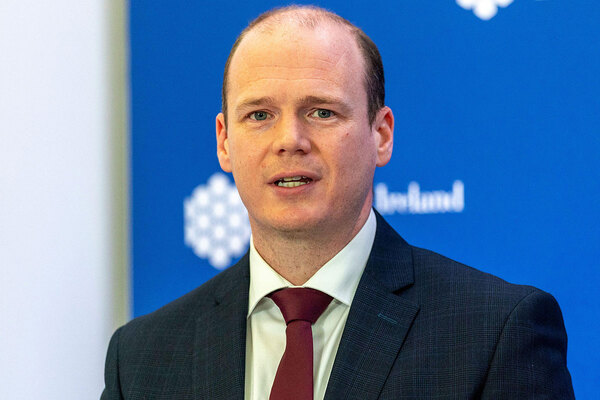
Nigel Walker, head of social and supported housing, business and commercial banking at Lloyds, began his career in Australian banking.
In 2002, he relocated to the UK with Bank of Scotland to support the merger with Halifax. More recently, he led the delivery of the UK government’s Covid support schemes.
What’s your reading of the current social and supported housing landscape in the UK?
The most pressing issue is that demand for social and supported housing continues to outpace supply, a shortfall problem that was highlighted in the Supported Housing Review 2023. The review estimated that there are currently approximately 634,000 supported housing units in Great Britain, but that nearly double that amount will be required by 2040. So we need to solve this problem now, or it’s only going to get worse.
Why is this happening?
The sector is facing various challenges. Clearly it’s facing funding constraints. Plus, it’s dealing with energy efficiency and decarbonisation pressures in order to align with net zero targets. It has a proportion of old stock that requires retrofitting and there’s a rising demand for its services from older adults and individuals with complex needs. Underpinning these challenges is a strict regime of regulatory compliance.
Why can smaller social and supported housing providers struggle to find mainstream finance?
For many reasons. Having a more limited scale and asset base reduces smaller providers’ borrowing capacity. They may lack investment readiness because of insufficient internal capacity to manage funding processes. There’s a lack of financial products specifically designed to meet the unique needs of smaller housing providers, especially in the area of unsecured lending.
Then there are borrowing costs to contend with. Five years ago, borrowing costs were exceptionally low, largely due to government intervention and central bank policies introduced during Covid. Today, in the post-pandemic environment, rising financing costs are creating challenges for smaller entities operating on tighter margins.
Why has Lloyds renewed its focus on the social and supported housing sector?
Lloyds has long been a well-established lender in the social housing sector, working with over 300 housing associations and providing more than £20bn in finance to the sector since 2018. This includes commercial lending and deal facilitation enabling more homes to be built. We understand how important the sector is for economic and social stability, and are committed to helping to tackle homelessness.
To that end, we’ve partnered with Crisis, have called for one million social homes over the next decade and have launched a not-for-profit lettings agency. We’ve also partnered with Homewards, a programme run by the Royal Foundation, to deliver an initial £50m in new lending to small charities and housing providers in Homewards locations. These small providers often face real barriers when it comes to accessing finance to develop housing, whether that’s due to scale, risk perception or lack of investment readiness.
How should lenders work with smaller housing associations?
With lending solutions that are tailored to their individual needs, and with sector specialists. This involves the housing association finance director and the lender working closely together in a trusted relationship that benefits both parties.
At Lloyds, our clients learn more about their own needs, while we learn more about the kind of support they require. We also benefit from having a team of local and specialist relationship managers on the ground, who build trust and foster relationships with SMEs.
How does Lloyds approach working with supported housing associations?
We’re supporting them with secured and unsecured loans, sustainability-linked finance, retrofit lending partially guaranteed by the National Wealth Fund and equity investment via our Housing Growth Partnership.
How should lenders balance their desire to help smaller social and supported housing providers with wider commercial considerations?
By always lending responsibly. Ultimately, responsible lenders only work with clients with capabilities and financial structures they can understand and who are able to meet their repayment commitments.
It’s crucial for any lender to ensure that potential borrowers meet various evaluation criteria, such as financial sustainability, governance and regulatory compliance and ESG performance, including energy efficiency and tenant well-being.
How important is it for lenders to support social housing investment in sustainability measures?
Housing contributes significantly to UK emissions so sustainability has to be a strategic priority for lenders. At Lloyds, we offer arrangement fee-free building and retrofit finance initiatives to businesses that meet Energy Performance Certificate (EPC) Band A and/or EPC B targets. We also have a free Green Buildings Tool that can be used to understand the cost savings that flow from energy-efficient properties.
How do you see the role of banks evolving in supporting the sector in the years ahead?
Gone are the days where banks were just lenders of money. Our role now involves supporting clients’ other needs such as transitioning to net zero and impact reporting. We’ll also see banks continue to invest in digital innovation and AI. We’re looking at how we capture data about social and affordable housing in a more holistic way, so that we can add as much value as possible and drive systemic change in the sector.
What would you like to achieve in the first 90 days of your new role?
I certainly want to develop meaningful relationships with housing associations and local authorities to understand what they need, not just what we can provide. I also want to work closely with bodies like the National Wealth Fund, Community Development Finance Institutions and the British Business Bank from an “SME access to finance” viewpoint. In addition, I’d like to expand retrofit financing.
Finally, I’m looking forward to engaging with central government, regional and local authorities, and housing associations on policies that will shape the future of the social housing sector, unlock growth and help the sector overcome its shortfall challenge.
Lloyds is authorised by the Prudential Regulation Authority and regulated by the Financial Conduct Authority and the Prudential Regulation Authority under Registration Number 119278
Related stories