How to boost delivery of low-cost homeownership
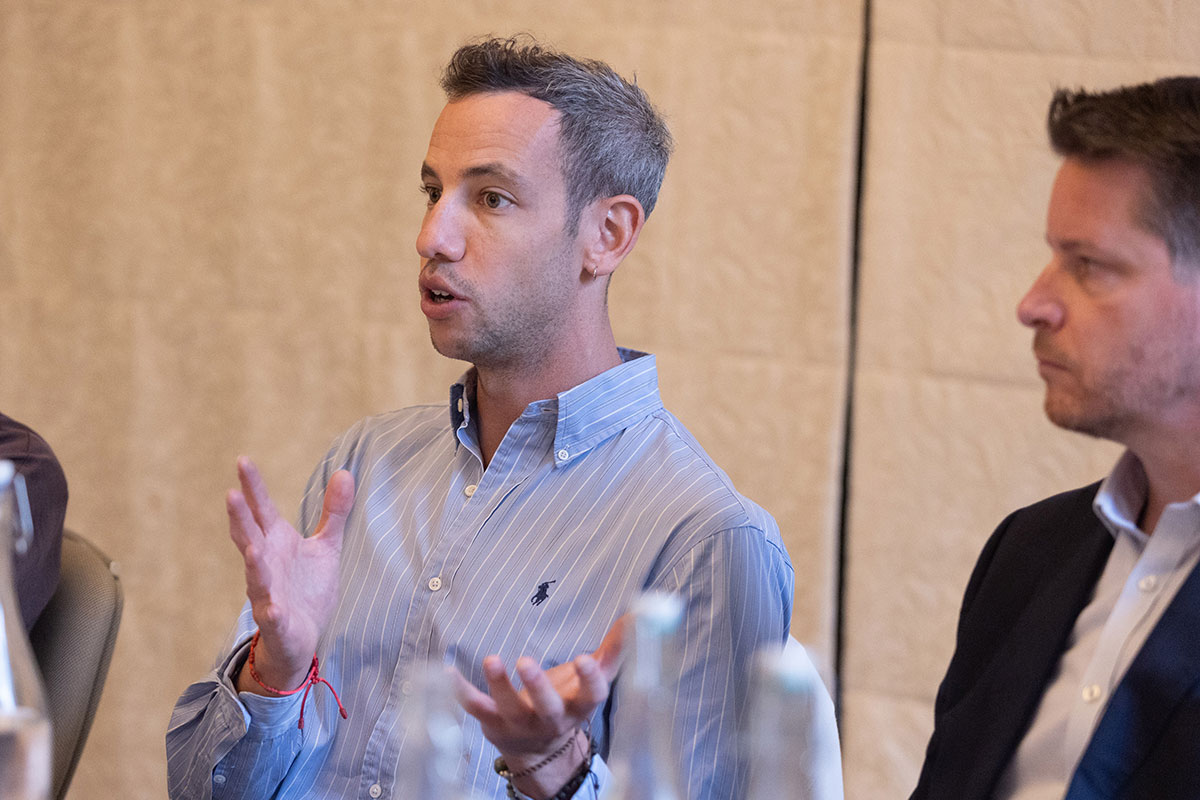
Inside Housing, in association with Miller Insurance Services, gathers industry experts to discuss homeownership models and what could be done to make them more accessible. Photography by Belinda Lawley


 Inside Housing, in association with Miller Insurance Services, gathers industry experts to discuss homeownership models and what could be done to make them more accessible (sponsored) #UKhousing
In association with:

Boosting homeownership has been a major ambition of all recent governments. The latest Labour administration seems no different.
It has repeatedly pledged to “restore the dream of homeownership”, in part through the 300,000 “affordable” homes it has promised to deliver over the next decade, but most – 60% – of these will be rentals. With up to 57,000 low-cost homeownership homes needed each year, there is a need for fresh ideas about how such a scale of delivery could be achieved.
To help with this delivery challenge, Inside Housing, in association with insurance broker Miller Insurance Services, held a roundtable with policy experts, private registered providers and investors, to discuss how opportunities for affordable homeownership might be widened.
Demand amid a mixed economy
Opening up the debate, Inside Housing editor Martin Hilditch points to the Royal Institution of Chartered Surveyors’ Residential Market Survey in August, which revealed “further deterioration” in the market, including continued drops in buyer enquiries, sales activity and new listings. “These are perhaps worrying figures for
an administration which was talking about its plan for [planning reform] only a few months ago, explicitly linking them to its plan to restore the dream of homeownership to families,” he adds.
Read more

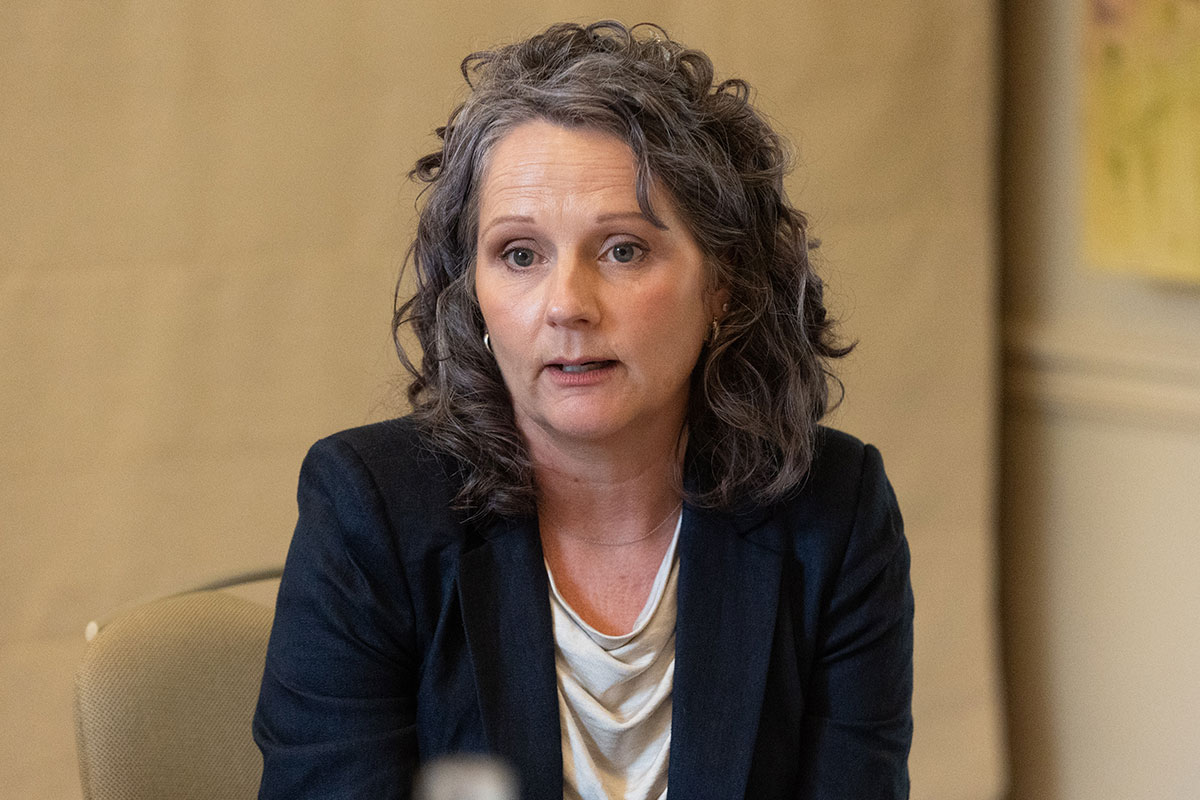
Mr Hilditch highlights a “mixed economy” of affordable housing providers, including the “growing band of for-profits”, and new partnership arrangements, such as those between Homes England and house builders Barratt Redrow and Vistry Group. “How will they meet that vision that the government has set out? What kind of homeownership products are needed? And who will fund and develop them?” he asks the panel.
Steve Partridge, head of the affordable housing consultancy at Savills, shares figures from the firm’s statistical model that links affordability and demand. In the current market, this predicts that 150,000 affordable homes of all tenures are needed each year, around a third of which should be for low-cost homeownership.
“This shows that the underlying demand is already there,” he adds. “But affordability is also predicted to worsen… over the next few years, so that need is likely to go [up] to 55,000 to 57,000 [homes] a year.”
Samuel Stafford, managing director of the Land, Planning and Development Federation, points out the multiple challenges to getting plans for new affordable housing approved – a task he describes as “plaiting fog”.
“There are lots of spinning plates at the moment,” he says. “There is the devolution agenda at the same time as local government reorganisation. There are issues with the electricity network capacity, waste water capacity and nutrient neutrality, and there is nothing in the Planning and Infrastructure Bill that is going to make a material difference.”
While much of the discussion focuses on refining existing homeownership products, there are calls from the panel to “think bigger”.

“It’s fair to say that the traditional binary of renting and buying is no longer serving modern-day housing needs,” says Joanna Lee-Mills, a partner at Ward Hadaway. “We really need to be looking at that spectrum of products that can bridge that gap and accommodate different financial circumstances for people, and reflect how people are living and working nowadays as well.”
“But could we even think bigger?” Ms Lee-Mills asks. “We could go from a build-to-rent-to-buy model to a community build-to-rent-to-buy model which involves whole blocks or streets where residents can journey together from renting to owning.”
Under this institutional investor-backed innovation, groups of residents would transition from renting to owning over a seven to 10-year period. “That would create placemaking, not just owning,” Ms Lee-Mills adds.
Georgia Kirby-Watt, operations director for affordable housing at Octopus Capital, says there is a “massive opportunity for innovation” in the homeownership market. “We need partnerships to deliver innovation because we’re not going to be doing this by ourselves.”
She suggests a homeownership model that initially requires no deposit or mortgage. “You could start by transferring 10% of ownership from day one with an interest-free loan that was paid back over five years, then go and get a mortgage and staircase the rest.”
Gary Newlyn, head of social housing and public sector at Miller, says insurance could help “smooth” the kind of risk inherent in new ideas. “There is much insurance can do to de-risk innovation and your aspirations in this market, but that might involve stepping back to see if there are different ways it might help you.”

Steven Rance, head of strategy and innovation at Miller, adds that insurance could also be used to ease investors’ fears about the homeownership market. “How do we create a commercial solution, using house builders who have got some capacity [to provide funding] and use insurance to then defray the risk that an investor might perceive in the sector as well?”
Several of the panellists point to the huge demand for their mainstay shared ownership products, the potential for it to be “mainstreamed” and for more investors to be attracted to the market.
“We can’t build shared ownership fast enough,” states Sarah Robson, executive director of development and asset management at Karbon Homes, which owns or manages more than 35,000 homes. “There is huge demand and we want to continue to meet it.”
Aileen Payne, finance director at 46,000-home Orbit Homes, says it had seen “a real demand” for shared ownership since the last Conservative government ended the Help to Buy scheme for new applicants in 2022. “We want to explore what other opportunities there are for shared ownership and market sale options now that we don’t have the Help to Buy.”
Stuart Hensby, director of sales and marketing at 55,000-home Abri, points out that people are “turning to shared ownership” as the private market “struggles to deliver” homes for first-time buyers. “The type of buyer for shared ownership is very different from five years ago,” he adds. “The expectations are much higher, and we need to drive and create a more mainstream feel for it.”
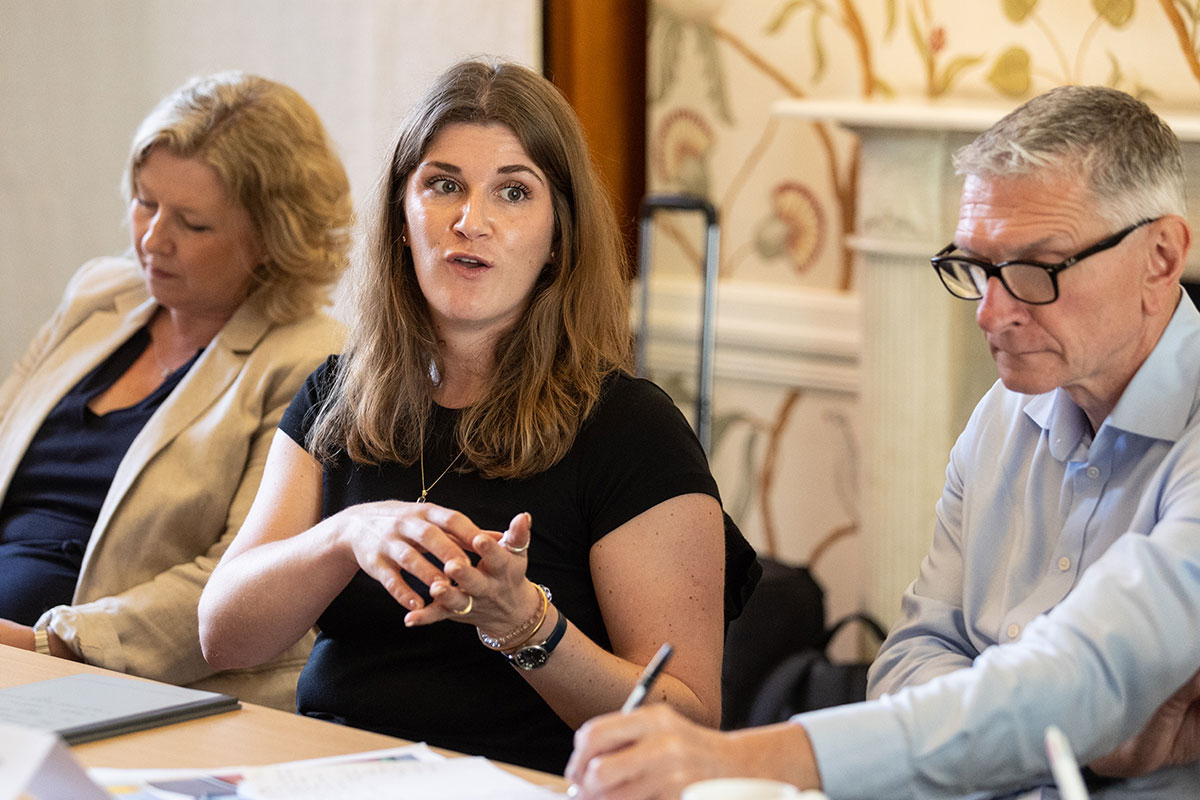
Despite its popularity, several panellists agreed there was some scope to improve the model, especially given recent “reputational issues” flagged by Mr Partridge.
Ms Kirby-Watt says shared ownership is “really great for the people it’s great for”. She flags the lower satisfaction scores under the tenant satisfaction measures introduced by the Regulator of Social Housing in 2023. Less than half (49.5%) of shared owners were satisfied with their service compared with 70% of social tenants, an analysis by the regulator found last year.
“There’s a lot that you’re going to have to cope with if you’re buying a shared ownership home, Ms Kirby-Watt adds. “You’re obligated to buy as much as you can afford, which is actually quite difficult as soon as something changes in your ability to afford it, which happens every two seconds nowadays. If we were doing our jobs properly, we should be scaring off 50% of the people who actually apply for shared ownership.”
Mr Partridge suggests that the reputational issues are more to do with the fact that many homes were leasehold flats, rather than the model itself.
Several panellists point to the recently published Shared Ownership Code to standardise best practice. Zoe Heinzel, strategic head of market and customer intelligence at L&Q, which has piloted the code, describes it as a “really important step”. “It really helps with the certainty of the buying and reselling process, and improves transparency and the general customer journey.”
Ms Heinzel says there is scope for a modified form of shared ownership that does not involve participants increasing shares through staircasing. “A lot of people never staircase, so there is an opportunity for a slightly different product where it is purely shared equity. You just keep your share and gain from the equity interest.”
Landlords would then benefit from a predictable and continuous rental income, which would otherwise reduce when further shares are purchased by shared owners.
Guy Horne, chief executive of HSPG and co-founder of for-profit Park Properties Housing Association, says staircasing has created a “mismatch” in income streams that had deterred investors. “Ultimately, the leaseholder is responsible for when they wish to staircase or not. That uncertainty of cashflows has held back some investors. I would welcome a way to solve that. We’ve thought of many innovative ways, but I think to be able to do it with insurance could be really interesting.”
Another homeownership product with growing potential is Rent to Buy. Under this government-funded scheme, tenants pay a sub-market rent to help them save for a deposit to then buy the home. There is also a similar product called London Living Rent (LLR).
Ms Robson said Karbon Homes had seen “huge demand” for Rent to Buy, but the number of people who converted to homeownership through the model has been “very low”. “I’m not too worried about that because the option is there for people to buy it in due course. Financially, it works really well for us, and it feels as though it’s really meeting need,” she adds.
Ms Heinzel said LLR homes provided by L&Q also have a “very low” conversion rate. “One of the main reasons is that it’s quite a jump from paying the London Living Rent to what would essentially be the shared ownership housing costs on a monthly basis,” she explains. “Even if people have saved their deposit, sometimes the increase in housing cost is too much for them. A bit more innovation is required to help people to get into homeownership from LLR and Rent to Buy.”
While some housing association panellists welcome refining existing homeownership products, there is a wariness about embracing new ideas while so much attention is on addressing reputational issues and improving customers’ understanding of these models.
“There’s a danger, if we introduce more products, the complexity will confuse people more,” Mr Hensby says.
“I don’t really want the landscape to get a lot more complicated. I want it to remain open and accessible to people,” Ms Robson states. “I’m pleased there are not a lot of new products coming out because there’s a need for consolidation of what we already have,” she adds.
“We need to keep the language simple, and we need to think about this through the lens of the customer.”
Participants
Martin Hilditch (chair)
Editor, Inside Housing
Zoe Heinzel
Strategic head of market and customer intelligence, L&Q
Stuart Hensby
Director of sales and marketing, Abri
Guy Horne
Chief executive, HSPG, and co-founder, Park Properties Housing Association
Georgia Kirby-Watt
Operations director for affordable housing, Octopus Capital
Joanna Lee-Mills
Partner in the social housing team, Ward Hadaway
Gary Newlyn
Head of social housing and public sector, Miller
Steve Partridge
Head of the affordable housing consultancy, Savills
Aileen Payne
Finance director, Orbit Homes
Steven Rance
Head of strategy and innovation, Miller
Sarah Robson
Executive director of development and asset management, Karbon Homes
Samuel Stafford
Managing director, Land, Planning and Development Federation

Related stories