Cambridge: How it plans to become a net zero council by 2030
Cambridge City Council’s new climate strategy includes ambitious district heating and retrofit plans. Kate Callaghan explores how it aims to become a net zero council by 2030


 Cambridge City Council’s new climate strategy includes ambitious district heating and retrofit plans. Kate Callaghan explores how it aims to become a net zero council by 2030 #UKhousing
Go back to the Cities Encyclopaedia
Cambridge City Council has set an “ambitious” target of becoming a net-zero council by 2030 and making the city net zero by 2050.
In 2019, the council declared a climate emergency and it implemented a climate strategy in 2021. Since then, reducing emissions from Cambridge’s housing stock has been a key objective. According to the council, heating homes accounts for almost a third of the city’s carbon emissions.
The UK Green Building Council estimates that nearly all 29m homes nationwide will need to be retrofitted to meet greenhouse gas emission targets. Cambridge City Council is leading the way in research and policies to encourage retrofitting in the region. With a new climate strategy for 2026-31 recently announced, the council is examining what is needed at both local and national levels to accelerate retrofitting and help the city reach its target.
Read more


Two schemes the council is working on to reduce household emissions are the city-centre district heat network and the net-zero retrofit pilot project.
The former aims to improve the efficiency of heating homes in Cambridge. Rather than individually heating homes, the city would use a network of underground pipes to distribute hot water from a central source. This idea is still in development, but with successful feasibility studies complete, the council is now producing a business case with the University of Cambridge and Anglia Ruskin University. “It’s really exciting and it feels like it’s moved quite quickly for such a big project,” says
Huge reduction in energy use
Rosy Moore, the council’s cabinet member for climate action and environment.
“We would need government funding, because it would require capital investment,” she adds.
The goal is to be connected by 2030. While the project will be set up for public buildings, once operational, the network will be expanded to include homes and smaller businesses.
Unlike older gas-powered heating networks, where the bills of residents who are using them are rising, the latest are planned to be powered by renewable energy. Additionally, the council estimates that, over 40 years, it could result in a 98% reduction in energy use for the buildings involved.
“Fifty council homes built in the 1930s are being upgraded to a net-zero operational standard, with tenants remaining in situ”
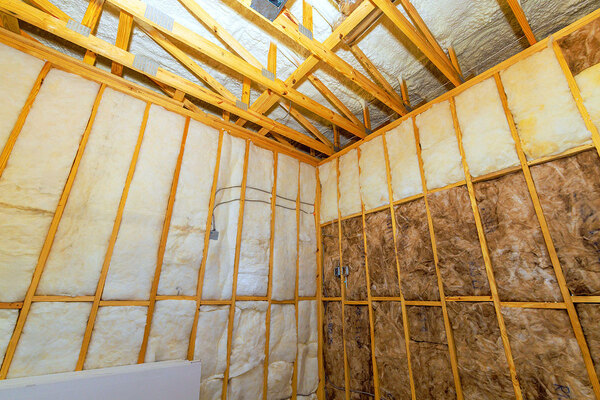
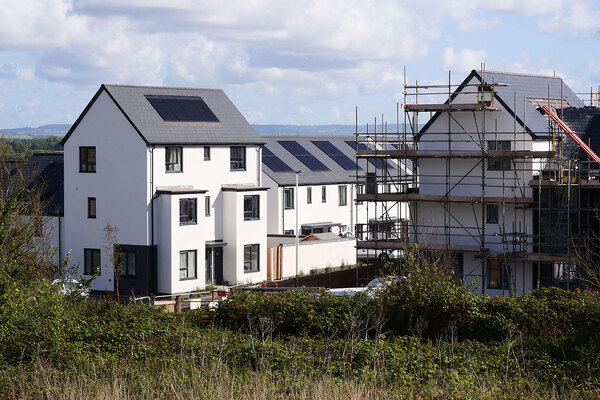
“The net-zero retrofit pilot is a super-ambitious initiative,” says Steph Salmon, the council’s energy and retrofit manager. For this scheme, 50 council homes built in the 1930s are being upgraded to a net-zero operational standard, with tenants remaining in situ. The last properties are expected to be completed in November this year. Alongside physical upgrades, the council will offer training sessions and in-depth user guides to demonstrate the new technologies to tenants and will signpost the best available tariffs.
The homes will be monitored this winter and will be used to research the effectiveness of this retrofit design. “We’ll be looking, in six to 12 months, to revisit them, to ensure that the impacts that we were hoping that were going to be achieved in terms of comfort and bill savings [and] indoor air quality have all been achieved,” says Ms Salmon.
Retrofitting social homes
The council is also investing £15m to retrofit social homes, with £3.8m from the government’s Warm Homes: Social Housing Fund used to upgrade properties with an Energy Performance Certificate rating of Band C or below. In addition, it is running community engagement sessions on “quick wins” to improve home energy efficiency, according to Ms Salmon.
Despite these schemes, the council faces challenges in scaling retrofitting up. This summer, the Cambridge Institute for Sustainability Leadership (CISL) released a report, commissioned by the council, that identified actionable strategies to accelerate retrofits. It found fuel poverty remains “notable” in the region, affecting 9% of households in the city and 8.7% in South Cambridgeshire, despite higher-than-average incomes and property prices.
Retrofitting challenges specific to Cambridge identified in the report include older housing stock and listed buildings, which mean planning constraints restrict retrofitting methods. Additionally, being a university town, short-term tenancies reduce the pressure on landlords to retrofit their properties, and rapid population growth has increased reliance on new builds.
But the report also identified challenges at a national level, such as skills shortages. “It’s a chicken-and-egg situation,” says report author Anum Yousaf Sheikh, policy research lead at CISL. “There’s not enough demand, so a lot of the builders don’t find it useful to invest in the skills of retrofitting within their workforce when they can generate the same amount of revenue just doing regular building work.”
Another factor is “the uncertainty of the funding that has been assigned to retrofit as a national priority”, says Ms Sheik. “A lot of grants existed that were scrapped without notice. That led to the funding landscape being very uncertain, and it had a lot of impact on how local authorities can access them.”
The report recommends the following:
- Develop a data-driven retrofit strategy
- National policy advocacy to influence support for retrofitting
- Expand the Action on Energy Cambridgeshire programme
- Explore innovative financing models
- Strengthen skills development
- Centralise retrofit data and track progress through a public portal
Of these, Ms Sheikh thinks retrofitting advocacy is important in Cambridge, especially for promoting its benefits beyond sustainability.
“I think the housing quality is key to improving the health of the local community as well. There’s a big push to think of retrofit as an integrated thing. Some of the locals we talked to in our research had disdain for it. They said, ‘If it’s only for meeting a certain energy-efficiency requirement, it’s not worth it for me, as a landlord or as a homeowner, to do it.’
“We have to shift that narrative, and tell people that it’s not just about achieving a net-zero goal, but it’s also about the health of your community, your own health. It’s about the comfort of your home; it’s about making your home energy efficient.”
“Retrofitting challenges specific to Cambridge include older housing stock and listed buildings, which mean planning constraints restrict retrofitting methods”
So, is Cambridge City Council taking on these recommendations?
“We are actively looking at which recommendations we can practically implement within our retrofit work and programmes,” says Ms Salmon.
First, the council is looking into its Action on Energy Cambridgeshire scheme, which Ms Salmon says is “set up to be able to offer the advice and support to residents who are looking at the retrofit journey”.
“So we’re looking at that website and trying to put out messaging around access to retrofit and things that people can do for quick wins and comfort within their homes as a first step,” she says.
“And then we’ll be looking at the other recommendations in the report to see what we can do on a much more long-term scale that then fits with our climate strategy.”
With the 2030 target looming, the council has taken concrete steps towards emission reduction. “We know [the target] is very ambitious, but it’s to help us push to be more ambitious. We declared a climate emergency in 2019, and although net zero seems to be getting a lot of flak, we actually believe climate change is real,” says Ms Moore.
“We can see it all around us, including in Cambridge, and we believe it’s the right thing to aim for.”
Sign up to Inside Housing’s Sustainability newsletter
Sign up to Inside Housing’s weekly Sustainability newsletter, featuring our in-depth coverage of the sector’s journey to delivering net zero.
Already have an account? Click here to manage your newsletters.
Related stories