Greater Manchester: A long-term view, decisions made locally and solving complementary challenges
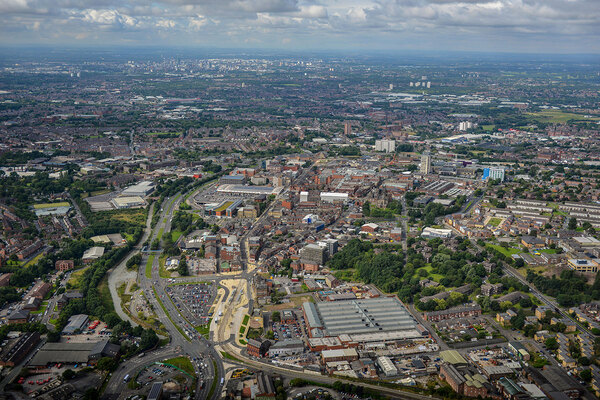
The combined authority’s approach to helping the region achieve its climate objective is through working in a collegiate way across the 10 boroughs in Greater Manchester


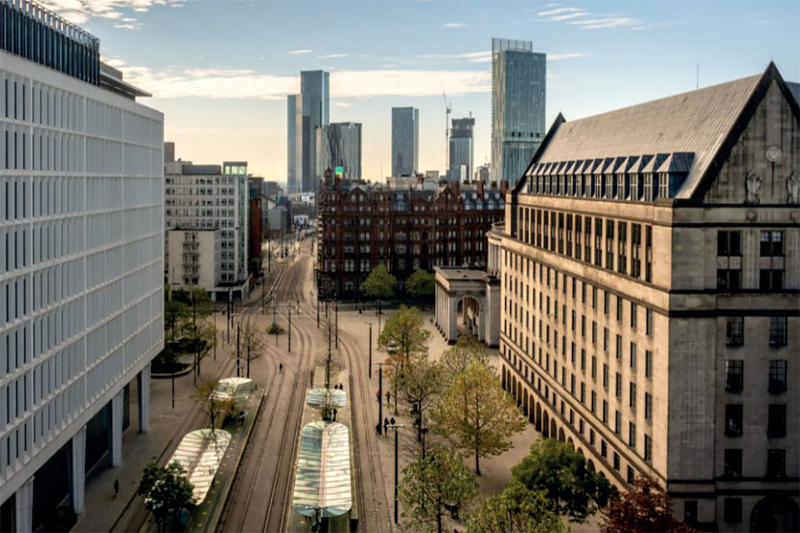 The combined authority’s approach to helping the region achieve its climate objective is through working in a collegiate way across the 10 boroughs in Greater Manchester
Go back to the Cities Encyclopaedia
A long-term view, decisions made locally, solving a number of complementary challenges – this is the role of a combined authority in building growth in the regions.
Andrew McIntosh, director of place at the Greater Manchester Combined Authority (GMCA), recognises that they have set themselves tough and ambitious climate-change targets.
In part, this is because of the scale of change involved and how the authority wants to use this agenda as a platform to move the region and its infrastructure towards sustainable growth.
Read more

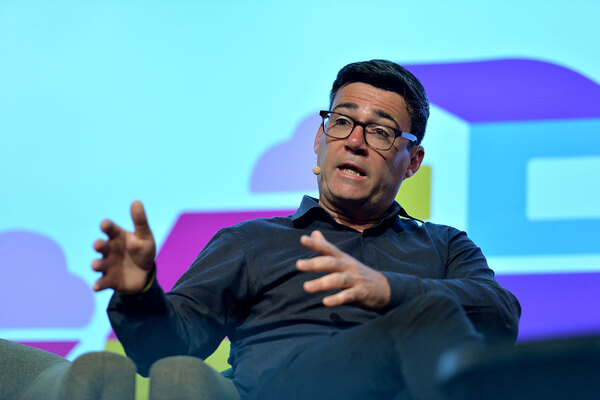
“We are seeing declining carbon emissions across the region, but we want to go faster,” he says. He recognises that cost is a challenge when looking at the decarbonisation agenda, and accepts that, without innovation, it could constrain the speed and scale of tackling climate change.
The GMCA’s approach to helping the region achieve its climate objective – being carbon neutral by 2038 – is through working in a collegiate way across the 10 boroughs in Greater Manchester. Mr McIntosh acknowledges that projects across the region move at different paces because each local council has its “own priorities”. However, the benefit of the GMCA driving the climate-change agenda is that it can “build support models that can be layered across the region, and the combined authority has access to tools that help make this happen”, he says. Additionally, the GMCA also has the ability to shape and drive the collaborative approach.
‘Developing, growing, regenerating’
Mr McIntosh says his role is all about “developing places, growing places and regenerating places”. He believes these agendas are complementary and should be viewed as such. The net-zero agenda ties these strands of activity together, particularly through the design of the relevant solutions to decarbonise at scale. With competing priorities, “funding is a challenge, and the question we have to answer is how we can explore the development of models that help us to build future net-zero homes. With a concerted focus on place, we can embed a collaborative local approach which will ultimately allow us to grow, but also emit lower emissions,” he says.
He says the newly agreed devolution deal is a key advantage for Greater Manchester. The certainty around funding will help his department undertake a longer-term programme of developments, covering the need for additional affordable housing, the need to regenerate places and lower the emissions in the region. He sees a real benefit in the ability to make funding decisions closer to the source of requirement, to develop a partnership approach with local agencies. “Working under a local banner helps us to be collegiate and pragmatic. A longer-term view also helps us to manage projects more effectively, allowing us to ultimately reduce costs in the long term.”
This localised approach frames the challenges in a collective way for the region, rather than as a competition between locations. “Devolution helps to enable people to make decisions that benefit communities directly,” he says.
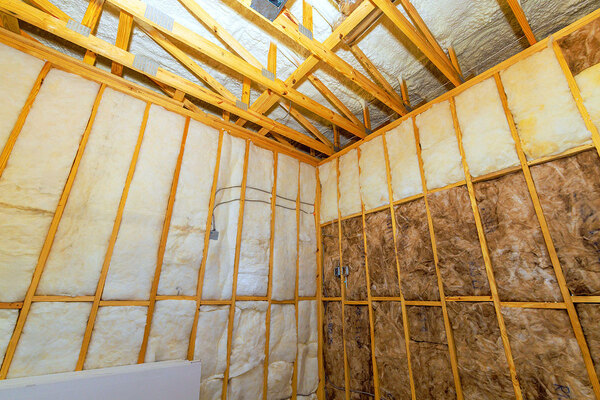
According to Mr McIntosh, challenges such as damp and mould and retrofitting could be tackled as collective issues, rather than tackling them in isolation: one housing improvement programme would allow local decision-makers to derive multiple benefits from intervention and investment.
Mr McIntosh feels the region has benefited from developing a local area energy plan (LAEP). An LAEP is a data-driven, whole-energy system, evidence-based approach that is collaboratively defined by local stakeholders. The aim is to identify local action to reach Greater Manchester’s targets and contribute to the country’s net-zero target. It identifies the infrastructure changes required to transition an area’s energy system to net zero in a given timeframe.
“Devolution helps to enable people to make decisions that benefit communities directly”
“For us, it has been really helpful undertaking this exercise. It has helped to quantify and articulate the investment levels needed to deliver net zero and identify measures that should be implemented. The question is now one of how you then implement the recommended measures.
“It provides us with a framework to consider and is a great example of bottom-up planning, helping us to drive the designed solutions required. We are presently using it to explore delivery models and asset classes, and it provides us with an evidence base with which to speak to investors, as the funding of the end solution has to be through both public and private means,” he says.
Mr McIntosh adds that the challenge now is “how we capitalise” on this evidence base and use it to “start conversations which will help turn plans into reality”.
Noting that net zero is a longer-term challenge, as is the regeneration of place, he believes net zero should be one of the top considerations of the planning hierarchy and should assist in the drive to build for growth. “The longer you have to plan, the better the end outcome,” he concludes.
This article was originally published in May 2024
Sign up to Inside Housing’s Sustainability newsletter
Sign up to Inside Housing’s weekly Sustainability newsletter, featuring our in-depth coverage of the sector’s journey to delivering net zero.
Already have an account? Click here to manage your newsletters.
Related stories