Lancaster: Using net zero targets to create healthy places to live and drive down bills
From nationally recognised housing policies to the UK’s first decarbonised leisure centre, Lancaster has used unconventional methods to become the top-performing district council on tackling climate change. Eliza Parr reports


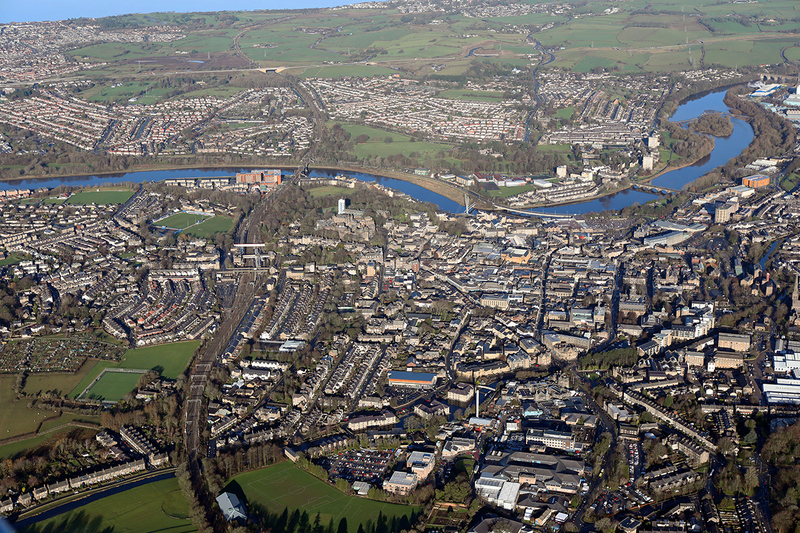 From nationally recognised housing policies to the UK’s first decarbonised leisure centre, Lancaster has used unconventional methods to become the top-performing district council on tackling climate change #UKhousing
Go back to the Cities Encyclopaedia
Lancaster City Council is ambitious when it comes to tackling climate change – and its methods are not always conventional. Over three days in November, during the Light Up Lancaster festival, artwork exploring “the impermanence of things” was projected onto the city’s medieval castle. The council’s climate change team was behind one such projection, working with artists and researchers to create an animation telling the story of change affecting glaciers.
It’s part of the council’s effort to raise awareness of climate change impacts. For those attending the festival, a QR code at the installation led them to advice on practical actions to take in the face of flooding, which, in Lancaster, is by no means an abstract risk. Ten years ago, storms Desmond and Eva had a devastating impact across the city where the River Lune breached its flood defences. Over 600 homes flooded and tens of thousands lost power. These defences had been designed to withstand a one-in-100 year flood.
Read more
Susanna Dart, principal climate policy officer at Lancaster City Council (LCC), says flooding is an impact of climate change that is at the forefront of many residents’ minds. “We are a coastal community with quite a large coastline, and we also suffer from different types – fluvial flooding and surface-level flooding – in quite a lot of areas. So, particularly for us, flooding is really big.”
Ms Dart, a scientist from Arizona in the US, started working on climate change policy at LCC in 2021, two years after the council declared a climate emergency. On 30 January 2019, a motion put forward by the “young people of Lancaster”, which warned of the “disastrous” consequences of rising temperatures, was passed unanimously. It means the council aims to reach net zero for its own activities by 2030 and across the district by 2040. This put LCC among the first 20 local authorities to declare such an emergency, shortly after Bristol City Council became the first in Europe.
And it has continued to run ahead of the pack. LCC ranked as the top-performing district council on community interest company Climate Emergency UK’s scorecards for 2025, with a total score of 69%, compared with an average of 36%. Its scores for ‘building and heating’ (75% vs the 48% district average) and ‘planning and land use’ (85% vs 28% for the district average) stood out. Regarding retrofitting all council-owned homes and requiring all new homes to be operationally net zero, LCC scored full marks, along with only around an eighth of all district councils.
“What’s really made Lancaster shoot forward, is that every single person has climate change in their job description”
It makes sense, then, that LCC’s housing policies have been recognised nationally. Its climate emergency review of the local development plan won a Local Government Chronicle award in 2024, with the judges saying its commitment to addressing climate adaptation through revised planning policies had “set a shining example for other local authorities to emulate”.
LCC is looking to go further than national ambitions for net-zero homes, warning that the government’s aim to reduce emissions by focusing on delivering “zero-carbon ready homes” does not go far enough. These homes will only be zero carbon when, and if, the grid decarbonises in 2035. In the meantime, they will require a lot of energy. A new policy as part of the updated local plan focuses on reducing emissions by reducing energy use in a home with a fabric-first approach to building, based on PassivHaus principles.
But getting sign-off on this net-zero housing policy wasn’t easy, with the planning inspector raising concerns about local councils setting their own standards beyond national building standards. Ms Dart says the two-year delay caused by back-and-forth with the inspector actually led to greater engagement with the community. “During those two years, we also thought, ‘Well, we need to make sure that this is something our communities want and bring them along with us’. So we did massive amounts of engagement to understand what people want from new housing. What does the future look like? What’s going well now? What needs to change? What policies do we need to bring in?”
Across the district, of the greenhouse gas emissions LCC can support reductions in, domestic emissions make up almost 40%. It currently manages a council housing stock of just over 3,600 homes, of which around 75% have an Energy Performance Certificate rating of Band C or above. The cost of bringing all homes up to this level by 2030 was calculated at £2.7m, which would equate to £400,000 from the Housing Revenue Account each year. However, LCC has been successful in bidding for grant funding to deliver improvements. Most recently, the council secured £780,000 to improve 100 council-owned homes as part of the Warm Homes: Social Housing Fund (WH:SHF).
Under its local area energy plan, adopted in October last year, the council assessed that reaching net zero across the district by 2040 will require 60,000 heat pumps in homes, while around 38,500 homes will need to be retrofitted. Ms Dart says the focus of the plan is not just to meet net-zero targets, but also to make sure bills don’t go up for residents, ensuring a just transition. Given the scope of work necessary on Lancaster’s existing homes – “some of the oldest housing stock in the country” – she emphasises the importance of new homes being built to meet net-zero standards. “Right now, if you built a home to the 2021 building standards, that home will need to be retrofitted in order to meet net zero. It’s not net zero on day one. And we can’t continue to add emissions; we’re through our 1.5°C carbon budget already. So, we need to make sure that any new development doesn’t add to that retrofit burden.”
Ms Dart says the approach to net-zero housing has been “very focused on getting in social housing decarbonisation funds” such as the government’s WH:SHF.
Being “good at bringing in funding” is a key part of the council’s impressive climate scorecard, she says. Another factor is its corporate set-up. “What’s really made Lancaster shoot forward, is that every single person has climate change in their job description,” she says. This means net zero by 2030 is everybody’s remit, not just the policy team’s. “When I talk to climate officers [at other councils], sometimes what’s really hard is it feels like there’s a small team who’s trying to do everything. What’s lucky with Lancaster is [that] you may have a small team, but there’s a wide ecosystem that’s all trying to get there too.”
Lancaster district’s size is helpful in driving climate change progress, too, according to Ms Dart. It’s small enough for people to collaborate easily and see tangible impacts, but big enough to be a hub of activity, encompassing two universities, a power station, a port and the West Coast Main Line railway route.
The universities, and academic work more generally, are also key, she says. “We’ve brought in quite a lot of research funding. We recognise we can’t do all the policy work. The portfolio you need to attack the climate and ecological emergencies is quite large, and we’ve been really lucky that we’ve been able to work with a wide range of researchers.” A team at Lancaster University recently set out how local authorities can “future-proof” policy design with scenario planning, a tool they can use to ensure more sustainable policies and address climate change. The team worked with LCC to assess the impact of the £100m Eden Project Morecambe regeneration on sustainable transport and socio-economic development.
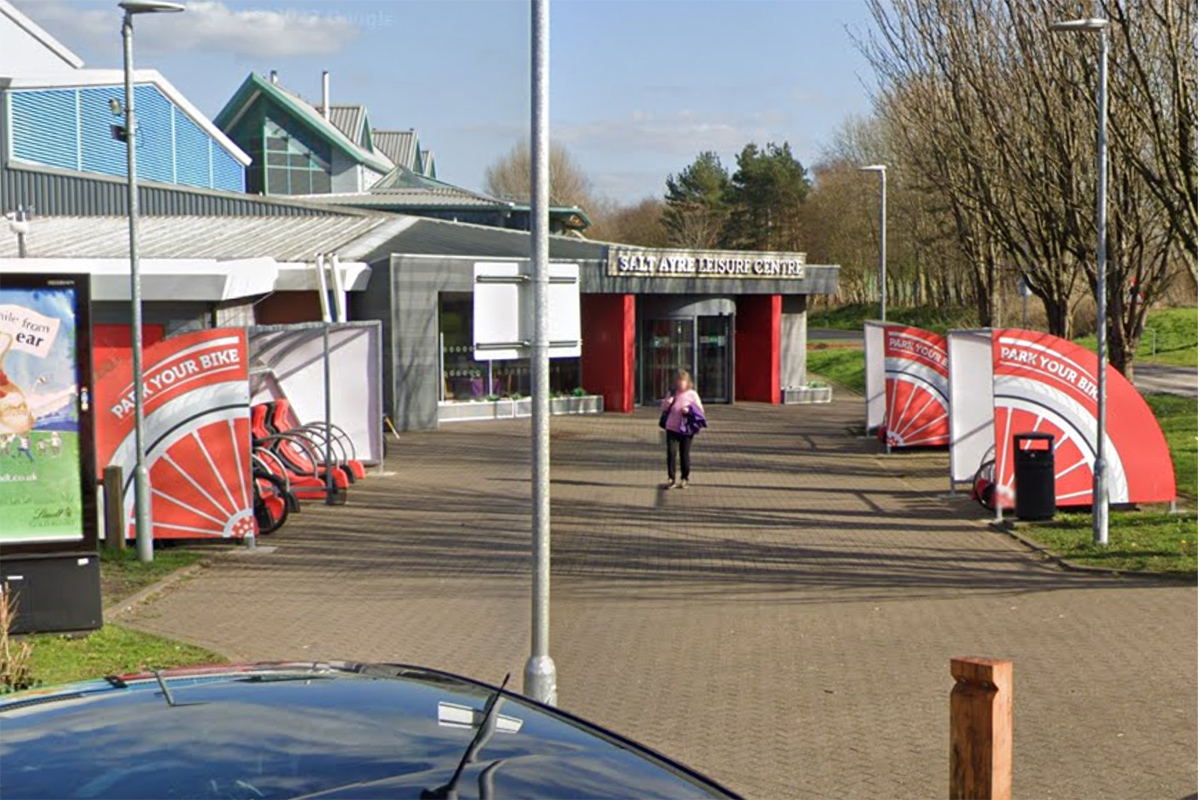
Another net-zero project the council is particularly proud of is its Salt Ayre Leisure Centre. In 2018-19, the sports centre was the council’s biggest hitter in terms of energy consumption across its buildings. Since then, it has become the UK’s first decarbonised leisure centre, following a deep retrofit and the installation of a solar farm on a disused landfill site. This solar farm generates about 1.3 GWh per year which, alongside the council’s 27 sites with roof-mounted solar arrays, produces the equivalent to 21% of all the council’s electricity. The Salt Ayre project was funded by a £6.8m grant from the Public Sector Decarbonisation Scheme (PSDS), and in 2022 it won an Association for Public Service Excellence award for Best Decarbonisation Initiative. LCC continues to push forward with other decarbonisation projects using PSDS funding.
“Lancaster’s commitment to addressing climate adaptation through revised planning policies had ‘set a shining example for other local authorities to emulate’”
In its local area energy plan to drive down consumption, the council cites the government’s net-zero strategy from 2021, which estimated that 82% of the UK’s emissions are “within the scope of influence of local authorities”. Ms Dart agrees that the “sphere of influence is huge” for councils, since they build roads, set planning policy and “make massive decisions” about their local areas. But she says councils need appropriate powers and funding in order to wield this influence effectively, pointing to calls from the Local Government Association for a statutory duty to achieve net zero. “We’re lucky right now that we’ve got internal drive to do that, but it would be a lot easier if it was a statutory duty.”
For councils looking to drum up some of Lancaster’s internal drive, Ms Dart says it’s important to look beyond simply cutting emissions. “Most importantly, our capital projects lead to quite significant savings. Our retrofit projects lead to better health and well-being outcomes for residents and drive down their bills.”
She suggests net-zero targets are a way for councils to reach their wider goal of creating healthy places to live. “Net zero might be the thing people talk about, but actually, what we’re doing is creating thriving, vibrant, healthy communities, right? And I think that’s something people need to keep in mind a bit more.”
Sign up to Inside Housing’s Sustainability newsletter
Sign up to Inside Housing’s weekly Sustainability newsletter, featuring our in-depth coverage of the sector’s journey to delivering net zero.
Click here to register and receive the Sustainability newsletter straight to your inbox.
And subscribe to Inside Housing by clicking here.
Already have an account? Click here to manage your newsletters.
Related stories