Bath and North East Somerset: What declaring an ecological as well as a climate emergency means for delivery and existing homes
Five years ago, Bath and North East Somerset Council declared both a climate and ecological emergency and set itself tight timeframes to tackle them. Martin Hilditch catches up with its progress, and the implications for the housing sector


 Five years ago, Bath and North East Somerset Council declared both a climate and ecological emergency and set itself tight timeframes to tackle them. Martin Hilditch catches up with its progress #UKhousing
Go back to the Cities Encyclopaedia
Bath and North East Somerset Council declared a climate emergency in 2019 and an ecological emergency the following year. Like calling 999 and asking for both the police and ambulance service, the two emergencies have the same root, but require distinct responses.
The council says it declared an ecological emergency to recognise “the severity of the degradation of the natural environment and loss of wildlife, the consequences of this, and the urgent need to take action to restore nature”. Starting in 2023, it put in place an action plan with the aim of becoming “a nature-positive organisation by 2030”.
Regarding the climate emergency, the council wants to take “urgent action” to help to halt it, and it created a climate-emergency strategy that runs through to 2030 as well. As Sarah Warren, deputy leader and cabinet member for climate and sustainable travel, says in the introduction to the strategy, the council has “committed to provide the leadership to enable the Bath and North East Somerset area to become carbon neutral by 2030, as well as doing the same for our own operations”.
The importance the council attaches to these two emergencies is demonstrated by the fact that it has made tackling them “one of our two core policies”.
So, several years after the emergency bells were sounded, how is the council’s response going, and what does it mean for housing? Inside Housing took a look at the council’s annual climate and emergency report, presented to a meeting of its cabinet on 13 November, to find out.
Read more
 Nearly 40% of councils lack access to in-house ecological expertise amid Biodiversity Net Gain rules
Tackling the ecological emergency
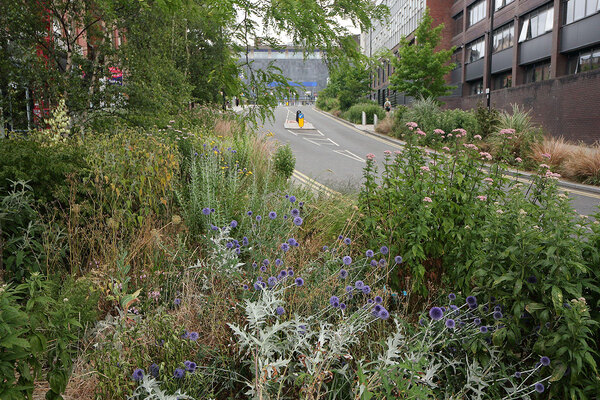
The council’s ecological-emergency action plan sets out three priorities: first, to increase the extent of land and waterways managed positively for nature; second, to increase the abundance and distribution of key species; and third, to enable more people to access and engage with nature.
In the 2025 progress report, the council states that it is looking to “step up our ambition” when it comes to nature recovery by “better integrating” delivery, including in areas such as planning, regeneration and day-to-day operations.
The council’s approach to delivery has a number of significant implications for the housing sector.
One of the most eye-catching potential changes relates to Biodiversity Net Gain (BNG). Bath and North East Somerset was one of the first local authorities in England to adopt a BNG policy and thus far has established seven off-site habitat banks. That means it has created more than 200 hectares of habitats across the area. The progress update highlights the existing BNG Pathfinder project, which helps the council to “fund nature recovery on council-owned sites through the sale of BNG ‘units’”.
But the biggest BNG news may be to come. As part of its local plan, the council is exploring the possibility of requiring 20% BNG, rather than the mandatory 10%. Planned policies also include a requirement for sustainable drainage systems, requirements for developments to have “more and better” green infrastructure, along with local targets for tree cover.
“Starting in 2023, the council put in place an action plan with the aim of becoming ‘a nature-positive organisation by 2030’”
In this latter area, the council wants to double woodland cover across Bath and North East Somerset. This year, as part of the government’s Plan for Change programme and alongside partners, the council obtained £7.5m of funding for a new national forest – the first to be created for 30 years. The 2,500 hectare woodland will take in parts of Wiltshire, Gloucestershire and the West of England.
In a statement issued when the news was announced in March, Ms Warren said the forest represented “a fantastic opportunity to foster collaboration between local communities, businesses and landowners to drive nature recovery and improve climate resilience across our region”.
One final point worth mentioning is that the council tracks 46 actions when it comes to tackling the ecological emergency – and provides a detailed update on how well each of them is going in its annual progress report. Of those 46 actions, which include looking at the feasibility of a 20% BNG target, the council found it had made progress on 26, completed six since 2023-24 and 87% of all actions “are well underway”.
Tackling the climate emergency
When it declared its climate emergency in 2019, the council also set out its strategy to turn things around. The four priorities in the strategy were to decarbonise buildings and transport, increase renewable-energy generation and decarbonise the council’s own operations.
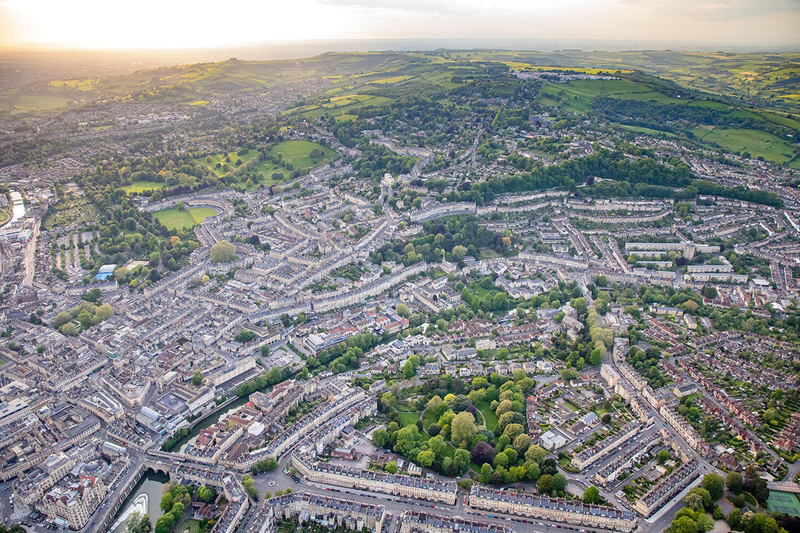
It’s clear why transport and housing are core to the council’s action plan. The climate-emergency report states that, together, they make up 68% of the region’s territorial emissions (housing comprising 32%). The report goes on to identify the top-five sub-sectors driving emissions within those two categories. These include domestic gas (21%) and domestic electricity (8%). As a result, “the key domestic emissions challenge as a district is to reduce gas”. A city renowned for its old buildings – there are more than 5,000 Grade I, II* and II-listed buildings in Bath – poses additional challenges. Replacing gas will “also require energy-efficiency improvements, especially in older buildings, so that heat pumps can operate effectively and affordably”. The 2019 climate strategy identified 65,000 homes that would need some kind of upgrade.
So, how is the council looking to meet that challenge and what has it achieved?
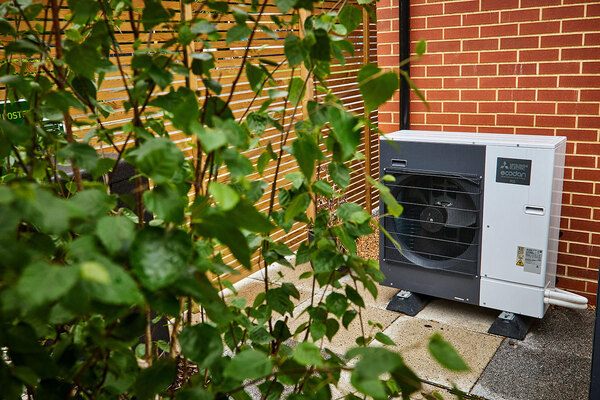
One hundred and sixty-two heat pumps were installed in homes in Bath and North East Somerset in 2024-25, with a further 169 residents completing a home assessment via Retrofit West, a community interest company which delivers a costed whole-house, individually tailored retrofit plan. In the same financial year, 593 domestic solar panels were also fitted.
The percentage of homes in the area with an Energy Performance Certificate (EPC) rating of Band C or above increased from 19% in March 2023 to 36% in March 2025. Due to investment from the Social Housing Decarbonisation Fund and Warm Homes: Local Grant, social rented homes are leading the charge, with 70% hitting the target. However, private homes lag some distance behind, with just 22% at EPC C or above.
“This year, alongside partners, the council obtained £7.5m of funding for a new national forest – the first to be created for 30 years”
With 2030 looming, it is clear where the council needs to concentrate its efforts. For starters, it is encouraging residents to take up grant funding and free retrofit home-upgrade advice, and it is drawing up a retrofit enabling plan to target resources.
The council is also thinking about retrofit as it develops policy options for its carbon-offset fund “in anticipation of receiving the first developer contributions”. These could “enable and support additional retrofit and renewable-energy projects”, the annual progress report says.
More broadly, the council is one of the partners on the £5m Mission Net Zero project led by neighbouring Bristol City Council, which will publish a regional climate investment plan for the West of England.
There is also regional work afoot to identify where heat from abandoned and flooded mines could be used to provide low-carbon heating for buildings.
The council is looking to involve communities more directly in decision-making, too. Through Lottery funding, the council and its partners are considering community green bonds to “empower communities to explore and build their own renewable-energy projects”. In this way, communities will be able to make collective decisions but also receive financial benefits as a result.
What of the progress this year? The council tracks 29 actions when it comes to tackling the climate emergency, with a numbered progress rating published for each one. Of that 29, 26 actions have either progressed their score or remained as ongoing work since 2023-24.
In a statement issued as the council published its update, Ms Warren said that tackling the climate and ecological emergencies “is one of our core priorities and influences every decision we take”.
And in terms of a takeaway for other councils, there is one other important piece of learning, according to Ms Warren: the need to bring a wide array of organisations together to deliver.
“Working in partnership is critical and I want to thank the wide range of organisations, groups and individuals who have contributed to the progress that we are making towards a low-carbon, nature-positive and climate-resilient district,” she adds.
“With the talent and ambition across our region, we’re confident that north-east Scotland will continue to be a key player in shaping a positive, low-carbon future.”
Sign up to Inside Housing’s Sustainability newsletter
Sign up to Inside Housing’s weekly Sustainability newsletter, featuring our in-depth coverage of the sector’s journey to delivering net zero.
Already have an account? Click here to manage your newsletters.
Related stories