Glasgow: What it’s like to live in Scotland’s biggest Passivhaus development
The UK’s biggest house builder has promised to build all homes in London to be Passivhaus or better. James Riding visits Dundashill in Glasgow, where a housing association has built 90 homes to this extremely energy-efficient standard


 .@jamesriding10 visits Dundashill in Glasgow, where a housing association has built 90 homes to an extremely energy-efficient standard #UKhousing
Go back to the Cities Encyclopaedia
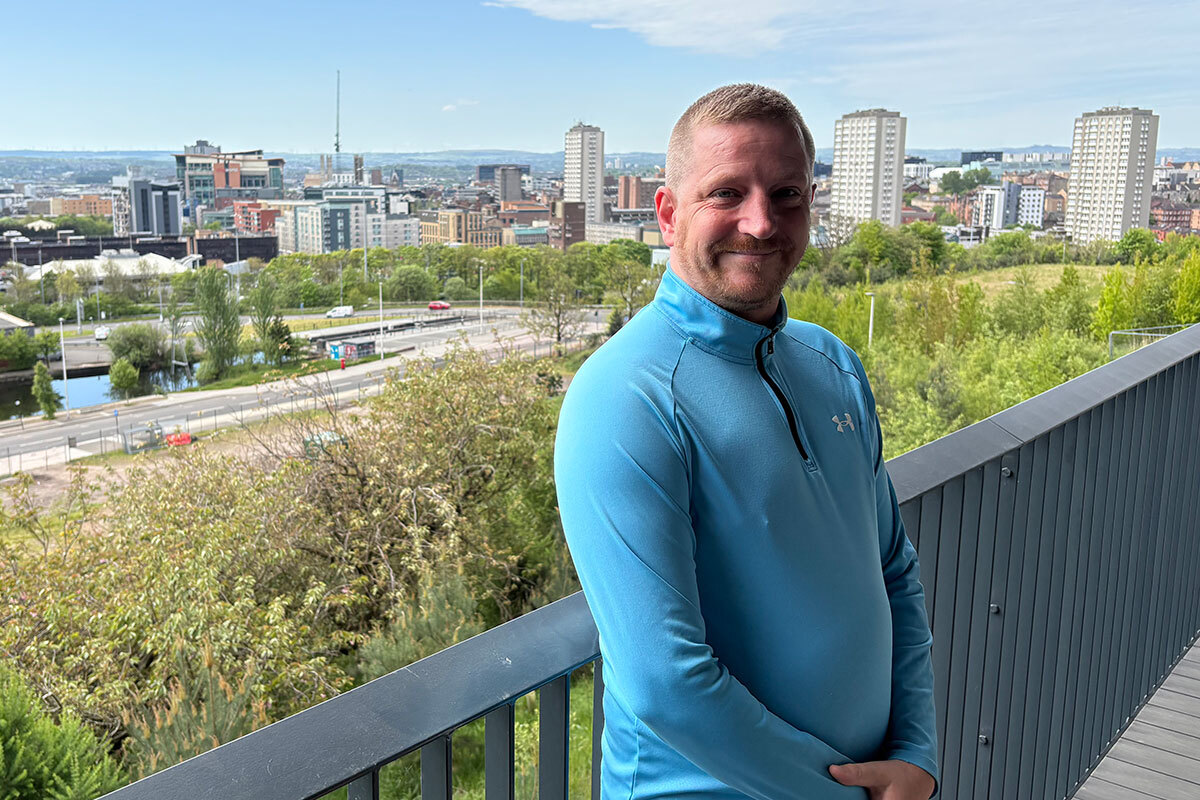
It is a sunny May morning in Glasgow and Gary McEwan is wearing shorts. The sun streams through the windows of his second-floor flat and the room is toasty – in fact, it is hot. “I’ve never had to use the heating once,” he says proudly.
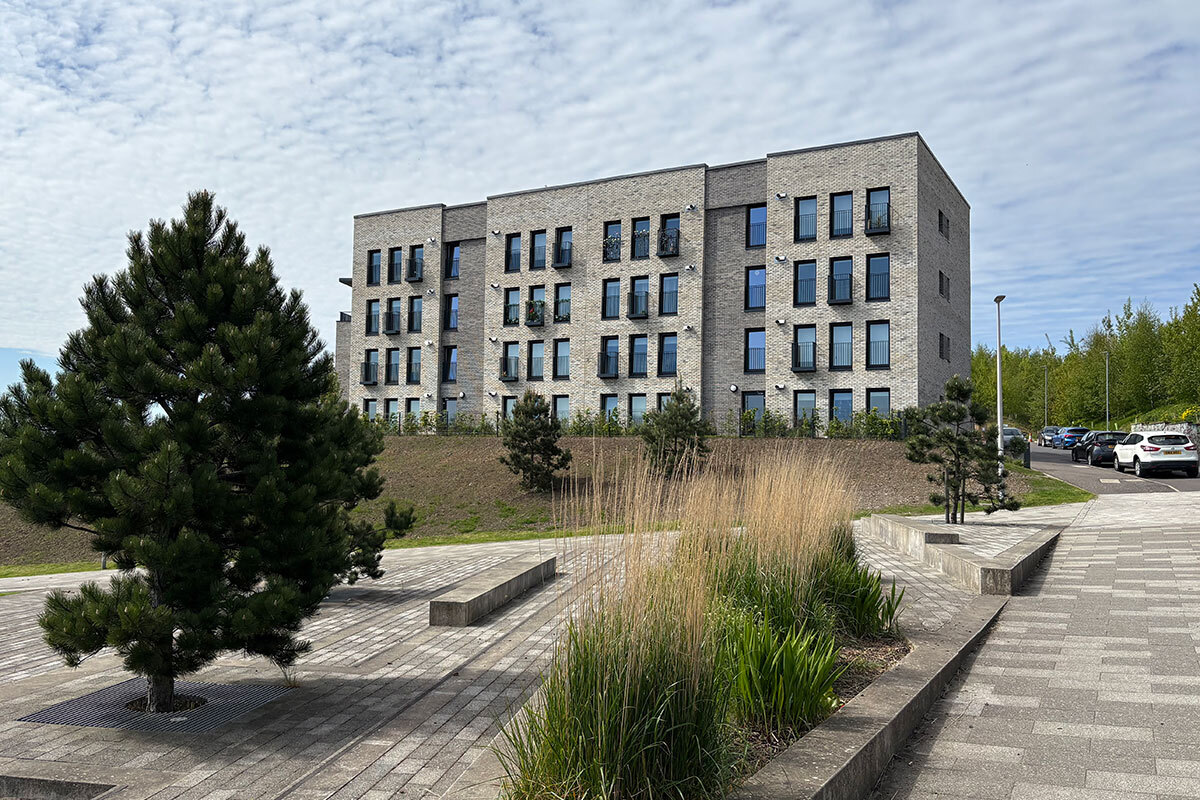
Mr McEwan rents a two-bedroom flat in the Dundashill development just north of the city centre, which is owned by West of Scotland Housing Association. The scheme was completed in 2024 on the site of a former Diageo whisky distillery and comprises 90 homes, all let at mid-market rent (similar to intermediate rent in England).
It is Scotland’s largest residential Passivhaus project, meaning it meets strict energy efficiency and ventilation standards. All the homes have triple-glazed windows and MVHR (mechanical ventilation with heat recovery) systems, solar panels on the roof, and electric back-up radiators for additional heating – which Mr McEwan has not turned on since he moved in last year.
Major house builder Barratt has announced all its new London homes will meet or exceed the Passivhaus standard. And Passivhaus is a hot topic in Scotland. The Scottish government has consulted on developing a Passivhaus-style standard for all new homes, with further details expected this summer. However, ministers are also conscious that these standards will drive the cost of housebuilding up while the economic climate remains fraught and the country is in a housing emergency.
We have come to Dundashill to find out what this might mean for residents like Mr McEwan, and the benefits of this type of development.
Read more
Cheap bills
Mr McEwan’s hot water is supplied by an electric air source heat pump. It is in the corridor outside his flat, reducing noise and allowing the housing association to access it when he is out. In February and March, when it was colder, his electricity bill was £54 a month, all in, including hot water.
“That’s me leaving all my lights on,” he says. In April, with the weather heating up, he paid just £36.
Living in a Passivhaus building offers ample opportunities to geek out over energy usage. It is perfect for Mr McEwan, who was already interested in tariffs – he works for Ovo Energy as a data analyst. He tells us about his contract with Octopus, which uses the energy from his solar panels to give him money off his bill.
“Yesterday, I exported three kilowatts,” he says, showing us an app on his phone.
One of his few complaints is that he cannot crack open his balcony door like a window to let some air in. “It does overheat in summer,” he says.
Passivhaus homes do not have air conditioning, because the insulation and MVHR systems minimise the need for active cooling, according to Collective Architecture, which designed Dundashill. During the summer, tenants are advised to open windows at night and keep their blinds down in the day.
Another minor gripe is that Mr McEwan is supposed to be able to control his hot water remotely via his phone, but the app isn’t working. The housing association speculates this could be a firewall blocking the app or a weak broadband signal.
By contrast, Lauren Rocks, who lives in the seven-storey tower, the tallest part of Dundashill, says her home gets “really cold” in winter, even with the heating and her MVHR on. This may have been due to a gap in her balcony door, which wasn’t closing properly (the housing association later came to fix it).
Karen Shaw, director of development and asset management at West of Scotland Housing Association, says there is a lot of variation in temperature, depending on which way the homes face. Those facing south get much more sunlight and therefore they get hotter.
Both Mr McEwan and Ms Rocks remark how peaceful it is in Dundashill. A public path winds through newly planted foliage to the canal at the bottom of the hill.
“It’s a pity there isn’t a wee shop,” Ms Rocks says. A shop will come eventually, though. This is the first completed scheme in a wider regeneration masterplan led by developer Igloo, which will include 600 homes.
Ms Shaw says the 90-home West of Scotland Housing Association development cost £21.6m, including landscaping, consulting and planning fees. The landlord secured planning permission in 2021 and construction took two years. She estimates that it was 10-15% more expensive to build the scheme to Passivhaus standard.
The standardised, simplified design helped keep costs down, she says (contractor CCG pre-built parts of the flats, such as timber frames with fitted windows and floor cassettes, in its offsite factory). Since the Dundashill contracts were signed, inflation has pushed construction costs up, while the Scottish government has chopped and changed its grant-funding budget for affordable homes.
“This would be more expensive to deliver now – if you could justify it now, because money is so tight,” she says.
Lessons learned
Emily Ong, architectural and Passivhaus designer for Dundashill, says this was Collective Architecture’s second such development and that additional lessons were learned this time, around the sequencing of works, giving workers Passivhaus induction sessions and educating residents about how to use their homes properly.
When West of Scotland Housing Association approached the firm about Dundashill, the landlord “wanted it to be a benchmark for affordable housing”, she says. The sustainability of Passivhaus is a big draw for social landlords, but “the main thing we’re hearing from clients is fuel poverty”, says Mairi Laverty, her architect colleague. The number of Scottish households in fuel poverty rose 3% from 2022 to 2023, according to official data, largely due to surging energy bills.
West of Scotland Housing Association is monitoring the benefits of the scheme for its tenants, to weigh up the cost of building to the Passivhaus standard. A total of 27 Dundashill residents have agreed to have their homes’ temperature and energy usage recorded by small monitors in their flats.
Ms Shaw says the Scottish government’s Passivhaus-style standard for new builds could result in fewer homes being built overall. “There’s a housing crisis, so your numbers are probably more important right now,” she says, adding that new homes could still be built to high fabric standards without full Passivhaus certification.
Sign up to Inside Housing’s Sustainability newsletter
Sign up to Inside Housing’s weekly Sustainability newsletter, featuring our in-depth coverage of the sector’s journey to delivering net zero.
Already have an account? Click here to manage your newsletters.
Related stories